 Contact
Small Group Math Instruction: Best Practices for K–5 Classrooms
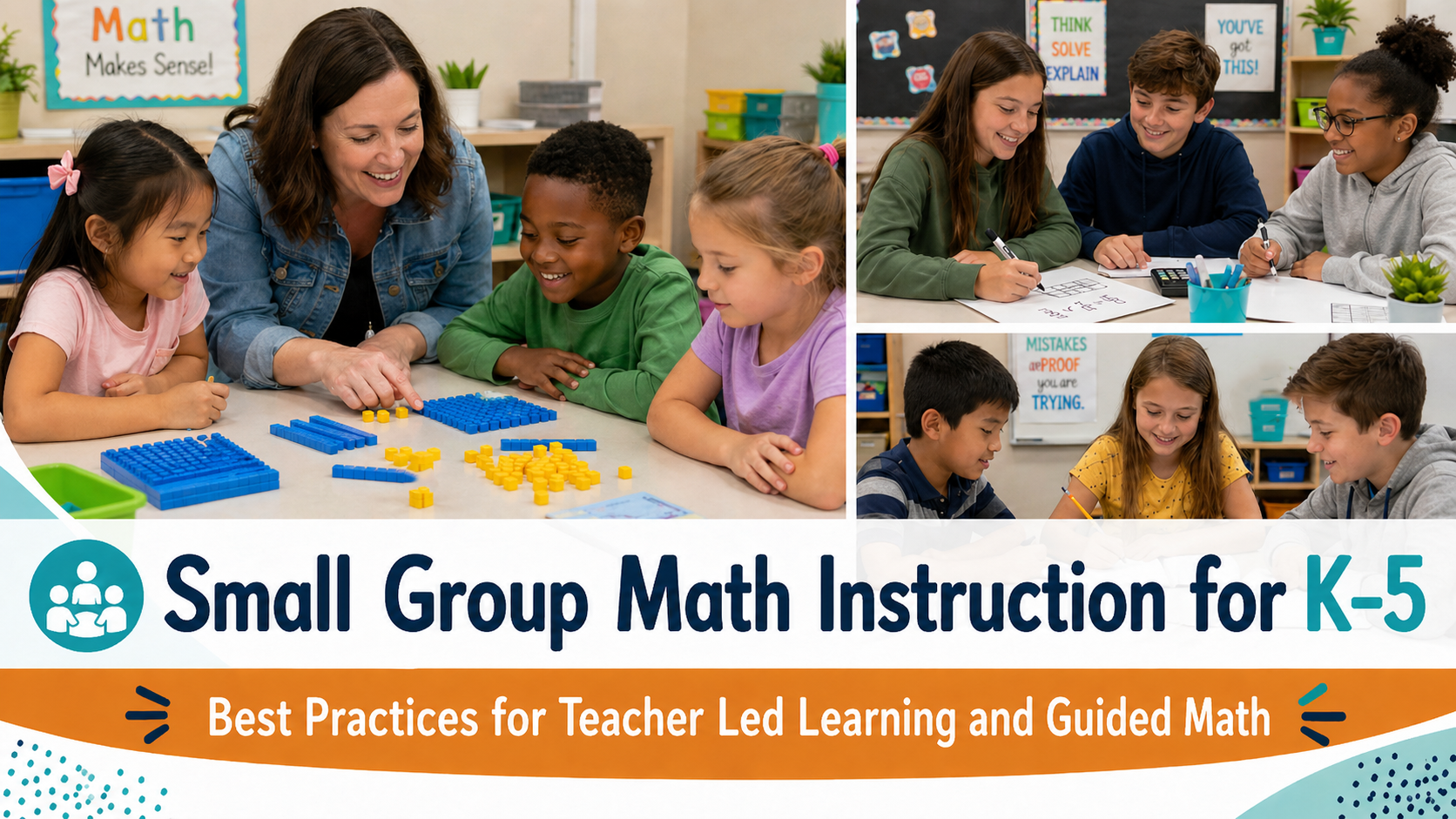
Small group math instruction gives teachers the opportunity to listen closely to student thinking, respond to misconceptions, and provide targeted support based on what students need next. The strongest small group lessons do not need to be complicated. They need one clear learning goal, a simple instructional flow, and classroom routines that allow the rest of the class to work independently.
This post covers how to form flexible groups, what to teach, how to structure a focused lesson, and how to make small group instruction work within the larger math block.
Building the Routines for Small Groups?
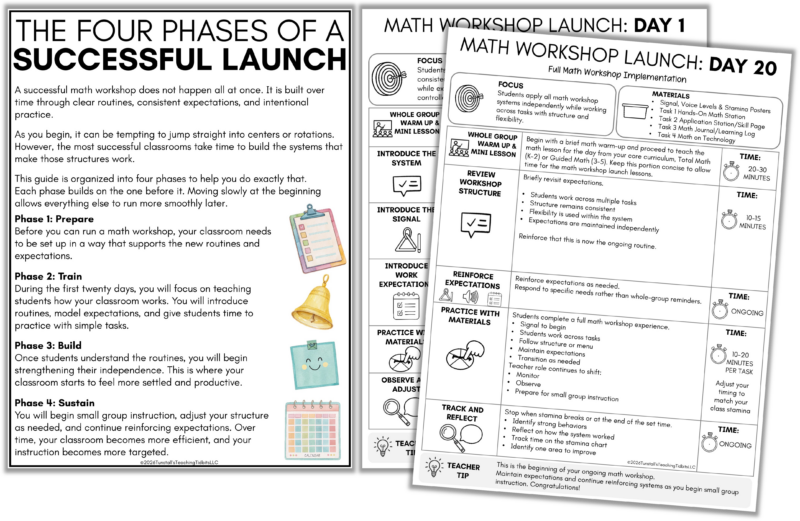
Small group instruction depends on what the rest of the class can do without constant teacher assistance. The free Math Workshop Launch Kit provides a gradual 20-day plan for teaching expectations, practicing routines, and building student independence before small groups begin. The plan works alongside any K–5 math curriculum. You can continue teaching your planned content and pacing while using the final part of the math block for each short launch lesson.
GET THE FREE MATH WORKSHOP LAUNCH KIT
What Is Small Group Math Instruction?
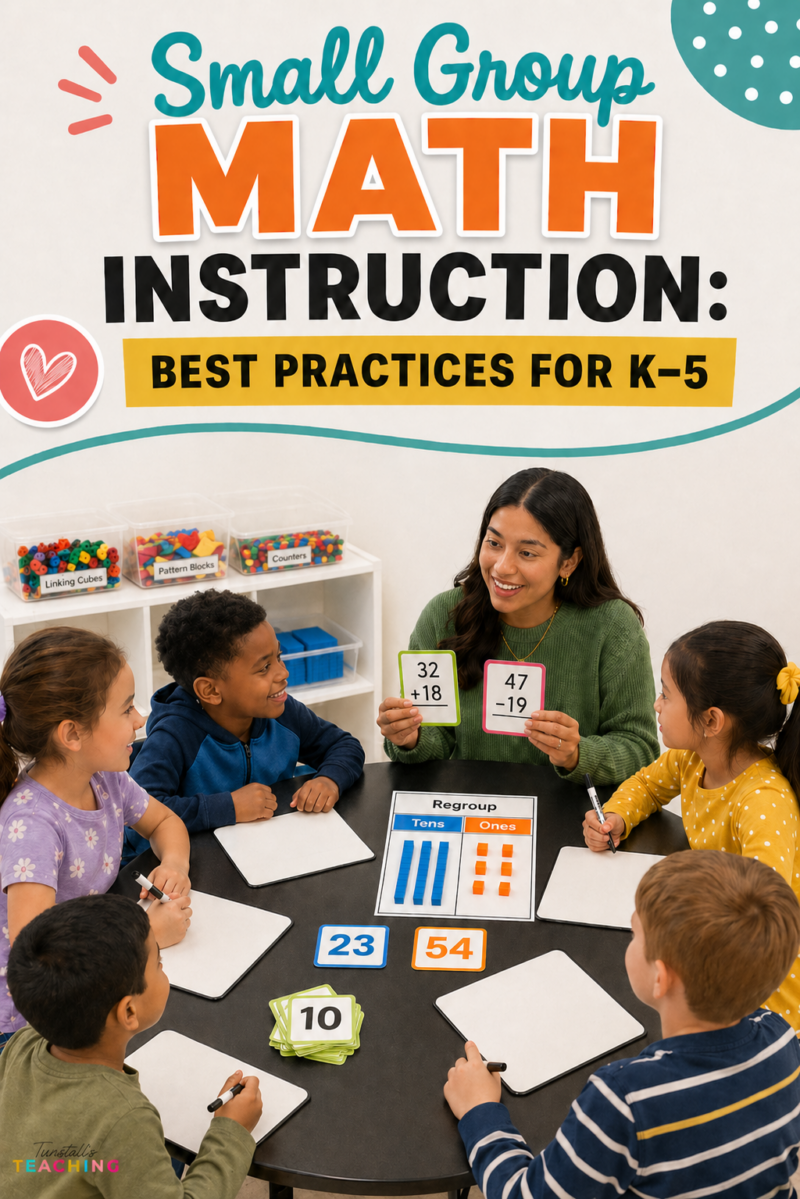
Small group math instruction is a focused time when the teacher works with a few students on a specific skill, strategy, concept, misconception, or extension.
In many classrooms, this instruction happens at the teacher table during math workshop. While the teacher works with one group, the rest of the class completes familiar math stations, centers, journals, technology tasks, or independent practice.
A strong small group lesson allows the teacher to:
- Listen to student thinking
- Model a strategy or concept
- Use manipulatives and visual models
- Address misconceptions
- Differentiate the task or level of support
- Provide immediate feedback
- Extend or strengthen learning
Small group instruction is not a second whole-group lesson. It should be short, focused, and responsive to the students sitting at the table.
For a closer look at the independent side of the math block, read What Students Do During Math Workshop.
Why Small Group Math Instruction Matters
Whole group lessons are important, but they do not always give teachers enough information about individual student understanding. Some students may need more practice with a foundational skill. Others may be ready for more complex problems, deeper reasoning, or strategy discussion.
Small group math instruction gives teachers time to respond to those needs more directly.
During small group instruction, students often have more opportunities to explain their thinking. Teachers can ask follow-up questions, adjust the task, offer a tool, or reteach a concept before misunderstandings grow.
This is where small group instruction becomes especially valuable. It helps teachers move from simply covering content to actually responding to student understanding.
A Simple Small Group Math Framework
A Simple Small Group Math Framework
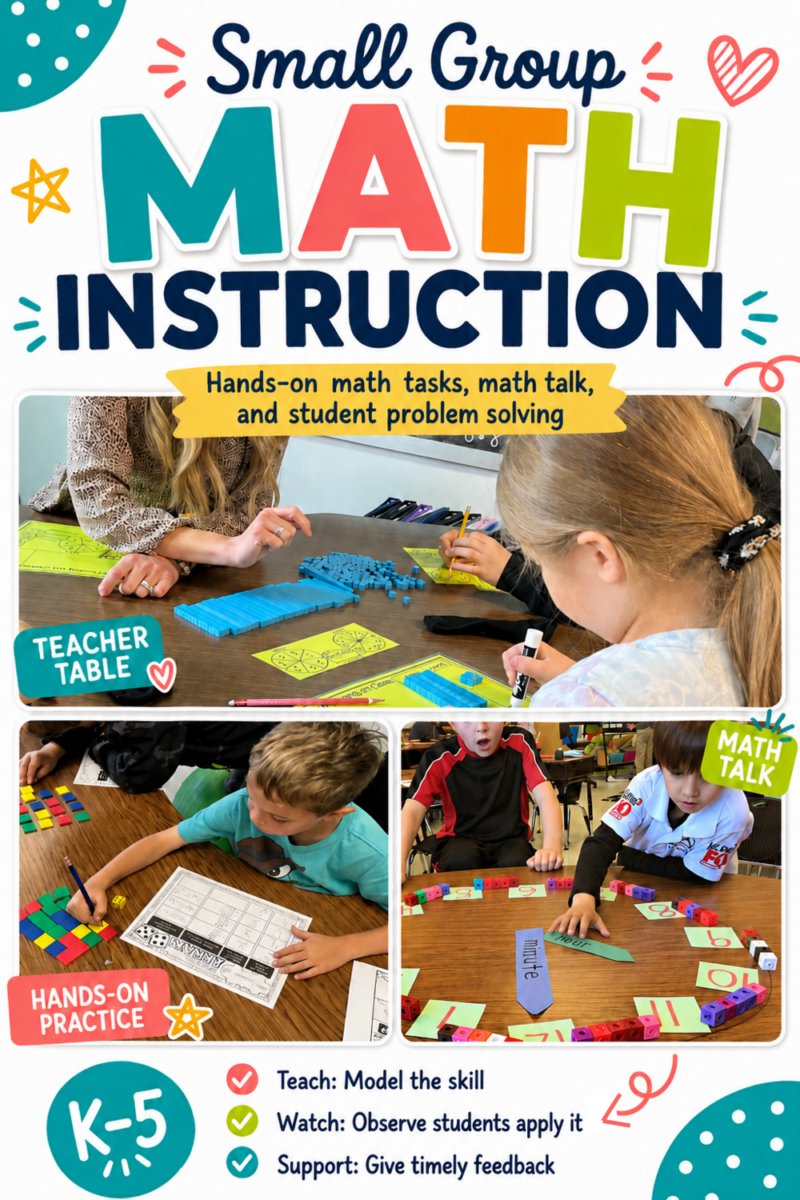
One way to keep small group math instruction focused is to use a simple three-part routine:
Teach
Begin by briefly modeling the strategy, concept, or problem type. This might include showing students how to use a tool, think through a problem, represent an idea, or apply a specific strategy. The goal is to provide a clear starting point without turning the small group into another long lesson.
Watch
Give students an opportunity to apply the learning while you observe. Notice which strategies they choose, how they use the model, where they become confused, and whether they can explain what they are doing. This is where small group instruction gives you information that may not be visible during a whole-group lesson.
Support
Respond with timely and specific feedback. You might ask a question, clarify a misconception, offer a tool, model another example, reduce the number size, or extend the task. The goal is to respond while the learning is happening. Teach, Watch, Support is also one of the practical instructional frameworks shared during this K–5 math professional development.
What to Teach During Small Group Math Instruction
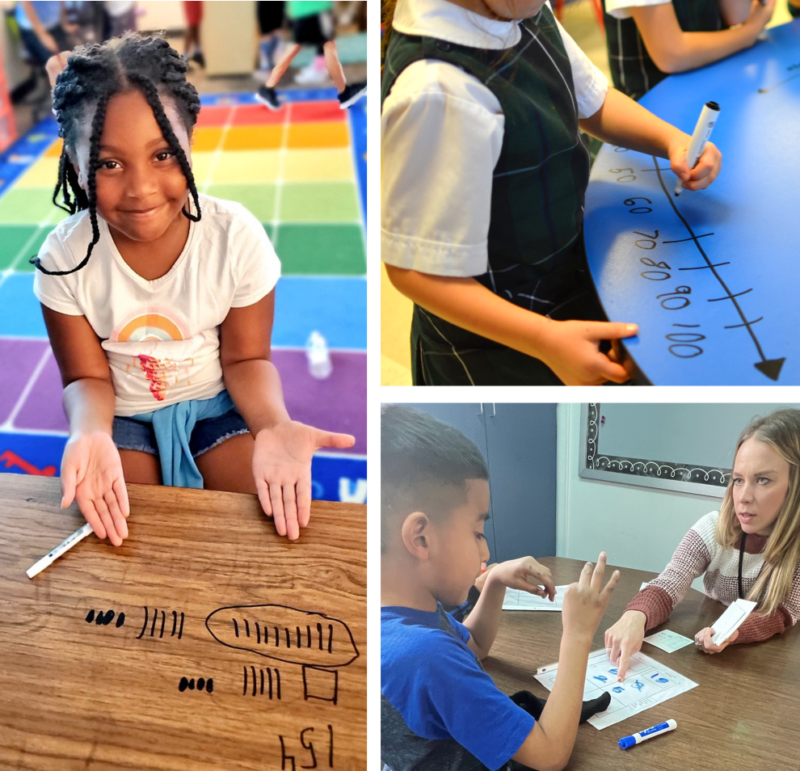
Each lesson should focus on one clear instructional target. What skill is being taught?
As you meet with each group, you can determine whether students need additional scaffolding, more explanation, time with manipulatives, guided practice to build confidence, or deeper questions and extensions. The lesson target doesn’t need to be different for every group, but your materials and approach with each group will allow each group to be supported with that same learning target.
How to Form Flexible Small Groups
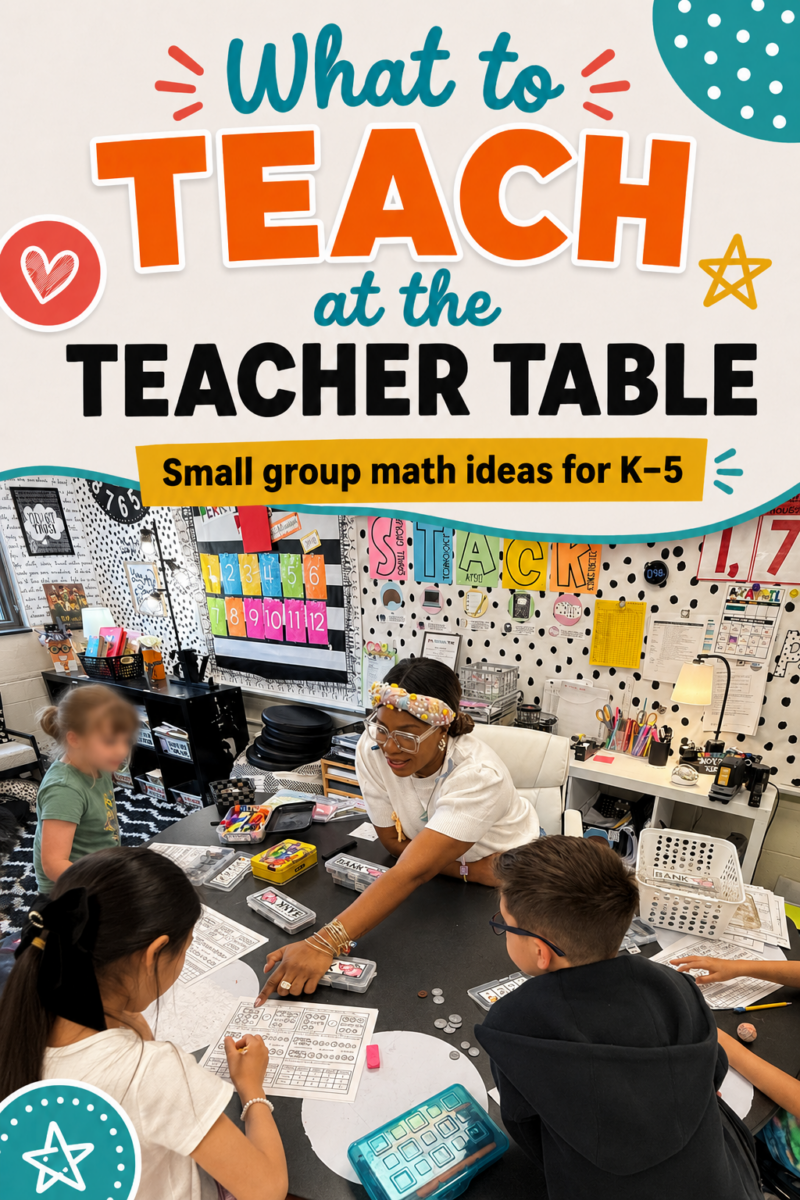
Small groups should be flexible rather than permanent.
A student may need support with one concept and be ready for extension with another. Groups can change based on the current math standard, student work, observations, assessments, or strategy use.
You might form a group around:
- A shared misconception
- A prerequisite skill
- A specific strategy
- Readiness for extension
- Assessment results
- A problem-solving response
- Something noticed during whole-group instruction
Data does not need to become an additional complicated system. Use the information you already collect to decide who needs to meet with you and what the group needs next.
For practical ways to collect and use this information, see these math data tracking and progress-monitoring ideas.
How Many Students Should Be in a Small Group?
There is no perfect group size for every classroom or every lesson.
Choose a group small enough that each student can participate, explain their thinking, and receive feedback. In many classrooms, that means approximately three to six students, but the number can change based on the lesson goal and level of support needed.
A group receiving intensive support may need to be smaller. A group practicing a shared strategy may be slightly larger.
What Makes a Strong Small Group Math Lesson?
Keep the Lesson Short and Focused
Many small group lessons can be completed in approximately 10 to 15 minutes.
Choose one question for the lesson to answer:
- Can students represent this number with tens and ones?
- Can students use a number line to subtract?
- Can students explain why two fractions are equivalent?
- Can students choose an efficient strategy?
- Can students find and correct the error?
A narrow instructional goal makes the lesson easier to teach, observe, and adjust.
Use Math Tools and Visual Models
Math tools are not only for younger students. Manipulatives and visual models support understanding across K–5.
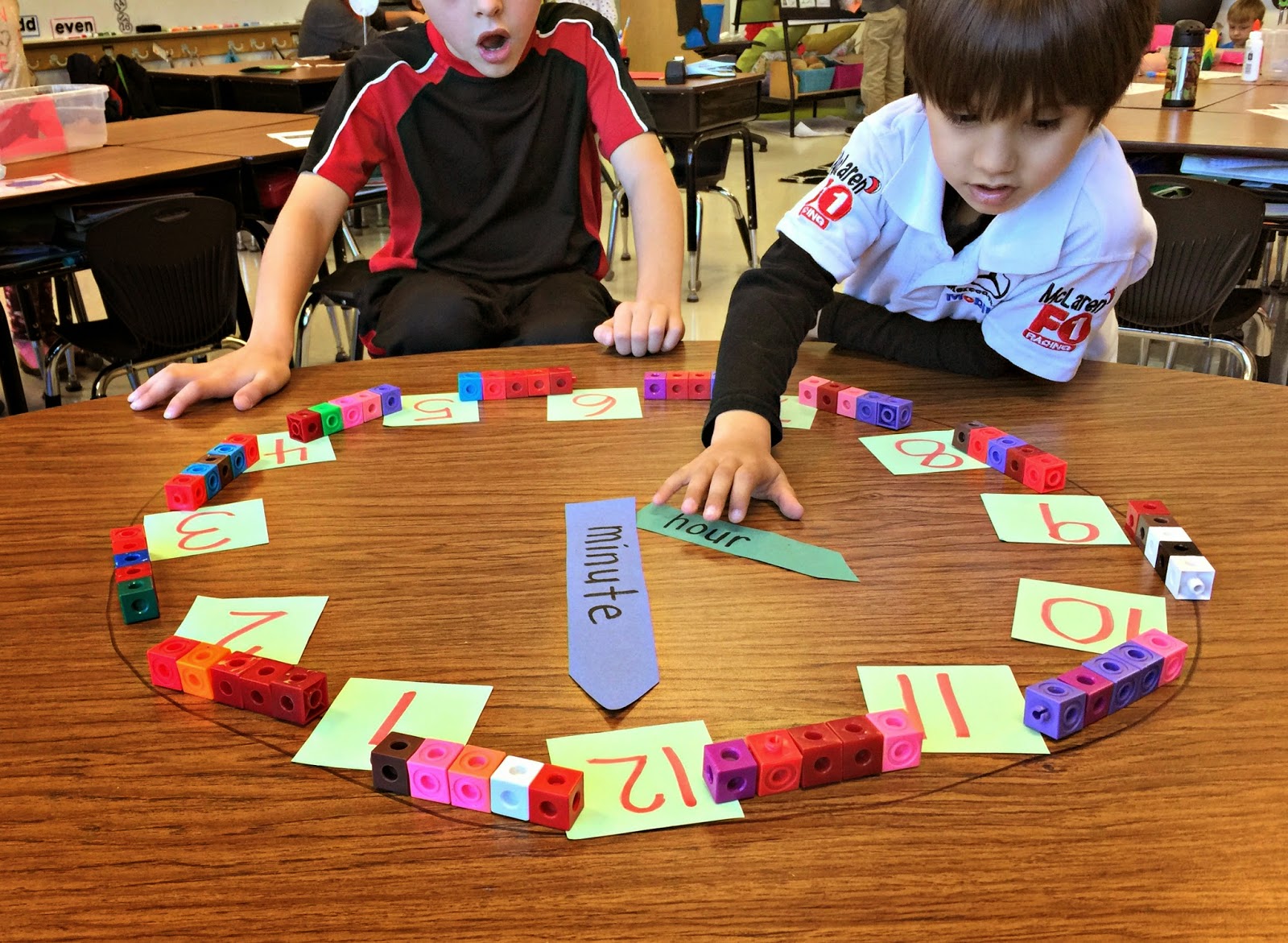
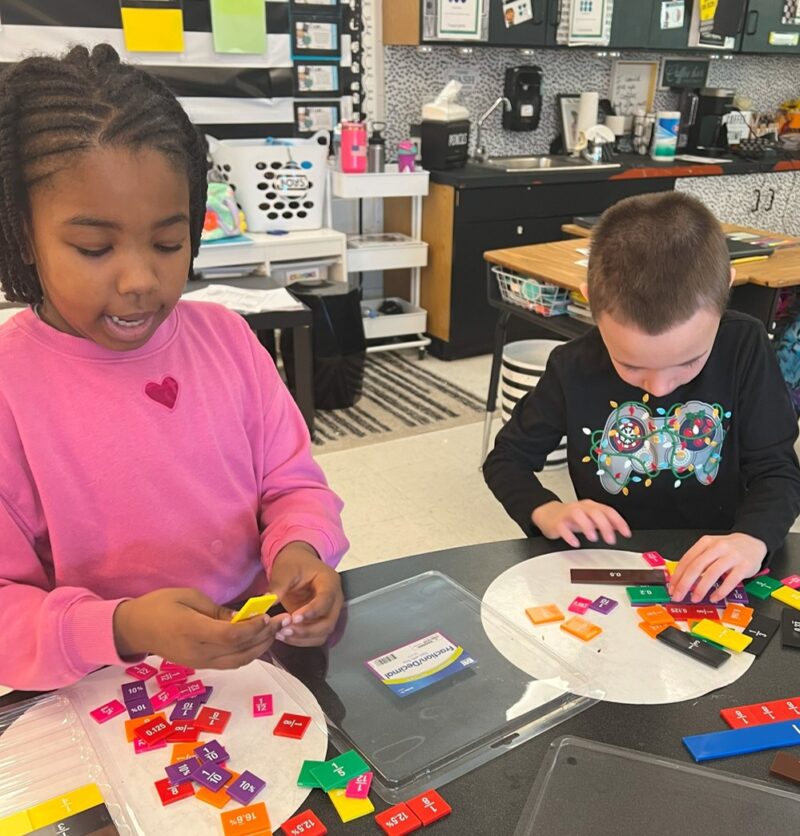
Students may use counters, ten frames, linking cubes, base-ten blocks, number lines, fraction strips, place-value disks, grids, area models, or problem-solving mats.
The tool should help students understand the mathematics, not simply make the lesson hands-on.
Find more ideas in Math Tools Resource Kits.
Move Through Concrete, Representational, and Abstract Thinking
Small group instruction is a natural place to use the CRA progression:
Concrete: Students build the concept with manipulatives or hands-on tools.
Representational: Students draw a model, diagram, number line, sketch, or visual representation.
Abstract: Students connect the model to numbers, equations, symbols, and written explanations.
Students do not always need to begin at the same point. Some may need a concrete model, while others are ready to explain an equation or compare two strategies.
Ask Questions That Reveal Student Thinking
The goal is not only to find out whether an answer is correct. Ask questions that reveal how students approached the problem.
- How did you know?
- What did you try first?
- Can you show that another way?
- What does your model represent?
- Why does that strategy work?
- Where did you get stuck?
- Does your answer make sense?
- What would happen if the numbers changed?
These questions help students explain and justify their reasoning. They also help you determine what support or extension should come next.
Plan for Misconceptions
Before the lesson, consider what students may misunderstand and which model or question could make the concept clearer.
Ask yourself:
- What error might students make?
- What prerequisite skill could be missing?
- What model could reveal the concept?
- What example and nonexample could help?
- What question would uncover their thinking?
Planning for likely misconceptions helps keep the lesson precise and responsive.
Small Group Instruction Within Math Workshop
Small group instruction does not happen in isolation. It depends on the routines happening throughout the rest of the room.
Students need to know how to:
- Get and return materials
- Work with a partner
- Use an appropriate voice level
- Handle questions
- Complete and submit work
- Move to an early finisher task
- Clean up
- Transition to the next station
The stronger these routines become, the more attention you can give to the students at your teacher table.
Use these related posts to strengthen the rest of the math workshop structure:
- What Students Do During Math Workshop
- Five Tips for Managing Math Centers
- Math Rotation Slides and Schedules
- Math Centers and Stations for K–5
- Early Finisher Activities for K–5
For additional standards-based practice, explore these math workstation resources for K–5.
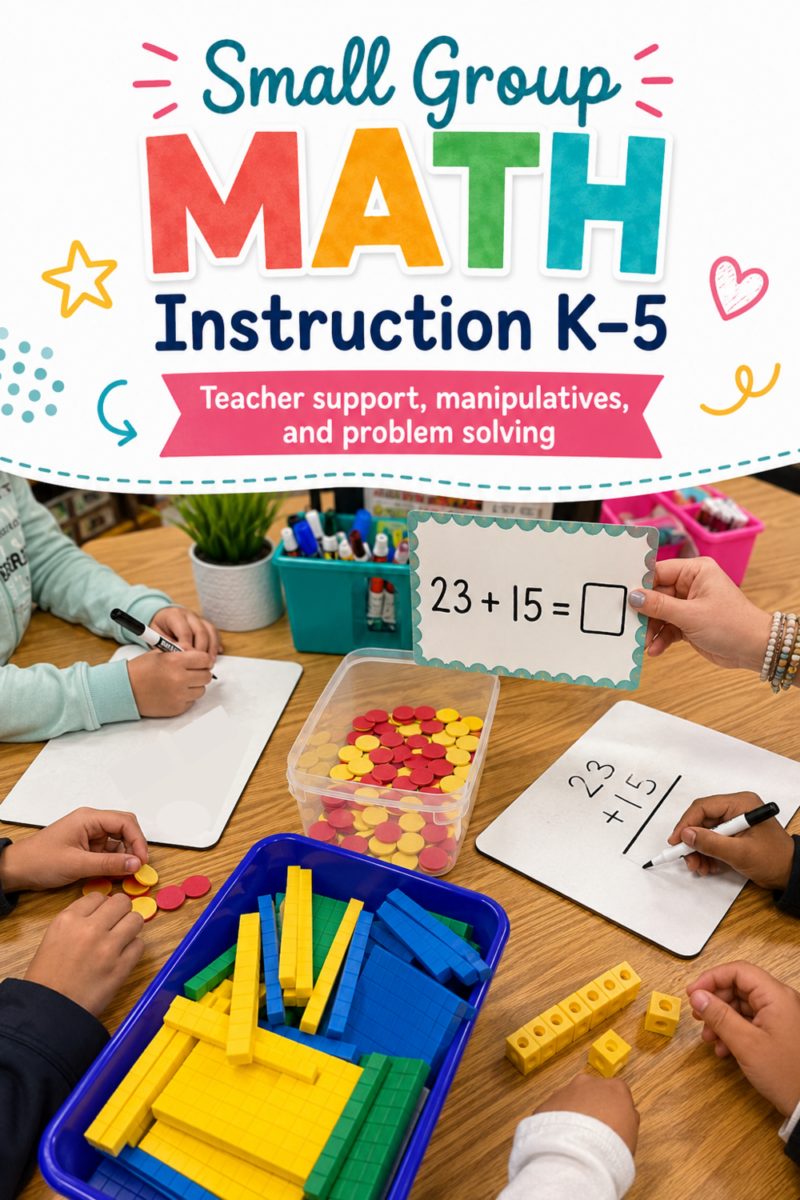
Use Small Groups for Support and Extension
Small group instruction is not only for reteaching.
It can be used to provide intervention, address prerequisite skills, strengthen current learning, or extend students who are ready for a deeper task.
Intervention
Intervention may include:
- Revisiting a prerequisite skill
- Reducing the number size
- Using a more concrete model
- Providing guided practice
- Breaking a problem into smaller steps
- Connecting the skill back to current grade-level learning
Explore additional math intervention and enrichment ideas.
Extension
Extension does not always mean moving students to the next grade-level standard.
Students can deepen their current learning by:
- Solving a problem in more than one way
- Comparing two strategies
- Creating a related problem
- Explaining why a method works
- Analyzing an error
- Justifying a mathematical claim
- Applying the concept in a new context
Small groups make it possible to support and stretch students without requiring everyone to complete the same task.
Common Small Group Math Problems and Simple Fixes
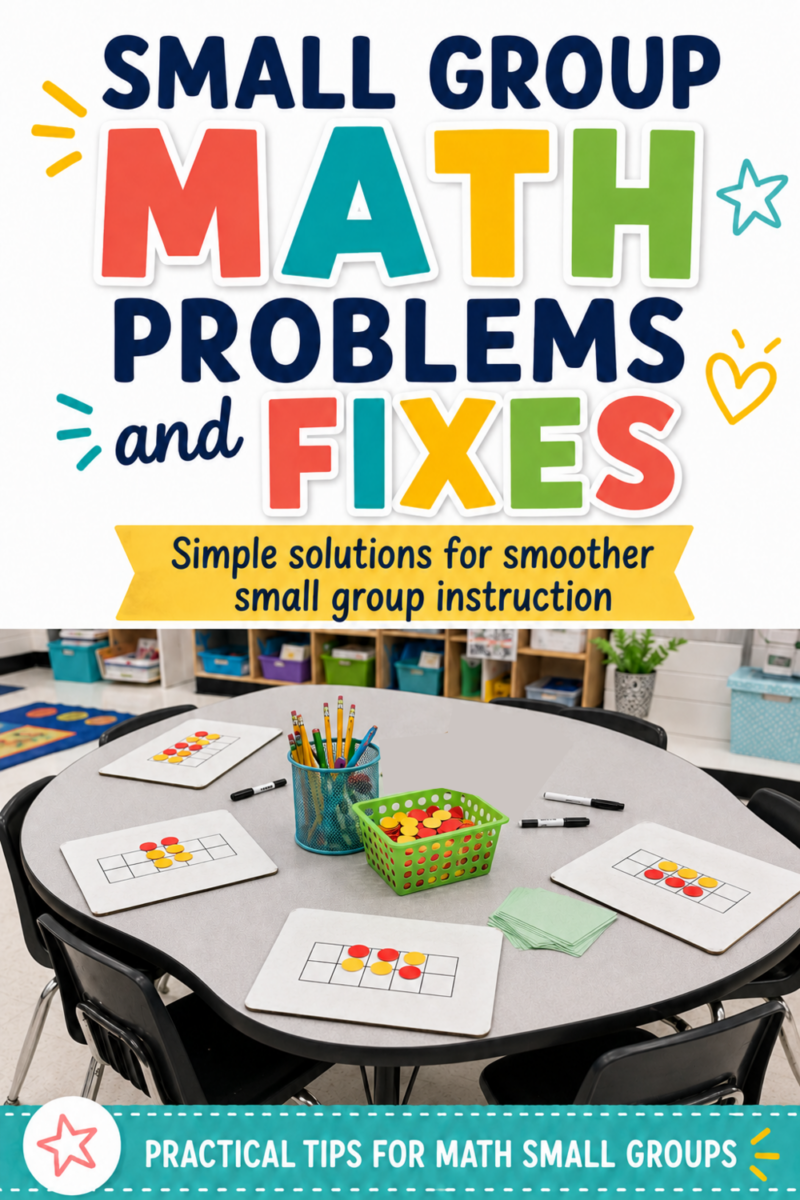
Students Interrupt the Teacher Table
Students may not know what to do when they get stuck. Teach a clear help routine that might include rereading the directions, checking an example, asking a partner, using a math tool, or moving to an approved next task.
Small Groups Take Too Long
The instructional target may be too broad. Choose one strategy, misconception, problem type, or question. Save additional teaching points for another group or another day.
Students Are Off Task During Stations
The station may be too new, too difficult, or unclear. Return to a familiar task format and simplify the directions. Change the math skill inside a known routine rather than continually introducing new activities.
Grouping and Data Feel Overwhelming
Begin with one useful piece of information. A quick check, exit ticket, work sample, or observation can be enough to form a temporary group. Adjust the group as you learn more.
Students Finish at Different Times
Create one clear early finisher routine that students can access without interrupting the teacher table. Keep the choices familiar, purposeful, and easy to begin independently.
Small Group Math Resources by Grade Band
Once the routines are established, the next step is having focused lessons and meaningful practice ready for each part of the math block.
K–2 Total Math
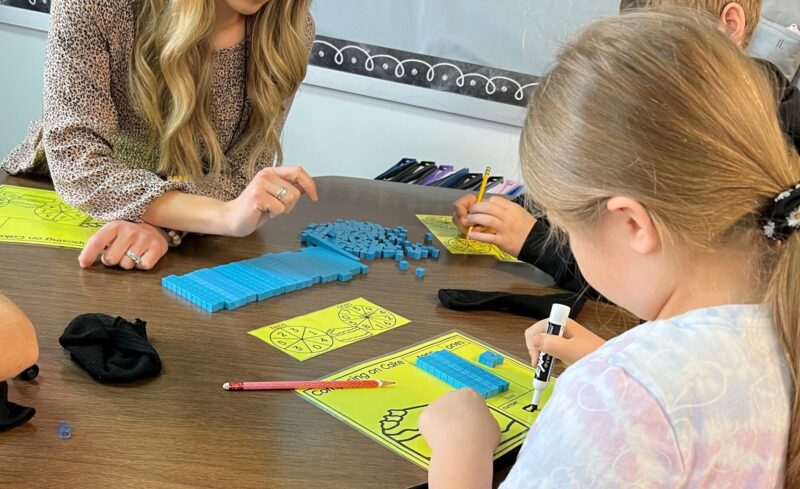
Total Math includes whole-group instruction, differentiated teacher-led small groups, Learning Logs, four daily workstations, technology activities, application practice, vocabulary, and assessments. The small group lessons are connected to the daily math standard but can also supplement another curriculum when students need additional support or differentiation.
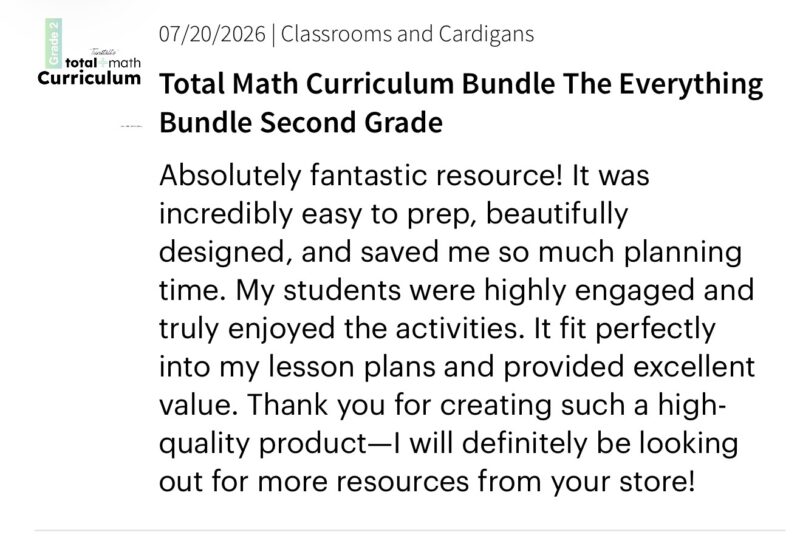
More on what teachers are saying about Total Math.
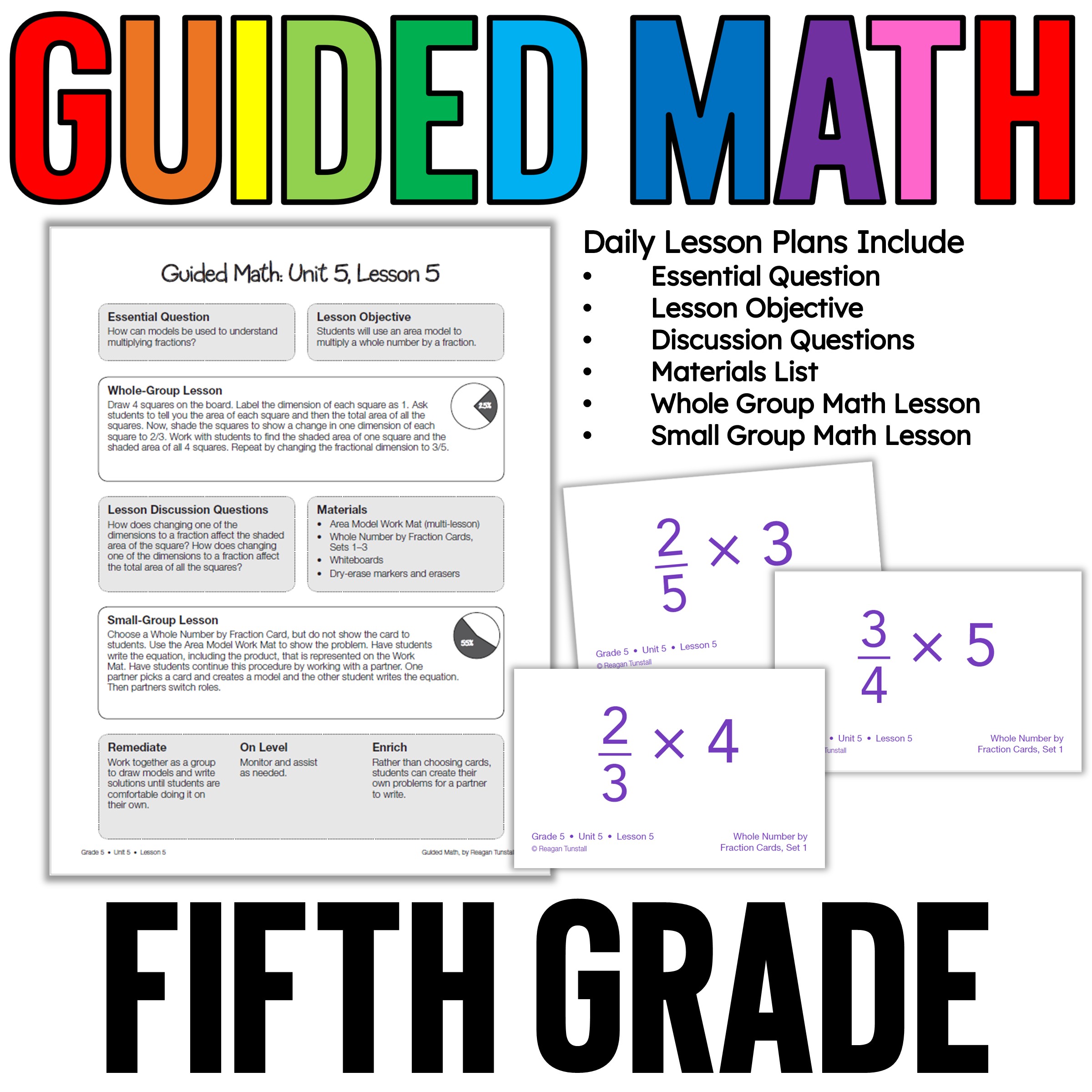
Grades 3–5 Guided Math
Guided Math includes teacher-led small group lessons, Math Journals, application tasks, assessments, and standards-aligned practice. The structure helps teachers target specific skills, respond to misconceptions, extend learning, and provide differentiated support throughout the year.
EXPLORE GRADES 3–5 GUIDED MATH
See Guided Math in Grades 3–5 for a closer look at the upper-elementary structure.
Small Group Math Professional Development
Small group instruction is powerful, but teachers also need practical ways to manage routines, choose focused lesson goals, differentiate instruction, use data, and keep the rest of the class engaged.
K–5 math professional development supports schools and districts with classroom-ready strategies for math workshop, small group instruction, student discourse, problem solving, flexible grouping, and the Teach, Watch, Support framework.
EXPLORE K–5 MATH PROFESSIONAL DEVELOPMENT
Small Group Math Instruction FAQ
What is small group math instruction?
Small group math instruction is teacher-led instruction with a small group of students focused on a specific skill, strategy, concept, or misconception.
How long should small group math instruction be?
Many small group math lessons are about 10 to 15 minutes. The goal is to keep the lesson short, focused, and responsive.
How many students should be in a small math group?
Many teachers use groups of 4 to 6 students, but the group size can change based on the lesson goal and student needs.
What should the rest of the class do during small group math instruction?
Students can work on math stations, journals, hands-on practice, technology, partner games, problem solving, or independent review while the teacher meets with a small group.
How do I group students for small group math?
Use flexible groups based on student work, observations, assessments, exit tickets, math journal responses, or shared misconceptions.