What Students Do During Math Workshop
One of the biggest questions teachers have when setting up math workshop is what students do during math workshop while the teacher meets with small groups.
What are the rest of the students doing while I teach small group?
It is a fair question because small group math instruction only works when students are meaningfully engaged in independent or partner tasks. If the rest of the class is confused, off task, or constantly asking questions, it is nearly impossible to give your teacher table the attention they need.
That is why the activities students do during math workshop matter so much.
The goal is to give students purposeful opportunities to practice, apply, explain, and extend their math thinking while you meet with a small group.
Just as important is making sure students know what to do, can stay engaged, and can work with independence while the teacher meets with a small group.
Math workshop looks different across grade levels, but the core station types can stay the same. What changes is the complexity of the task, the level of student independence, and the type of accountability.
The station routine stays consistent, but the task changes by grade level.
What Is Math Workshop?
Math workshop is the part of the math block where students apply learning through meaningful math tasks while the teacher meets with small groups.
It is not the entire math block. In many classrooms, math workshop happens after a whole group lesson or mini lesson. During this time, students may rotate through different math stations, work with partners, complete math journal tasks, use technology, solve problems, or meet with the teacher.
A strong math workshop includes two important parts:
Students know exactly what to do.
The teacher is free to provide focused small group instruction.
When both of those pieces are in place, math workshop can become one of the most productive parts of the day.
Start with Repeatable Math Workshop Routines
Before deciding what students will do during math workshop, it helps to think about the types of routines you want students to use again and again.
Students do not need a brand new station format every week. In fact, too many new formats can make math workshop harder to manage because students spend more time learning directions than practicing math.
Instead, choose a few consistent station types that students can learn well. Then change the math skill inside those familiar routines.
For example, students might always have a math journal or learning log station, but the skill changes from addition to fractions to geometry. They already understand the routine, so they can focus on the math.
This is what makes math workshop feel smoother over time.
Why Student Tasks Matter During Math Workshop
During math workshop, students rotate through math stations, centers, or workstations while the teacher meets with small groups.
The tasks students complete during math workshop protect your small group time. When students have familiar routines, clear expectations, and meaningful work, they are less likely to interrupt the teacher table and more likely to use their time well.
This is why the goal is not to change every station every week. The goal is to build routines students understand, then change the math skill inside those routines.
Teacher Table
Teacher table is where small group math instruction happens. This is your time to meet with a small group of students for targeted instruction based on their current needs.
At teacher table, students may review a skill from the whole group lesson, practice with math manipulatives or visual models, work through misconceptions, solve problems with teacher support, explain their thinking out loud, build fluency with a specific strategy, or extend learning with a more challenging task.
Teacher table lessons should be short, focused, and responsive. This is not the time to reteach an entire lesson from start to finish. Instead, choose one clear learning goal and use that time to support student understanding.
In K–2, teacher table work often includes concrete models, number sense routines, vocabulary, counting, composing and decomposing numbers, or guided practice with new concepts.
In grades 3–5, teacher table work may include problem solving, written explanations, fraction models, multi-step word problems, strategy comparison, or targeted intervention for prerequisite skills.
The teacher table works best when the rest of the class can work independently. That is why the other math workshop stations need to be simple, familiar, and clearly taught.
Math Journal or Learning Log Station
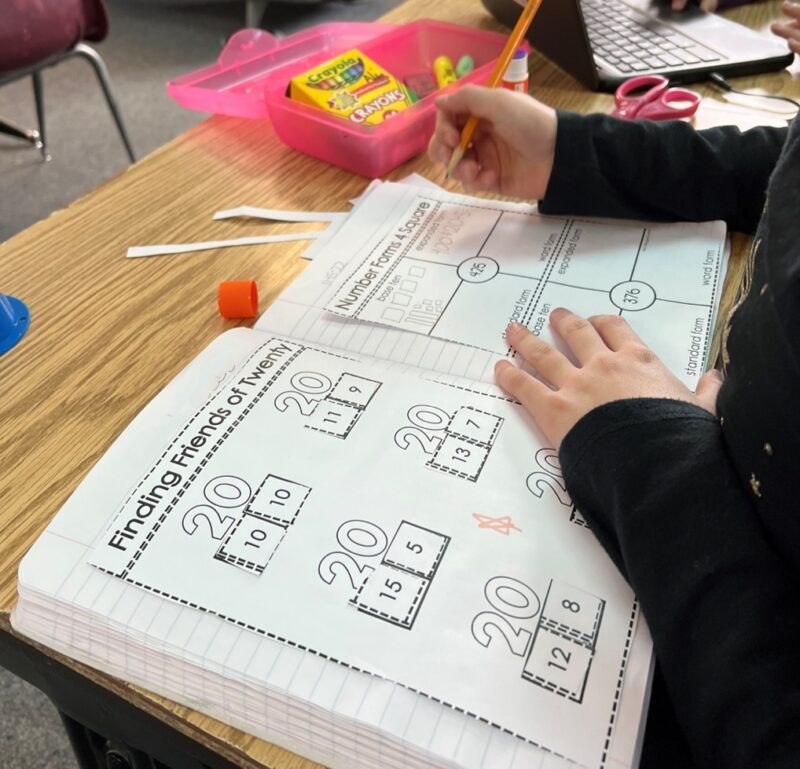
A math journal or learning log station gives students a place to record, explain, and reflect on their math thinking.
This station is powerful because it turns math practice into a written record of learning. Students are not just solving problems. They are showing strategies, organizing ideas, using math vocabulary, and explaining how they know.
In K–2, this station may look like a Learning Log page where students draw, label, model, or complete a simple math response. The goal is to help students show their thinking in a developmentally appropriate way.
In grades 3–5, this may look more like a Math Journal response where students solve a problem, explain a strategy, compare representations, or justify their answer in writing.
The routine stays the same, but the math thinking grows with the grade level.
A math journal or learning log station also creates accountability. When students know their work will be reviewed, discussed, or used later, they are more likely to stay focused and complete the task with care.
Hands-On Math Station
A hands-on math station gives students the opportunity to use math tools, manipulatives, or game-based practice to reinforce current or previously taught skills.
This station is especially helpful because many students need to build math understanding through concrete experiences before moving to abstract symbols.
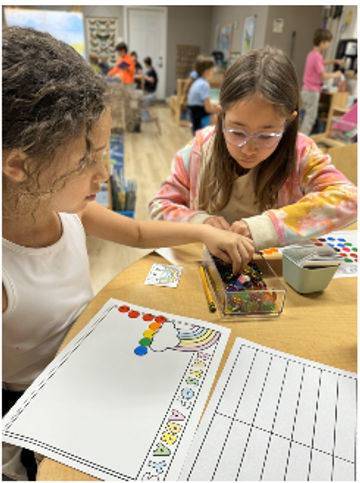
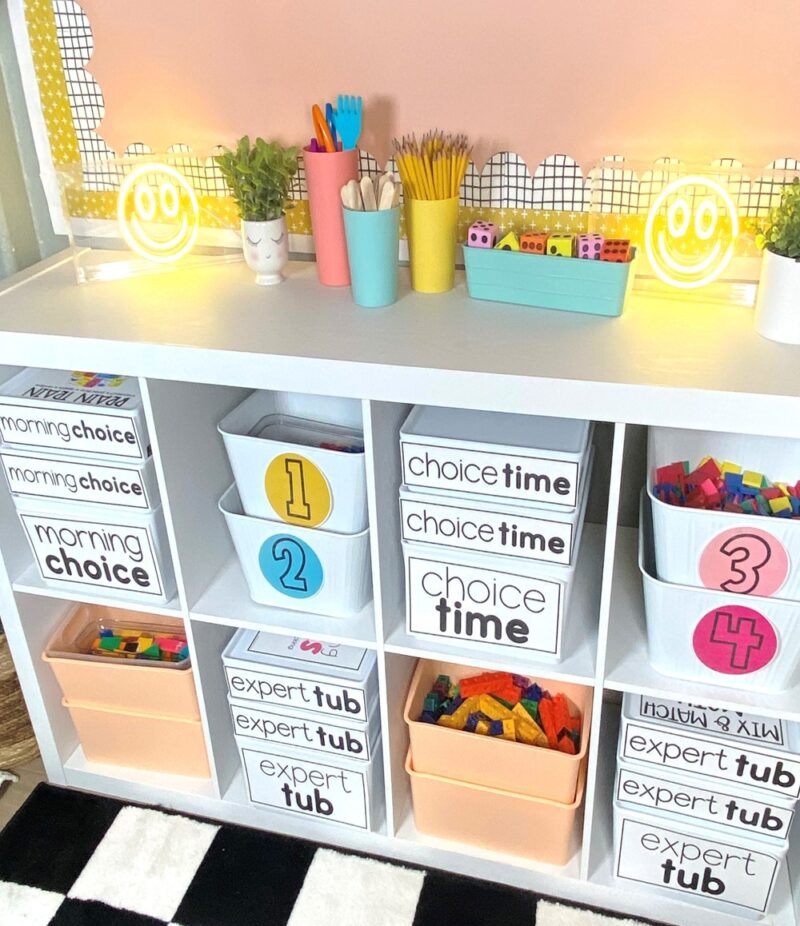
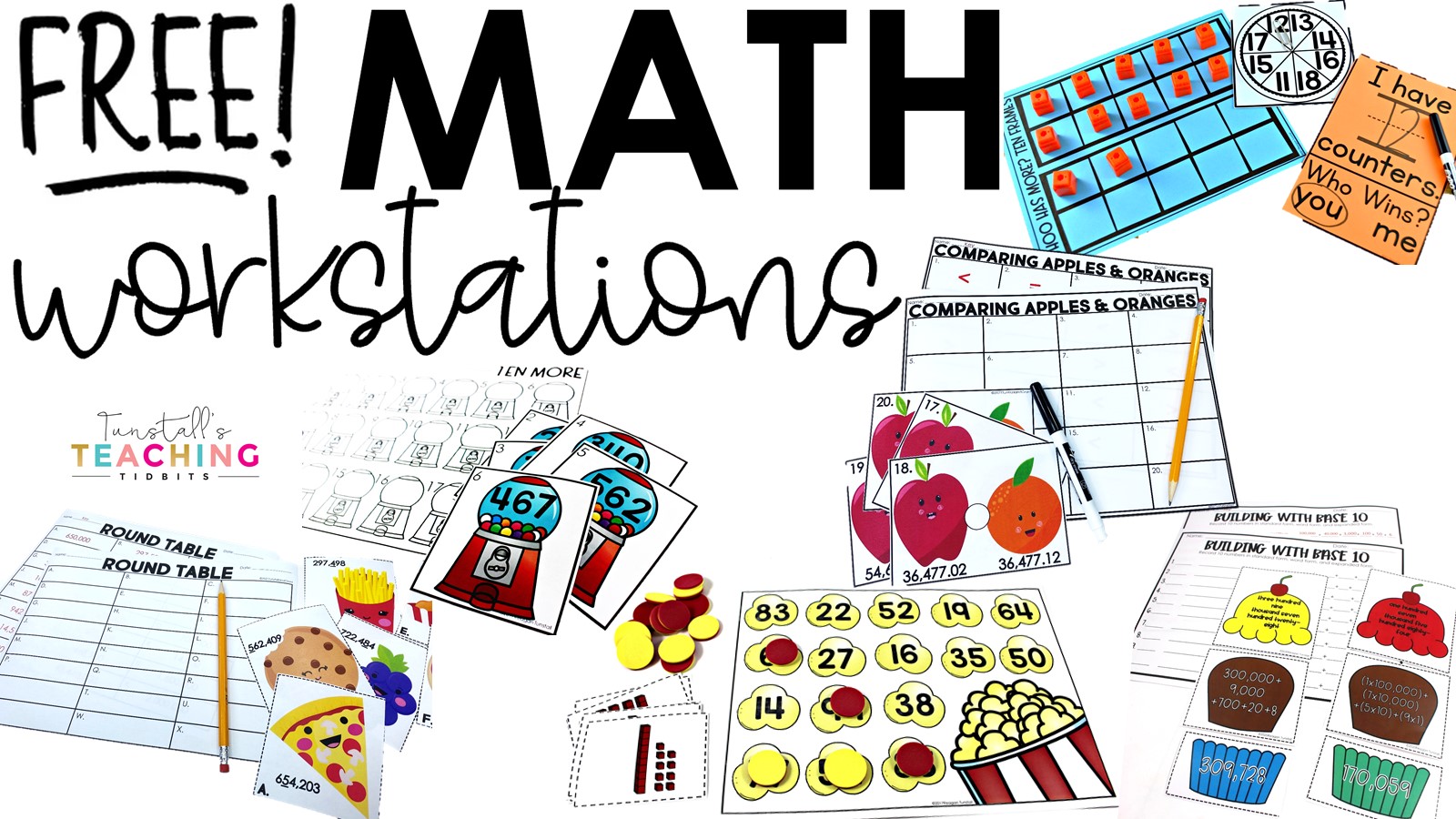
Hands-on math stations may include base ten blocks, pattern blocks, fraction tiles, geoboards, counters, dice, cards, number lines, task cards, partner games, or sorting activities.
The key is to keep the routine predictable. Students should already know how to use the materials, what the task is, how to record their work, and how to clean up.
In K–2, hands-on stations often focus on building concrete understanding with math tools, matching visuals to numbers, sorting, counting, comparing, composing, decomposing, or practicing a familiar skill through a simple partner game. Find Hands-On Math for Kindergarten, First Grade, Second Grade
In grades 3–5, hands-on stations may still use manipulatives, but the task often moves toward representing more complex concepts, modeling fractions, solving multi-step problems, comparing strategies, or applying a skill in a game or task card format. Find Hands-On Math for Third Grade, Fourth Grade, Fifth Grade
The station routine stays consistent, but the level of reasoning increases.
A hands-on station should not require constant teacher directions. If students need you to explain it every time, it is not independent enough for math workshop yet.
This is why familiar formats work so well. Once students know how to play a game or use a task structure, you can change the numbers, skill, or problem type without reteaching the entire activity.
Technology Station
A technology station can be a helpful part of math workshop when it is purposeful and easy for students to manage independently.
Technology should not just be screen time. It should support math practice, fluency, review, or application in a way that helps students stay engaged while you work with a small group.
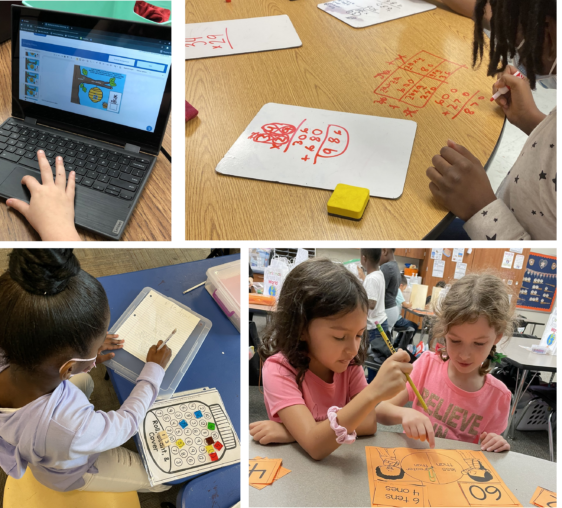
During a technology station, students might practice math facts, complete assigned digital math activities, use interactive skill practice, play standards-aligned math games, review previously taught skills, or complete adaptive practice.
The most important part of a technology station is predictability. Students need to know which site or activity to open, how to log in, what to do if something does not work, what volume level to use, and what to do when they finish.
In K–2, technology may include simple, visual, skill-based practice that students can complete with minimal reading and clear routines. Find Math on Technology for Kindergarten, First Grade, and Second Grade.
In grades 3–5, technology may include more independent review, multi-step practice, digital task cards, fluency work, or assigned activities connected to current standards.
If technology creates more interruptions than independence, simplify it. Start with one familiar platform or activity before adding choices.
Application Station
An application station gives students a chance to use math in context. This is where students move beyond basic practice and apply their understanding to a task, problem, or real-world situation.
Application tasks are valuable because they help students connect skills to meaning.
At an application station, students might solve word problems, use math mats, match models to equations, sort examples and nonexamples, build or represent a problem, work through a skill-based challenge, or apply a strategy from the lesson.
This station can be simple, but it should require thinking. Students should have to make decisions, choose strategies, explain reasoning, or show their work.
In K–2, application may look like building a story problem with manipulatives, drawing a picture, matching a model to a number sentence, or using a simple math mat to show understanding. Find application pages for Kindergarten, First Grade, and Second Grade.
In grades 3–5, application may include multi-step word problems, measurement tasks, fraction models, graph interpretation, skill-based challenges, or written explanations. Find application pages for Third Grade, Fourth Grade, and Fifth Grade.
The station routine stays consistent, but the task becomes more complex as students grow.
Problem Solving Station
A problem solving station is one of the best ways to build perseverance, reasoning, and mathematical discussion during math workshop.
This station gives students time to work through a task that may have more than one strategy, representation, or solution path.
Students might solve a multi-step word problem, work with a partner to compare strategies, use a problem solving mat, draw a model, write an equation, explain whether an answer makes sense, create a similar problem, or analyze an error.
Problem solving stations help students move from “I got the answer” to “I can explain my thinking.”
In K–2, problem solving may include acting out a story problem, using objects to build the problem, making a sketch, or sharing a simple explanation with a partner.
In grades 3–5, problem solving may include multi-step tasks, strategy comparison, written justification, model analysis, and deeper mathematical reasoning.
To keep this station manageable, use a familiar problem solving routine. Students should know the steps they are expected to follow, such as reading the problem, identifying what they know, choosing a strategy, solving, and explaining their answer.
The more familiar the routine, the more students can focus on the math.
Early Finisher Choices
Even with well-planned stations, students will not all finish at the same time. That is why every math workshop needs a clear early finisher routine.
Without one, students often interrupt the teacher table with the familiar question:
“I’m done. What can I do?”
An early finisher routine gives students a productive next step without needing to ask the teacher.
Early finisher choices might include math fact practice, math vocabulary review, math journal extensions, strategy practice, math games, problem solving cards, task card review, independent skill practice, or “I’m done” choice boards.
The best early finisher choices are meaningful, familiar, and easy to access. Students should not need new directions. They should know exactly where to go, what to choose, and how to work independently.
In K–2, early finisher choices may need more visual support and fewer options. In grades 3–5, students may be ready for more independent choice, written response, review tasks, or problem solving extensions.
This routine helps protect your small group time and keeps math workshop running smoothly.
Accountability During Math Workshop
Math workshop should feel engaging, but it also needs accountability. Students need to understand that their station work matters.
Accountability does not have to mean grading every single page or checking every single answer. It simply means students are responsible for completing meaningful work and showing their thinking.
Accountability might look like recording sheets, math journal entries, partner check-ins, exit slips, turn-in baskets, student reflection, quick teacher review, sharing strategies after rotations, or checking work at a station.
In K–2, accountability may be a simple drawing, recording sheet, completed math mat, or partner share.
In grades 3–5, accountability may include written explanations, math journal responses, strategy comparisons, completed task cards, reflection prompts, or problem solving work.
One simple way to build accountability is to end math workshop with a quick reflection. Ask students:
- What strategy did you use today?
- What was easy?
- What was tricky?
- What did you do when you got stuck?
- What math vocabulary did you use?
- What helped you stay focused?
These questions help students see math workshop as more than a rotation system. It becomes a time for practice, thinking, independence, and growth.
Keep Math Workshop Simple at First
Math workshop does not have to look exactly the same in every classroom. Some teachers use rotations. Others use a must-do and may-do format. Some meet with one or two small groups each day while students complete independent or partner tasks. The best structure is the one that gives students meaningful math practice while protecting your small group instruction time.
This is where math rotation slides and schedules can be especially helpful. They give students a visual reference for where to go and what to do, which reduces repeated questions and helps transitions run more smoothly.
For more help planning the flow of your math block, you can read more about math rotation slides and schedules for small group instruction. This will help you think through rotation options, timing, and ways to organize students during math workshop.
Resources to Support Math Workshop
Once students understand the routines, the next step is having consistent, purposeful tasks ready for each part of math workshop.
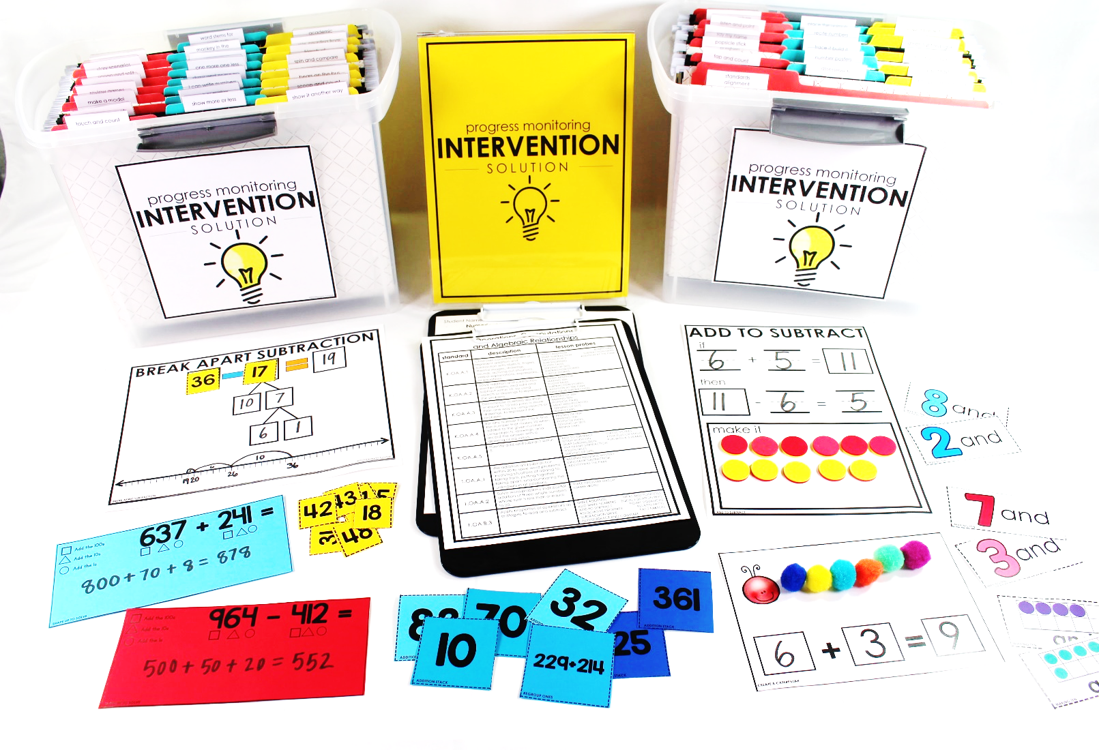
For K–2 classrooms, Total Math includes whole group lessons, teacher-led small groups, Learning Logs, workstations, technology activities, application practice, vocabulary, and assessments. These components work together to support a complete math block while helping students build independence through familiar routines.
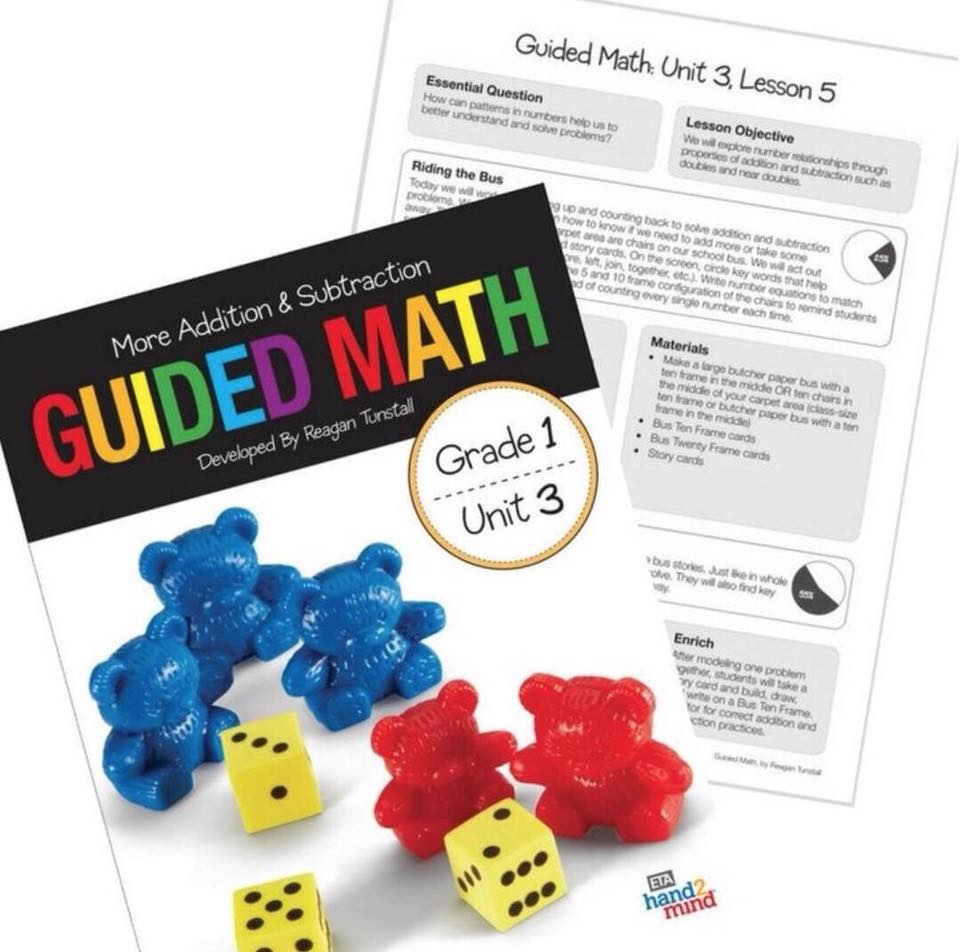
For grades 3–5 classrooms, Guided Math includes teacher-led small group lessons, math journals, application tasks, assessments, and standards-aligned practice to support a complete math workshop structure. These resources help students practice, apply, and explain their math thinking while the teacher works with small groups.
Whether you teach primary or upper elementary, the goal is the same: use consistent routines and meaningful tasks so students know what to do during math workshop.
Need Help Launching Math Workshop?
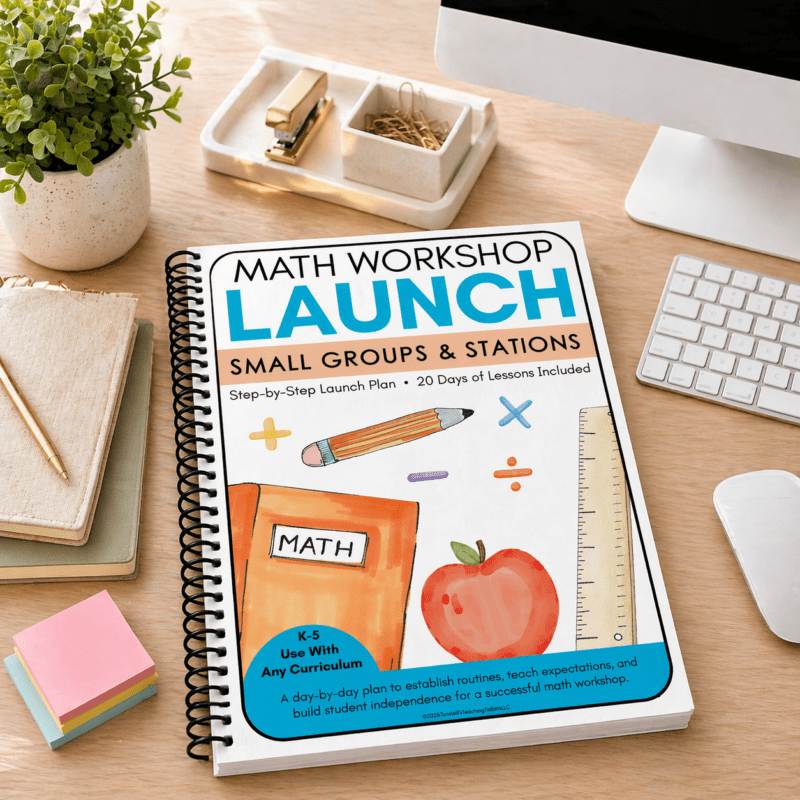
If you are ready to set up math workshop routines that actually work, grab the free Math Workshop Launch Guide.
This free guide walks you through a step-by-step launch plan for teaching expectations, building independence, practicing routines, and helping students succeed during small group math instruction.
Final Thoughts
What students do during math workshop matters.
When students have purposeful, familiar, and independent tasks, the teacher can focus on small group instruction without constant interruptions. Students get meaningful practice, build confidence, and learn how to take ownership of their math work.
A strong math workshop does not happen because every activity is new or exciting. It happens because routines are clear, expectations are taught, and students know how to stay engaged in meaningful math tasks.
Start simple. Teach the routines. Build independence. Then let your math workshop grow from there.

Contact Us