 Contact
Math Vocabulary Cards and Word Wall Ideas for K to 5 Classrooms
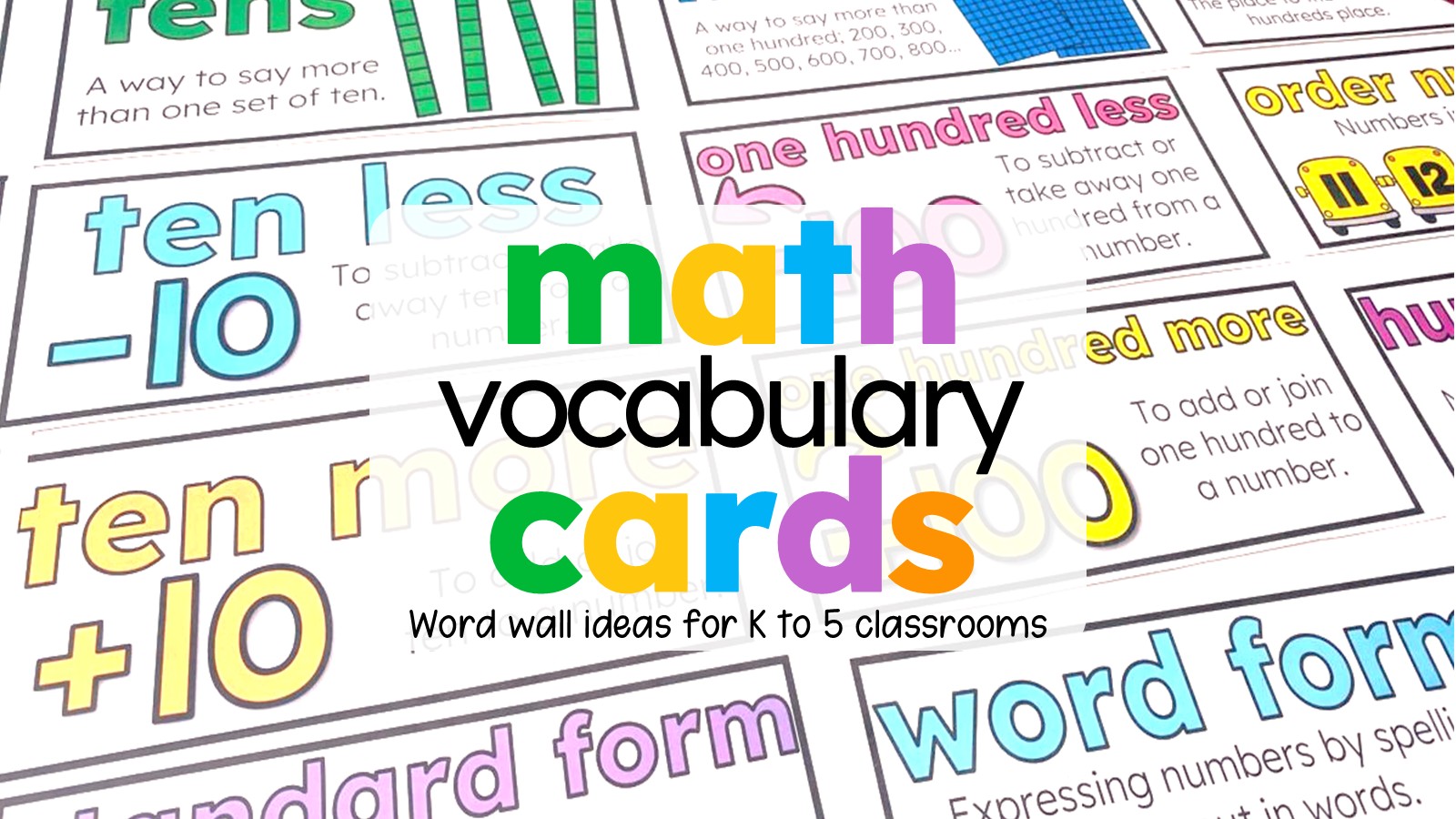
Math vocabulary cards are a simple way to support the language students need during math instruction. Students hear, see, read, and use math words every day, but they often need visual support to connect those words to models, tools, and concepts.
A math word wall gives students a place to look when they are learning new concepts, explaining their thinking, writing in math journals, or working independently. When vocabulary is displayed clearly and used often, math words become part of the classroom routine instead of something students only hear once during a lesson.
In this post, we will look at ways to use math vocabulary cards in kindergarten through fifth grade classrooms. These ideas work well for math word walls, focus walls, small group lessons, teaching rings, math workshop, and back to school classroom setup.
Why Math Vocabulary Matters in the Math Classroom
Math vocabulary helps students name what they are learning. When students understand words like equal, compare, compose, decompose, fraction, product, perimeter, and estimate, they are better able to explain their thinking and connect math ideas.
Without strong math language, students may know how to solve a problem but struggle to explain what they did. They may recognize a model but not have the words to describe it. They may understand a concept during a lesson but lose the connection later when they see the word again.
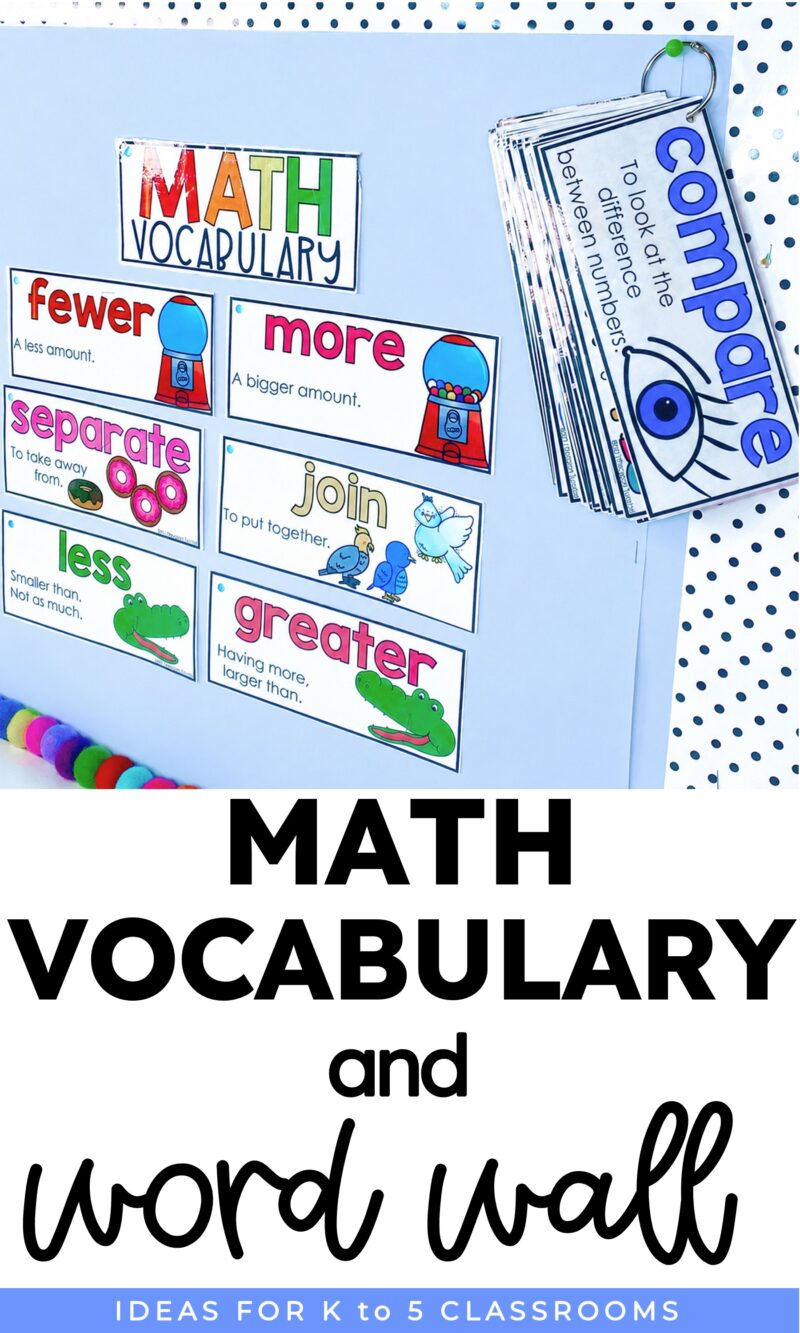
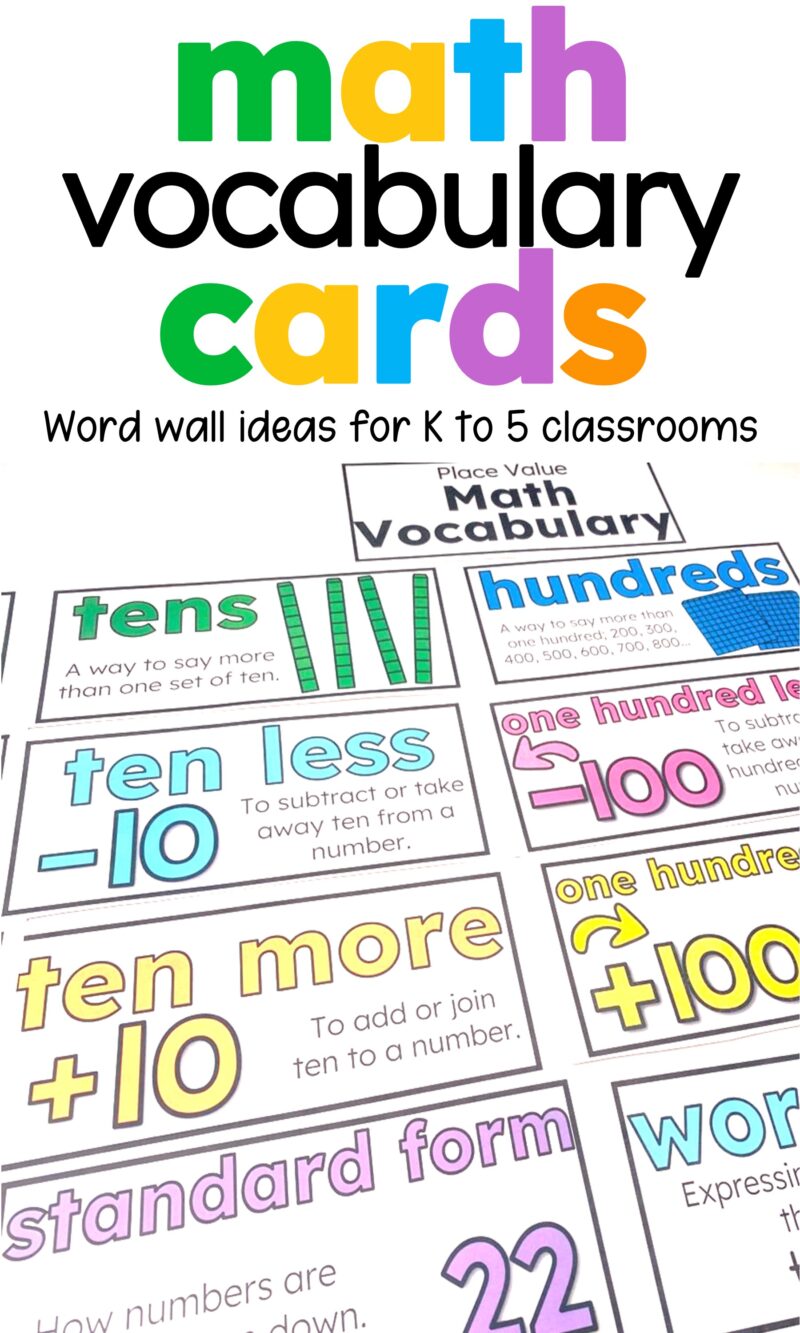
This is why visual math vocabulary support matters. A math vocabulary word wall gives students a consistent reference point. The word, definition, and visual model work together to support understanding.
Math vocabulary cards are especially helpful during whole group lessons, math talks, problem solving, student explanations, math journals, small group instruction, math stations, review, and intervention.
When students can see and use math vocabulary often, the words become part of their everyday math thinking.
Try a Free Math Vocabulary Card Sample for Grades K-2 and for Grades 3-5
Want to see how math vocabulary cards can support your math block? You can try a free math vocabulary card sample for grades K to 2 and a free math vocabulary card sample for grades 3 to 5.
These free samples are a simple way to introduce important math language during the beginning of the year, math workshop, small group lessons, classroom discussions, or a math focus wall. You can display the cards on a word wall, keep them on a ring, or use them as a quick teaching reference during mini lessons.
The K to 2 sample supports early math language students use during routines, lessons, and hands-on learning. These cards help young learners connect math words to classroom expectations, visual examples, and student-friendly language.
The grades 3 to 5 sample gives upper elementary students visual support for the math words they use during problem solving, guided math, journals, learning logs, and written explanations. These cards help students connect vocabulary to deeper math concepts and use more precise language when sharing their thinking.
Use the free samples to see how math vocabulary cards can help students connect math words to visuals, routines, and real math understanding.
Try the Free K to 2 Math Vocabulary Cards
Try the Free Grades 3 to 5 Math Vocabulary Cards
Math Vocabulary Cards as Visual Supports
Math vocabulary cards are more than a classroom display. A strong vocabulary card gives students a visual support they can use throughout the year.
The best math vocabulary cards include a clear word, a student friendly explanation, and a visual that connects to the concept. This helps students see the meaning of the word instead of only memorizing a definition.
For example, a student may hear the word compose during a lesson. When the card shows the word, a clear meaning, and a visual model, the student can connect the language to the action of putting parts together. That visual support makes the vocabulary easier to understand and easier to use.
Math vocabulary cards can support:
- new unit vocabulary
- math word walls
- focus walls
- small group lessons
- teaching rings
- math journals
- student explanations
- review activities
- intervention groups
- back to school classroom setup
The goal is not to cover every wall with words. The goal is to create vocabulary support students can actually use.
Math Word Wall Ideas for Elementary Classrooms
A math word wall can be a useful classroom tool when it is organized in a way students can understand and use.
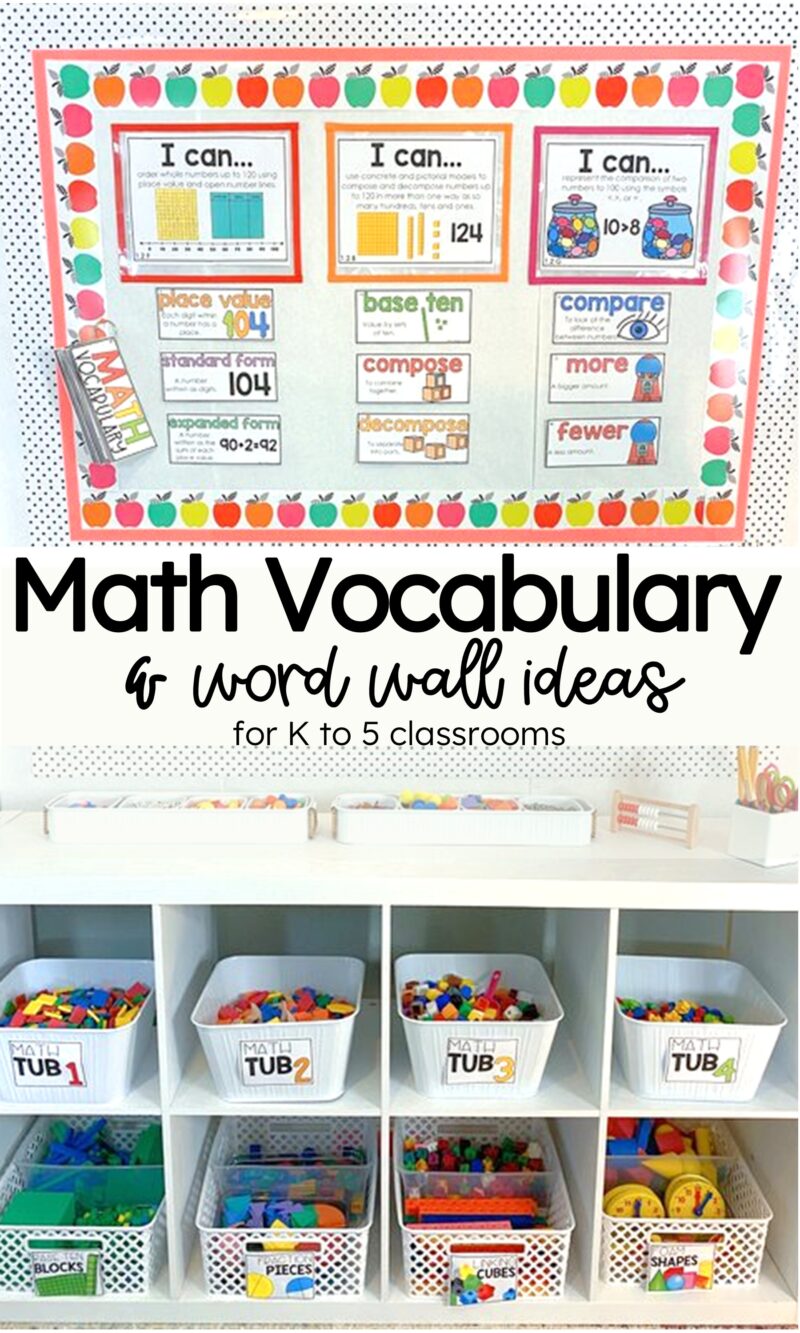
You can organize a math word wall by unit, math strand, or current focus. Personally, I have found that a math focus wall is easiest to maintain through the year and stays unit focused. The best choice depends on your space, your grade level, and how you want students to use the display.
A unit based math word wall works well when you want students to focus on the current topic. For example, during a fractions unit, the wall may include words like numerator, denominator, equal parts, fraction, equivalent, whole, and compare.
A strand based math word wall works well when you want vocabulary available all year. You might have sections for number sense, operations, geometry, measurement, data, and algebraic thinking.
A math focus wall works well when space is limited. You can display only the words students need for the current lessons and change them throughout the year. Take a look at this math tools area that features a math focus wall.
You can also place math vocabulary cards on a ring for teacher table lessons, small group instruction, or quick review. This makes the cards easy to use even if you do not have a large display space.
The most important thing is that the word wall stays useful. Students should be able to find words, connect them to visuals, and use them during math conversations.
How to Use Math Vocabulary Cards During Your Math Block
Math vocabulary is most powerful when students interact with it. Students opportunities to hear the word, say the word, read the word, and use the word while doing math.
Here are simple ways to make math vocabulary cards part of your math block.
Introduce vocabulary during the lesson
Before beginning a new concept, introduce the key math words students will hear during the lesson. Keep the introduction short and visual. Show the word, connect it to a model, and use it in a sentence.
For example, during a place value lesson, students may need words like tens, ones, digit, number, value, and compose. Displaying those words gives students support as they build, draw, and explain numbers.
Refer to vocabulary during math warm-ups
Math Warm-Ups are a natural place to use math vocabulary. As students explain their thinking, point to vocabulary cards that match their strategies, models, or ideas.
This helps students connect their own math thinking to precise math language.
Use vocabulary during small group instruction
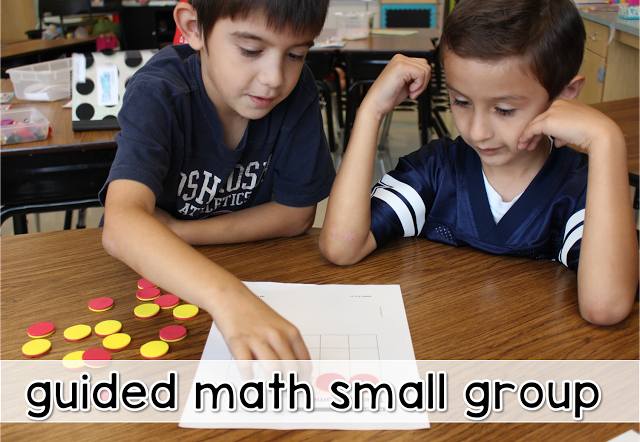
Small group instruction is a perfect time to revisit math vocabulary. Students often need repeated exposure to words before they can use them independently.
At the teacher table, you can quickly review a word, connect it to a model, and have students use the word while explaining their work.
Add vocabulary to math journals
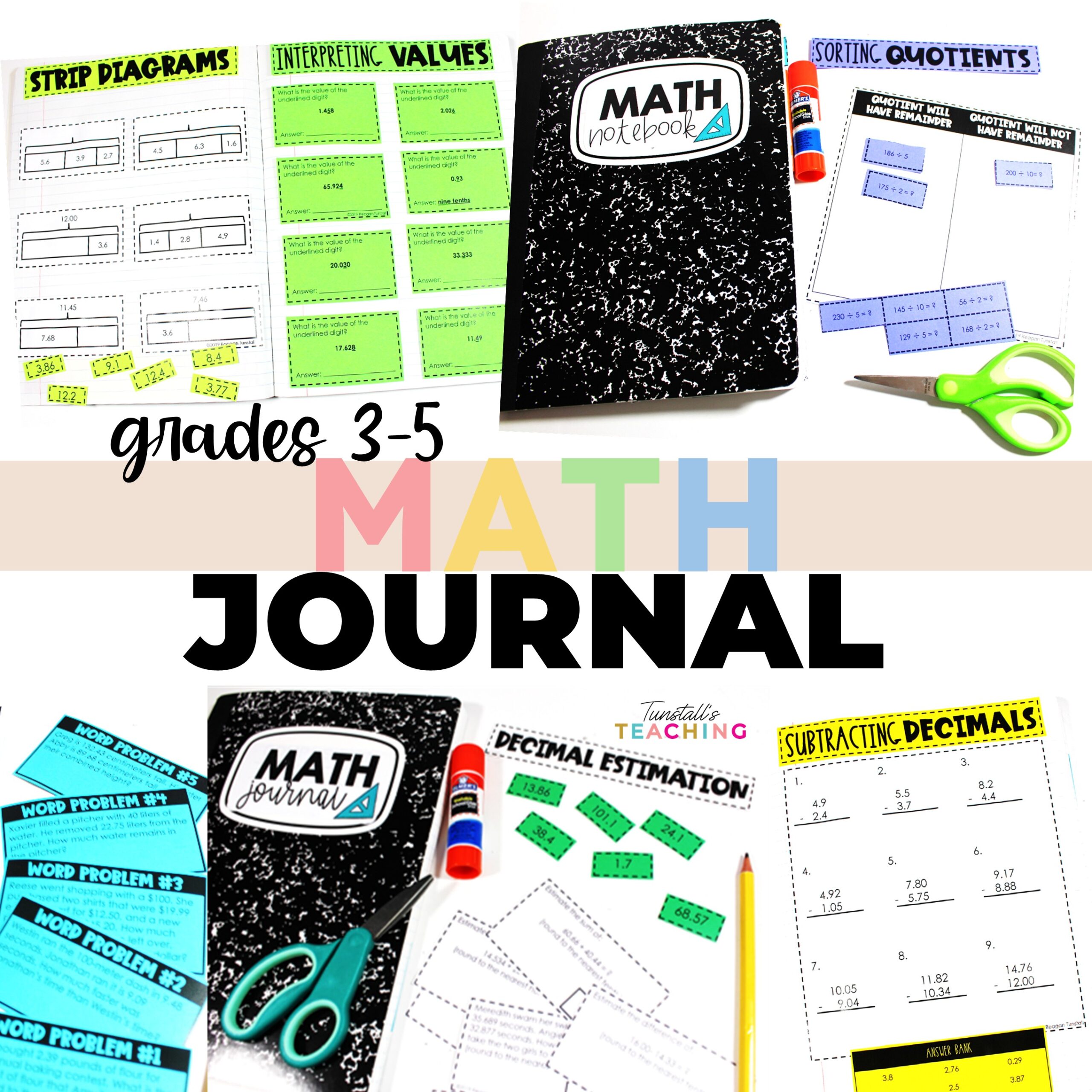
Math journals give students a place to use vocabulary in writing. Students can label models, write math sentences, explain strategies, or complete sentence frames using math words. These posts can help provide a clear understanding of how we use math journals for grades K-2 and grades 3-5 in a math workshop.
This makes vocabulary part of student thinking instead of a separate activity.
Math vocabulary cards also pair well with math notes and anchor charts. When students have vocabulary displayed on a word wall and also record key concepts in a math notebook, they have two helpful reference points. The word wall supports the whole class, while math notes and anchor charts give students a personal place to review vocabulary, models, and examples. You can read more about how math notes and anchor charts support math learning in this post: Five Reasons Math Notes and Anchor Charts Benefit Math Learning.
Keep vocabulary visible during math stations
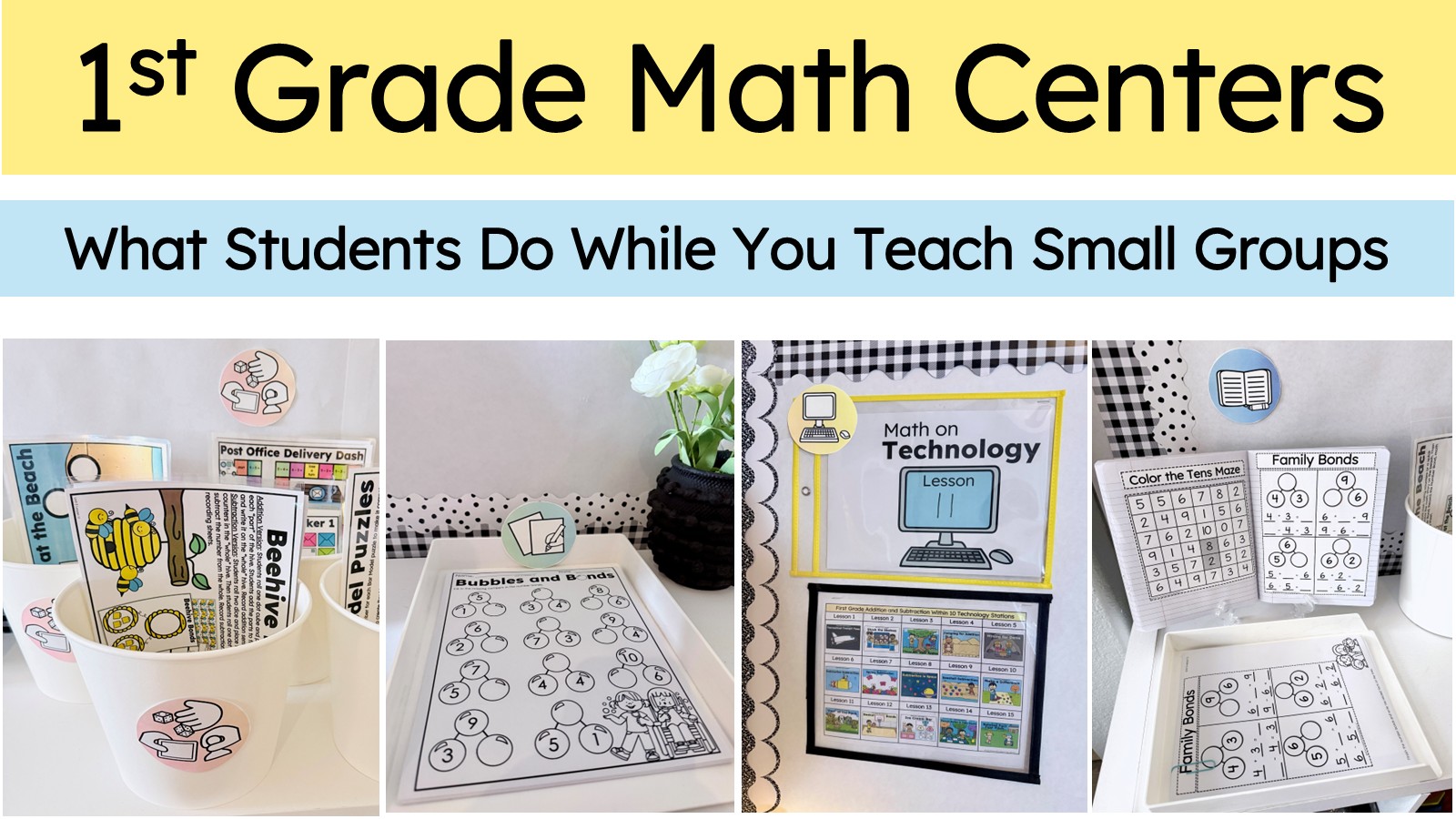
During math stations or math workshop, students often work more independently. A visible math word wall or vocabulary ring gives them a support they can use without needing to stop and ask for help.
This is especially helpful during problem solving, partner work, and written response activities.
Math Vocabulary Cards for Kindergarten, First Grade, and Second Grade
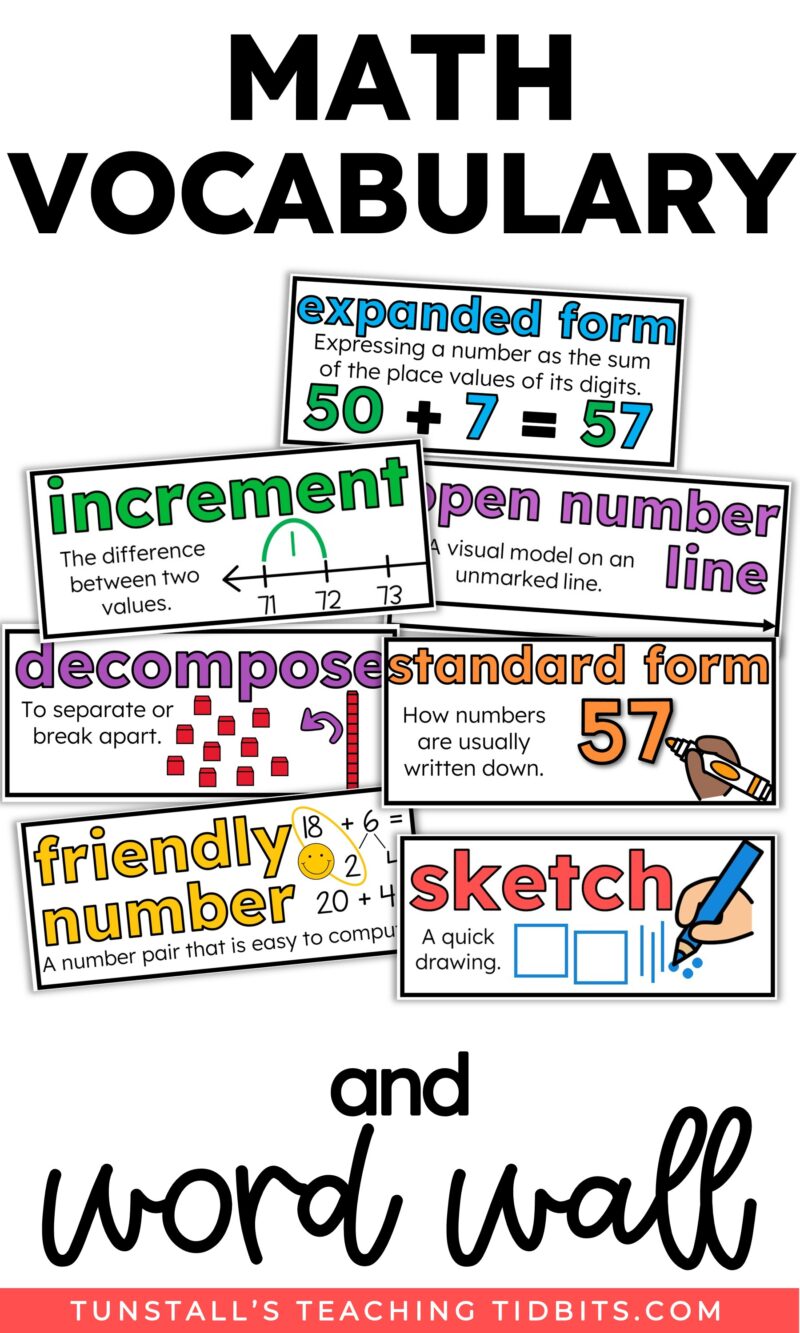
In the primary grades, math vocabulary should be visual, concrete, and connected to what students are doing with tools and models.
Kindergarten, first grade, and second grade students need repeated experiences with words through counting, comparing, sorting, building, drawing, composing, decomposing, adding, subtracting, measuring, and describing shapes.
Math vocabulary in K to 2 should support words students use during daily routines and hands on lessons.
Some important K to 2 vocabulary areas include:
- number sense words
- counting words
- comparing words
- addition and subtraction words
- place value words
- measurement words
- geometry words
- data and graphing words
- time and money words
This is where visual math vocabulary cards are especially helpful. Young students may not remember a definition alone, but they can use a picture, model, or example to make sense of the word.
These ready-to-use- math teaching slides are designed to boost student engagement through visual and conceptual learning, aligning with key math standards across different states.
For a complete K to 2 math structure, Total Math for Kindergarten, First Grade, and second grade, provides math lessons, vocabulary, routines, stations, and practice that support conceptual understanding across the year.
Math Vocabulary Cards for Third, Fourth, and Fifth Grade
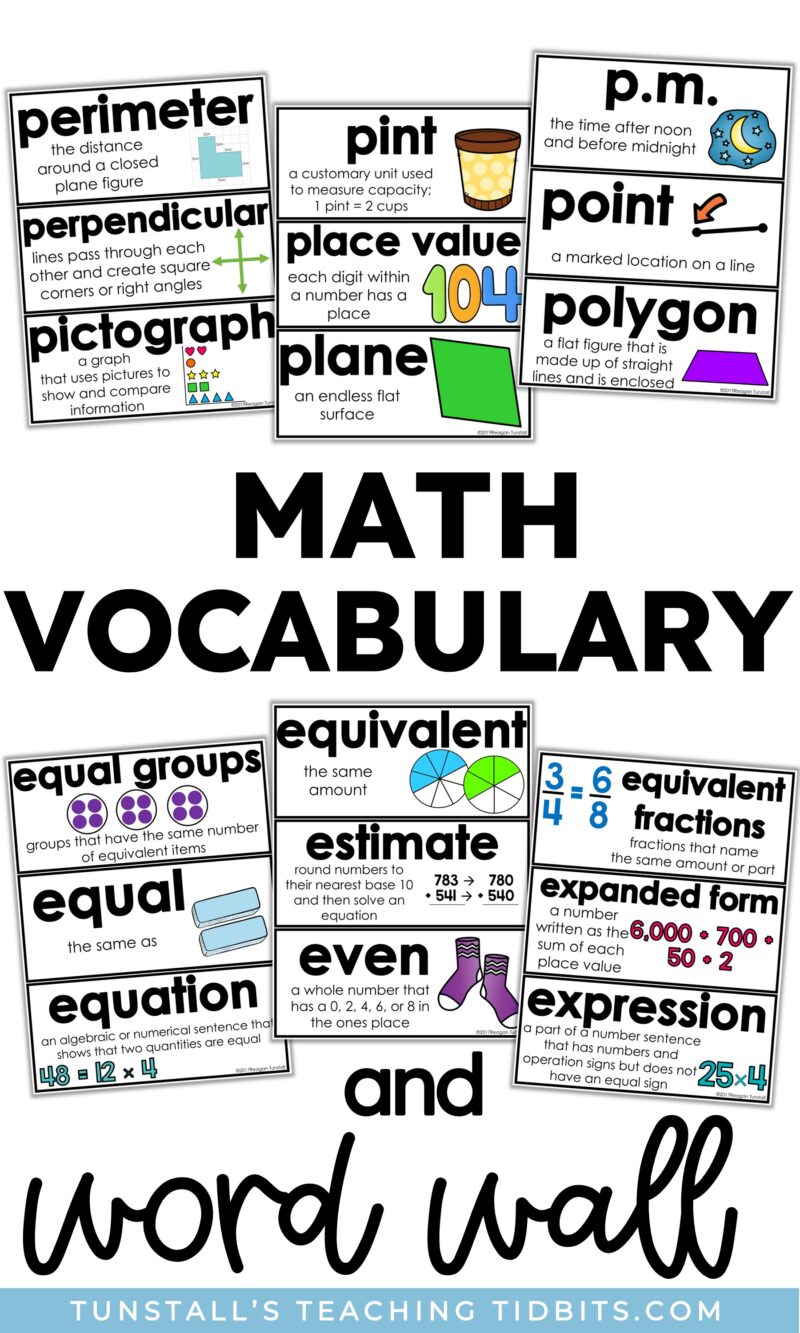
In third, fourth, and fifth grade, math vocabulary becomes even more important because students are working with more complex concepts and multi step thinking.
Upper elementary students need vocabulary support for explaining strategies, comparing models, solving word problems, and writing about math. They also need language for fractions, decimals, multiplication, division, geometry, measurement, data, and algebraic thinking.
At this level, students may be able to read a math word but still not understand what it means in context. A word like factor, quotient, equivalent, expression, variable, perimeter, or volume carries important conceptual meaning.
Math vocabulary cards give students a consistent reference while they are solving and explaining.
In grades 3 to 5, vocabulary cards can support:
- math workshop
- guided math groups
- problem solving
- math journals
- learning logs
- test review
- partner discussions
- unit vocabulary
- written explanations
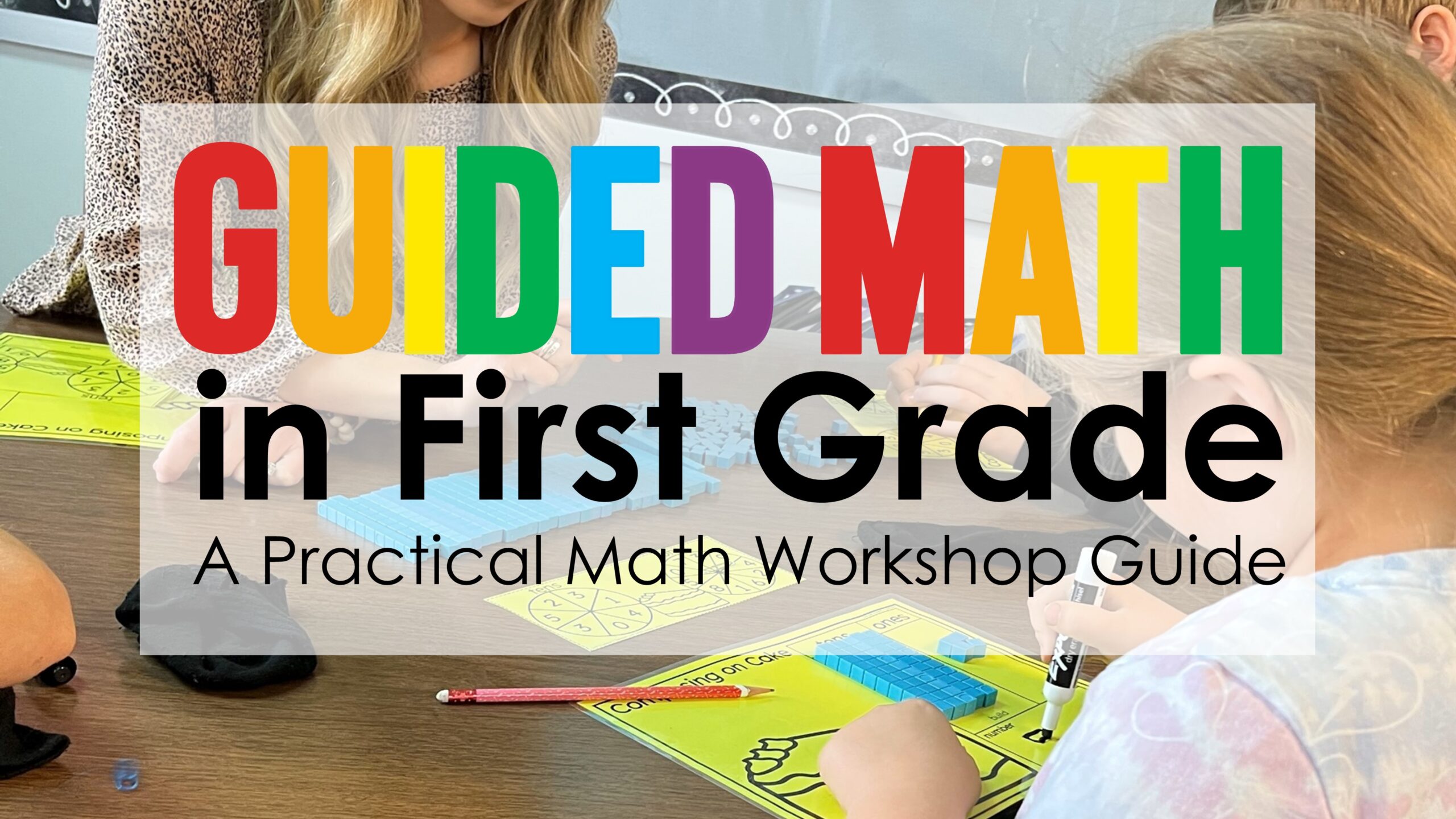
You can also use vocabulary cards alongside teaching slides, small group instruction, and guided math routines. When students hear the word during a lesson, see it in a visual display, and use it in their explanations, vocabulary becomes part of their math understanding.
For upper elementary math support, vocabulary works best when it is connected to the routines students already use during instruction. If you are building or refreshing your math block, the Math Workshop Launch Guide is a helpful place to begin. You can also connect vocabulary to deeper grade-level instruction through 3rd Grade Guided Math, 4th Grade Guided Math, and 5th Grade Guided Math. For whole group lessons and daily concept support, the 3 to 5 Math Teaching Slides provide another way to keep math language visible and connected to the skills students are learning.
Math Focus Wall Ideas
A math focus wall is a simple way to highlight the vocabulary students need right now. Instead of displaying every vocabulary card at once, you can choose a small set of words that match your current lessons.
This works well because students are more likely to use the words when the display feels connected to what they are learning.
A math focus wall might include:
- current unit vocabulary
- models or examples
- math tools
- strategy language
- sentence frames
- problem solving words
- review words from past units
For example, during a geometry unit, your focus wall might include words like polygon, side, vertex, angle, parallel, perpendicular, and quadrilateral. During a multiplication unit, you might display words like factor, product, array, equal groups, multiple, and equation.
A focus wall can be large or small. You can use a bulletin board, pocket chart, magnetic board, tabletop stand, or a small ring of cards at your teacher table.
Easy Math Vocabulary Activities
Math vocabulary activities do not have to take a lot of extra time. You can build them into the routines you already use.
Here are simple ways to help students use math vocabulary during instruction.
Word and model match
Give students a vocabulary word and have them match it to a model, picture, or example. This works well for geometry, place value, fractions, measurement, and operations.
Turn and talk with a math word
Ask students to use a specific math word while explaining their thinking to a partner. This supports oral language and math reasoning at the same time.
Vocabulary in math journals
Have students choose a word, draw a model, and write a sentence using the word. For younger students, sentence frames can help make this activity more accessible.
Find the word in the lesson
Before a lesson, choose one or two vocabulary words for students to listen for. When the word comes up, pause and connect it to the model or problem.
Use vocabulary during problem solving
After students solve a problem, ask them to explain their work using at least one math vocabulary word. This helps connect vocabulary to reasoning.
Keep cards on a teaching ring
Place the vocabulary cards on a ring and keep them at your small group table. This makes it easy to review words, introduce new vocabulary, or revisit key terms during intervention and guided math groups.
These simple routines make math vocabulary part of the lesson instead of a separate task.
Shop Math Vocabulary Cards and Word Wall Resources
If you want ready to use math vocabulary cards for your classroom, I have vocabulary resources for kindergarten through fifth grade.
These resources are designed to support math language with clear vocabulary cards, student friendly explanations, and visuals that help students connect words to concepts.
You can use them for math word walls, focus walls, bulletin boards, small group instruction, teaching rings, unit vocabulary, math journals, and back to school classroom setup.
K to 2 Math Vocabulary Cards
Use these math vocabulary cards to support early math language in kindergarten, first grade, and second grade. We have also linked other subject area vocabulary cards below!
- Shop Kindergarten Math Vocabulary Cards
- Shop First Grade Math Vocabulary Cards
- Shop Second Grade Math Vocabulary Cards
- K-2 Grade Band Vocabulary Cards (Older)
- Try the Free K to 2 Math Vocabulary Sample
- Shop Literacy Vocabulary Cards for K-2
- Shop Monthly Seasonal Vocabulary Cards for K-2
- Shop Science Vocabulary Cards for K-2
- Shop Social Studies Vocabulary Cards for K-2
- Shop the money saving bundle of All Vocabulary Cards for K-2
3 to 5 Math Vocabulary Cards
Use these math vocabulary cards to support upper elementary math language, problem solving, student explanations, and written responses. We have also linked other subject area vocabulary cards below!
- Shop Third Grade Math Vocabulary Cards
- Shop Fourth Grade Math Vocabulary Cards
- Shop Fifth Grade Math Vocabulary Cards
- Try the Free Sample for Grades 3 to 5
- Shop 3-5 Literacy Vocabulary Cards
- Shop 3-5 Science Vocabulary Cards
Math Alphabet Posters
Use these posters for an A to Z math vocabulary display that supports classroom decor and math language all year.
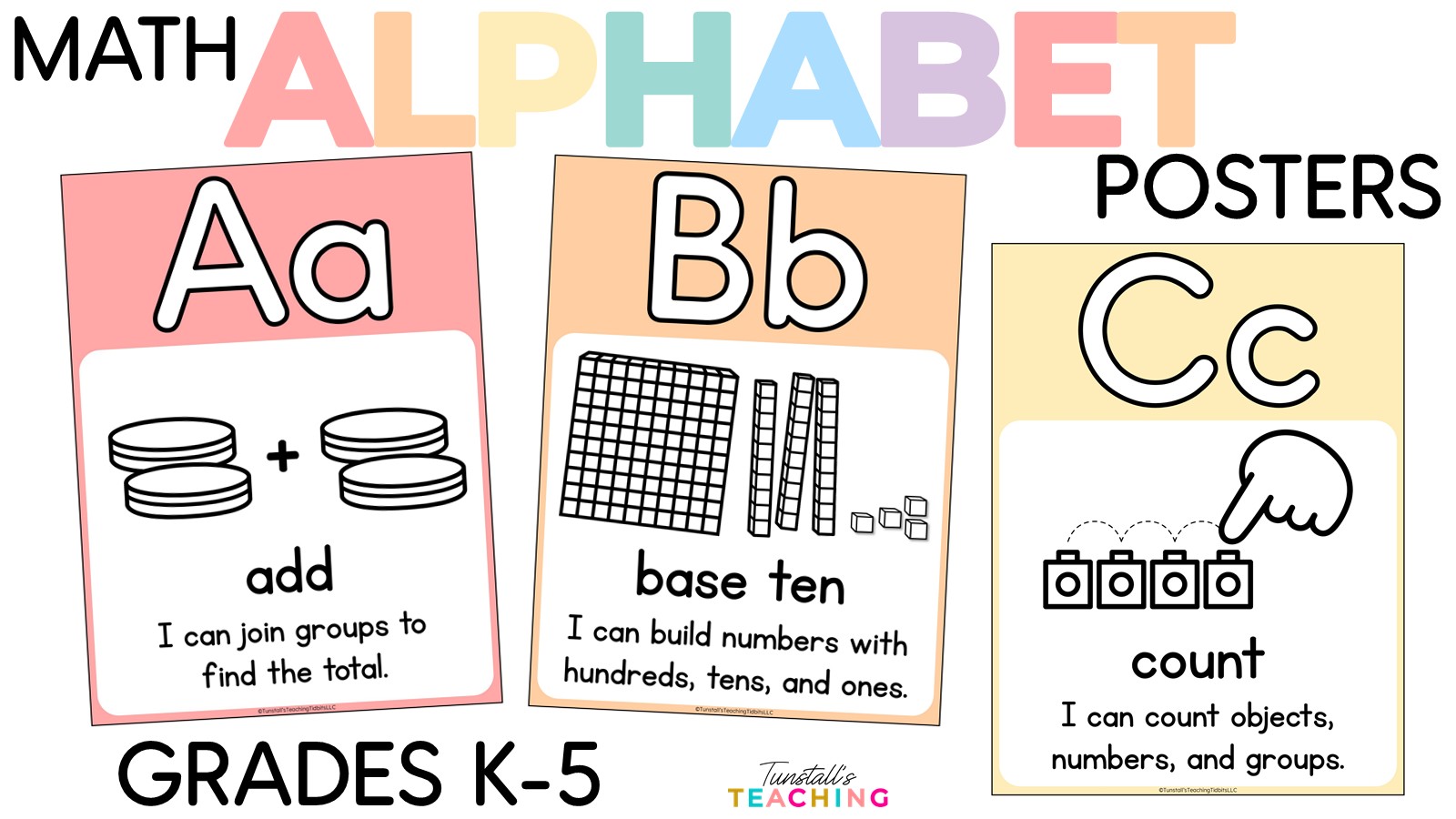
Math Alphabet Posters for Classroom Vocabulary Support
Math Alphabet Posters are another way to support math language in the classroom. While math vocabulary cards are usually connected to grade level skills and units, math alphabet posters give students a broad A to Z math vocabulary display.
These posters work well for classroom decor, but they also serve an instructional purpose. They expose students to math language throughout the year and create a classroom environment where math words are visible and meaningful.
Math Alphabet Posters are especially helpful for back to school setup because they add a math focused display that can stay up all year. They can be used on a bulletin board, above cabinets, along a wall, or in a math area of the classroom.
You can use Math Alphabet Posters alongside your grade level math vocabulary cards. The alphabet posters create a broad math language display, while the grade level vocabulary cards provide targeted support for the specific skills students are learning.
The Language of Math
Math vocabulary is not just something students memorize. It is the language students need to understand concepts, explain thinking, and participate in math conversations.
When math vocabulary is visible, visual, and connected to instruction, students have support they can use throughout the day. Whether you use a math word wall, focus wall, teaching ring, vocabulary cards, math alphabet posters, or simple vocabulary routines, the goal is the same.
Students need math words they can understand, use, and connect to real math thinking.
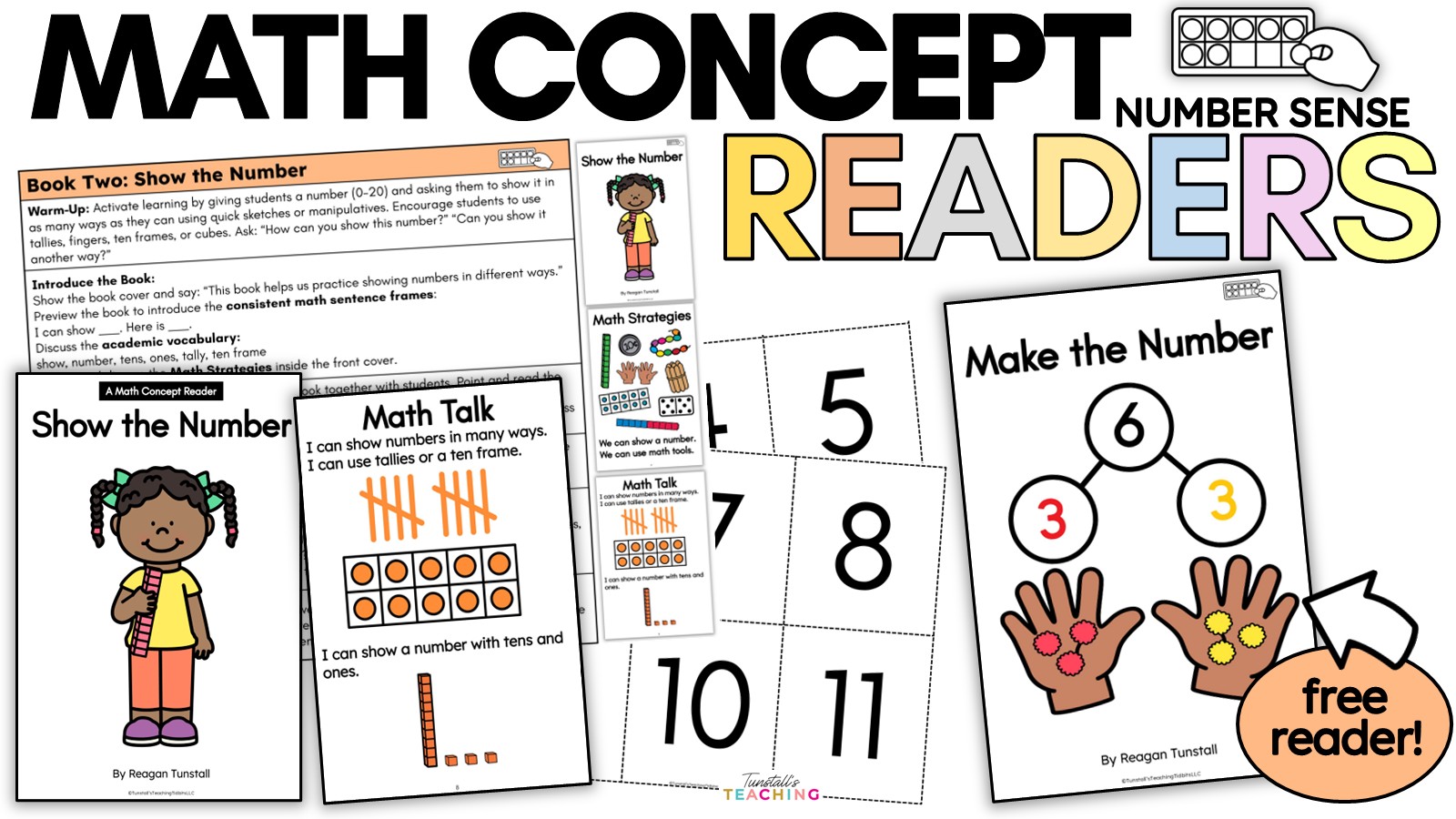
Math Concept Readers also support math vocabulary because students see math words connected to visuals, models, and consistent concept language. This helps students build meaning in a way that feels connected to instruction.