 Contact
Back to School Math Lessons for Grades 3-5: Free Guided Math Lessons to Start Strong
If you have ever wondered, “What should I teach during the first days of upper elementary math?” these free Guided Math lessons were created to help. Students may be older and more independent, but they still need time to learn routines, build confidence, talk about math, use tools, and understand what meaningful math work looks like in your classroom.
The free grades 3 to 5 Guided Math lesson samples give you a ready-to-use starting point for your math block. You can use them to introduce your math structure, observe student thinking, begin small group routines, and help students settle into the expectations of math workshop.
Ready to plan your first upper elementary math lessons?
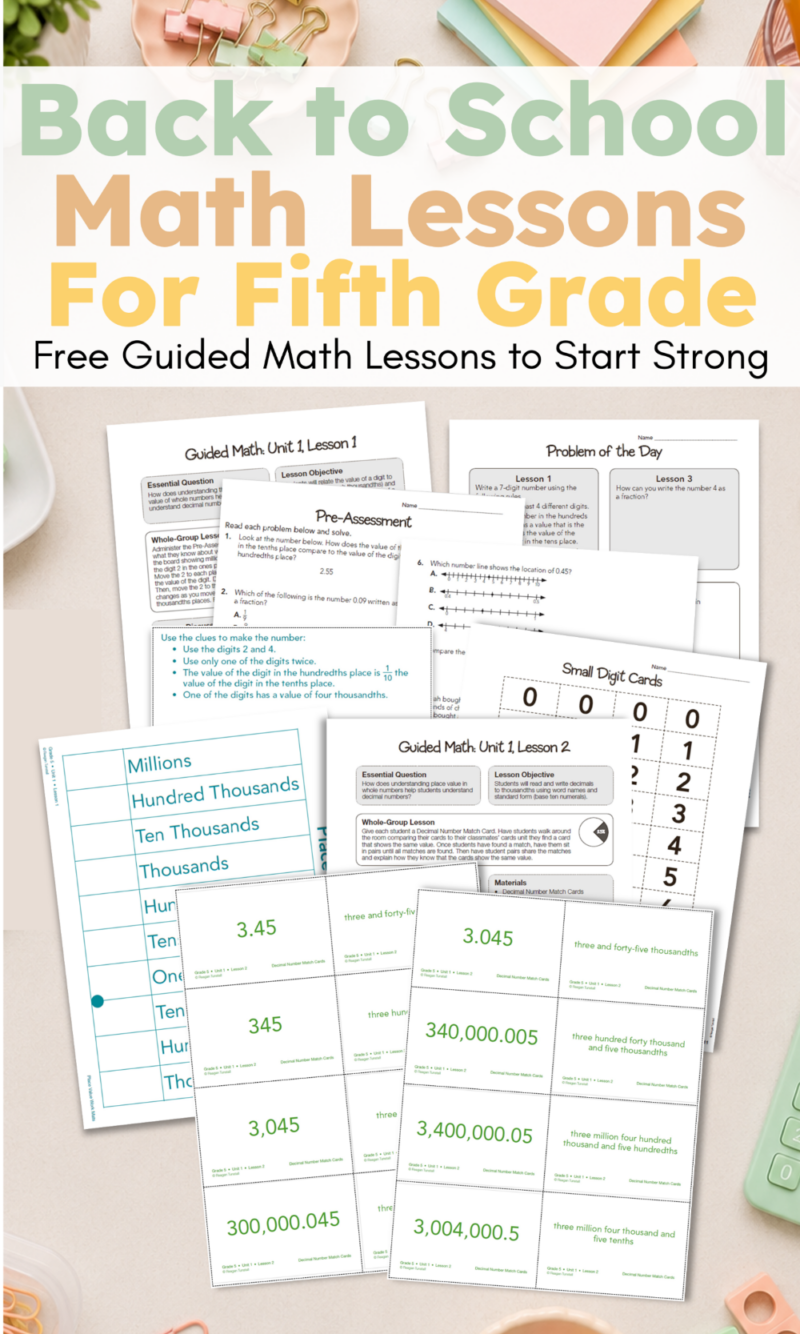
Choose your grade level and download a free Guided Math sample with lesson plans, whole-group and small-group instruction, student materials, and a problem of the day.
Back to School Math Lessons for Upper Elementary
The beginning of the year is not just about reviewing math skills. It is also about helping students understand how they will participate as mathematicians.
In grades 3–5, students are ready for deeper conversations, multiple strategies, written explanations, partner discussion, and more independent work. But those routines do not happen automatically. We have to teach them.
During the first days of math, students need opportunities to practice:
- communicating mathematical ideas
- explaining strategies clearly
- listening to the reasoning of others
- using tools and models with purpose
- working independently during math workshop
- transitioning into small groups and stations
- showing their thinking with numbers, words, and models
These routines make the rest of the year more successful. When students know what math time should look and sound like, you can spend more time teaching and less time managing.
Learn More About Guided Math for Your Grade Level
If you want a closer look at how Guided Math works in your specific grade level, I have a dedicated post for each upper elementary grade. Each post walks through the full-year Guided Math structure for that grade level, including the math units, lesson components, small group support, student materials, assessments, and how the Guided Math lessons can pair with the corresponding teaching slides.
Choose your grade level below:
These grade-level posts are helpful if you want to see how the full Guided Math year is organized beyond the free sample lessons.
Why Guided Math Works in Grades 3–5
Upper elementary math brings a new level of complexity. Students are working with multi-digit operations, fractions, decimals, geometry, measurement, data, and problem solving. These concepts require more than one way of thinking and often more than one way of teaching.
A Guided Math structure helps you keep the math block organized while still meeting students where they are. You can begin together with a focused lesson, then use small group instruction to support, reteach, or extend learning based on what students need.
This structure also helps students become more independent. They learn how to participate in a mini lesson, move into small group or partner work, use materials responsibly, and show their thinking in a way that makes sense.
For teachers, Guided Math helps bring together the pieces of the math block:
- whole-group instruction
- teacher-led small groups
- student math materials
- independent or partner practice
- math conversations
- assessment and data
- review and application
The result is a math block that feels more intentional and easier to manage.
What Is Included in the Free Grades 3 to 5 Guided Math Sample?
The free sample lessons give you a look at how Guided Math can support your upper elementary math block.
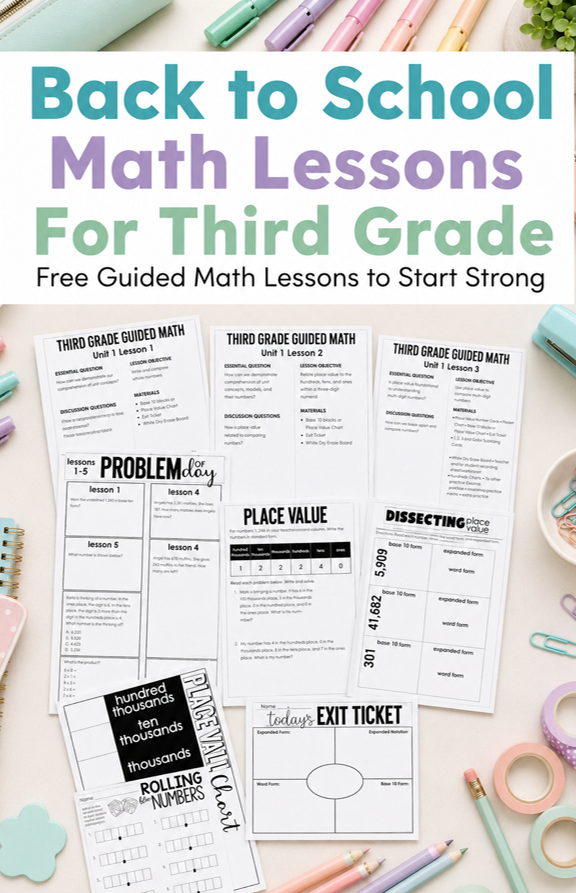
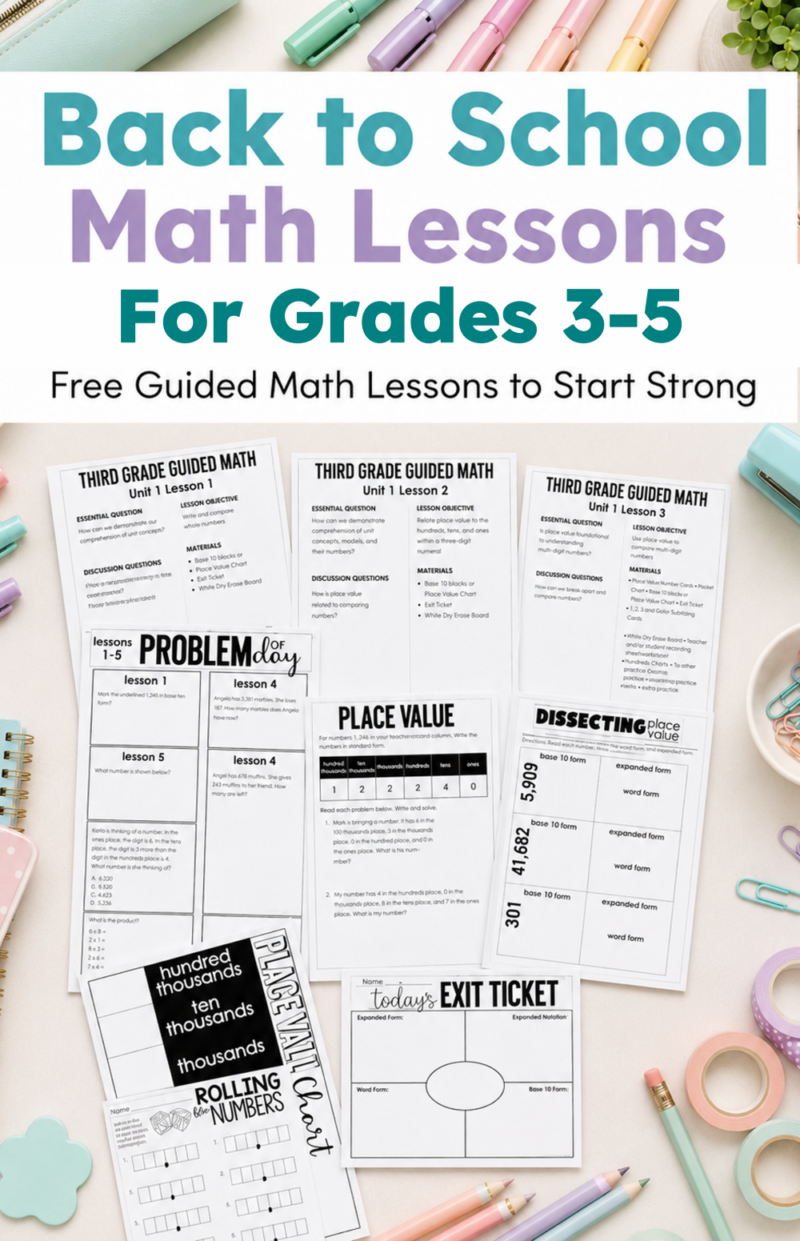
Each grade-level sample helps you see how the lesson structure works together. You will find teacher lesson plans, problem of the day, whole group instruction, small group lessons, and student materials. This makes the sample helpful whether you are new to Guided Math or simply looking for a strong way to supplement math learning.
Problem of the Day
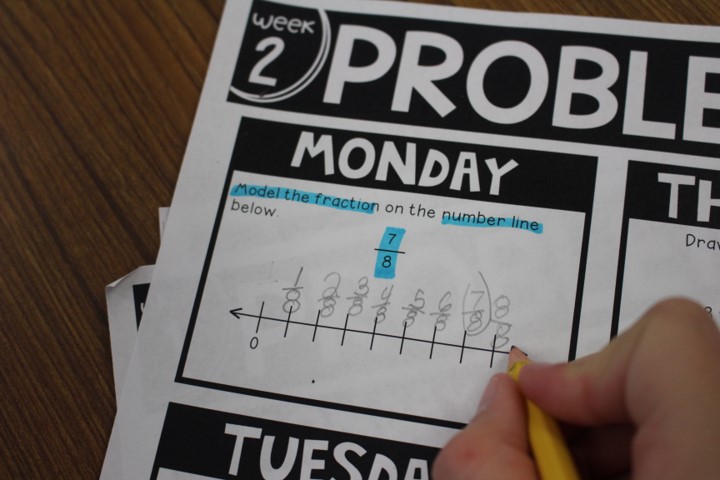
The Problem of the Day gives students a focused math task to begin the lesson. This is a helpful routine for the first days of school because it gives students a chance to think, solve, explain, and discuss. These problems can be used as a math warm up done together as a group to work out together as a table team or in partners too.
As students work, you can observe how they approach a problem. You may notice who jumps right in, who needs more time, who uses a model, who explains clearly, and who may need support with prerequisite skills. This quick routine can give you valuable information before you ever begin formal assessments.
Pair Guided Math Whole Group Instruction with Teaching Slides
The whole-group portion of the lesson gives everyone a shared starting point. This is where you introduce the concept, model the thinking, and help students connect the math to tools, representations, vocabulary, or problem-solving strategies. In grades 3–5, whole-group instruction works best when it is focused and purposeful. Students need modeling, but they also need time to talk, respond, and make sense of the math. A strong mini lesson can help students understand the day’s focus before they move into small group instruction, partner work, or independent practice.
Pair the Guided Math lessons with the grades 3–5 teaching slides to support your whole-group mini lessons and make instruction more visual and interactive.
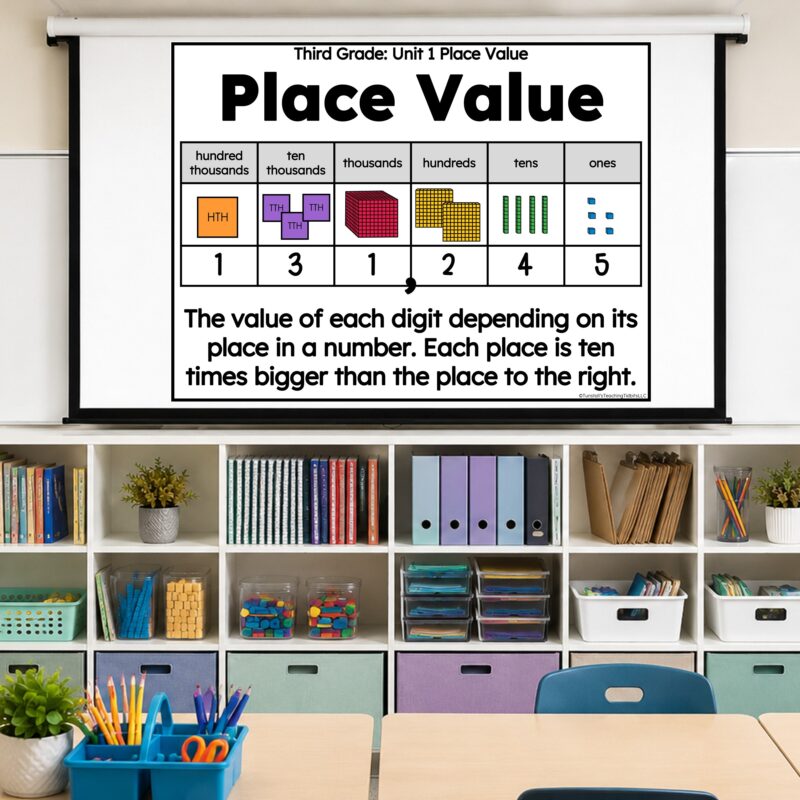
The teaching slides are helpful for introducing the day’s concept, modeling strategies, and guiding math discussion. Then, the Guided Math lessons give you the teacher-led small group and student practice pieces that help students apply what they are learning.
Add visual whole-group instruction to your Guided Math lessons.
Choose your grade level to explore a full year of interactive math teaching slides.
Together, the slides and Guided Math lessons create a complete math block that supports whole-group instruction, small group learning, and independent practice.
Teacher-Led Small Group Instruction
Small group instruction is one of the most helpful parts of Guided Math.
This is where you can slow down the math, listen closely to student thinking, and adjust your instruction based on what students show you. Some students may need a concrete model. Others may be ready to explain a strategy, compare methods, or take the concept deeper.
This is especially important in upper elementary because math concepts build quickly. A small group structure gives you time to support students before misconceptions grow.
Student Materials for Guided Math
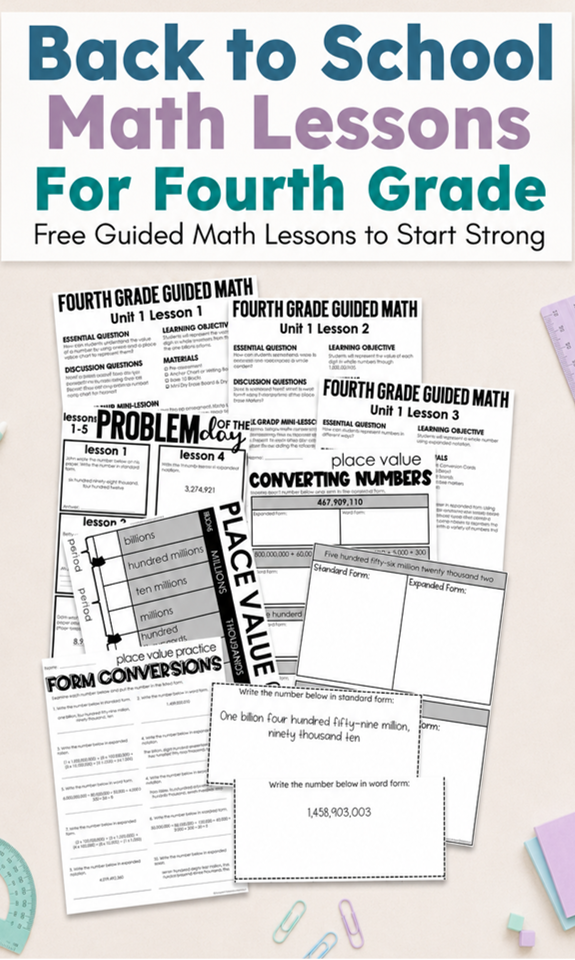
The student materials help students take an active role in the lesson. Instead of only watching a demonstration, students have a place to solve, model, record, and apply their thinking.
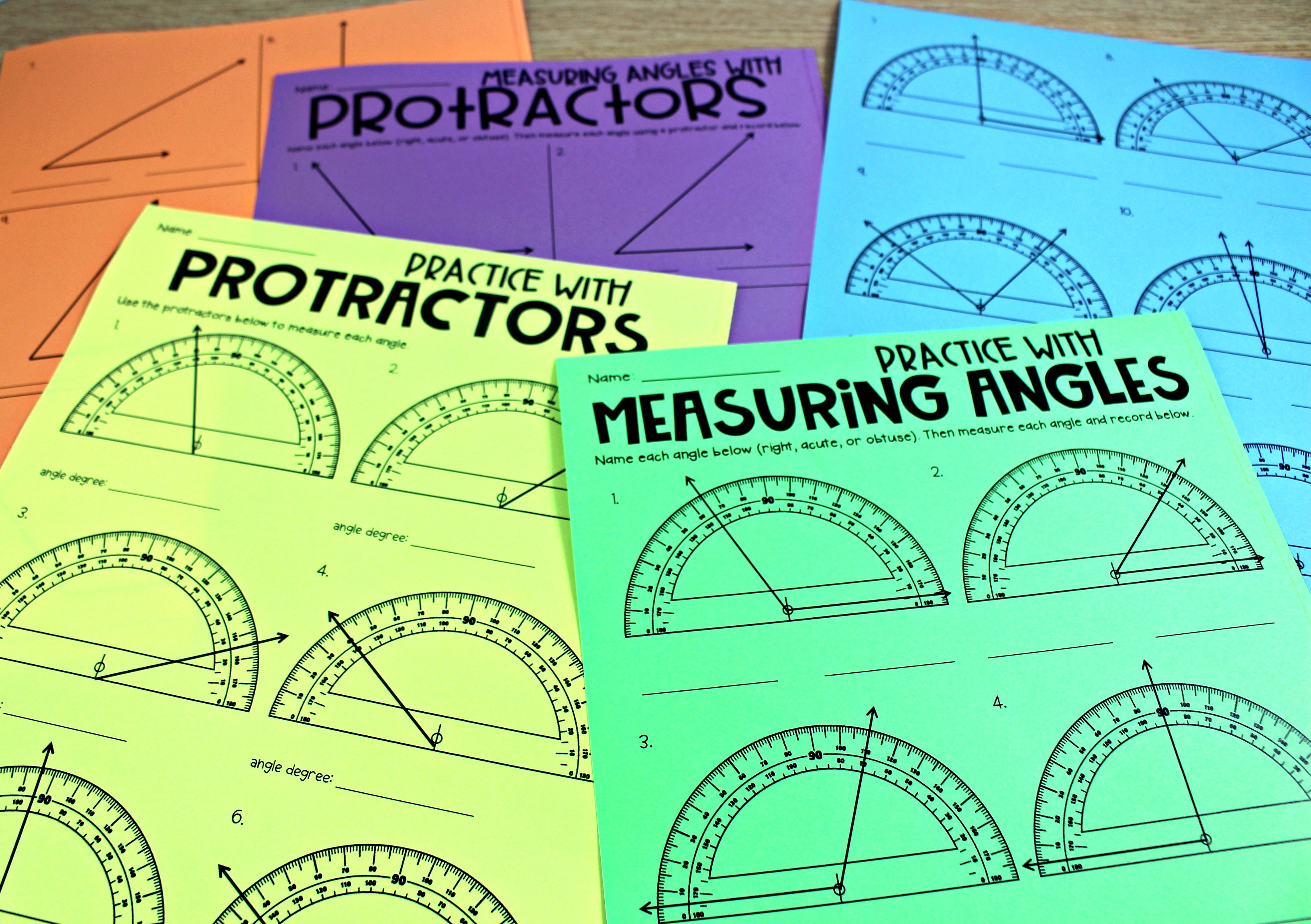
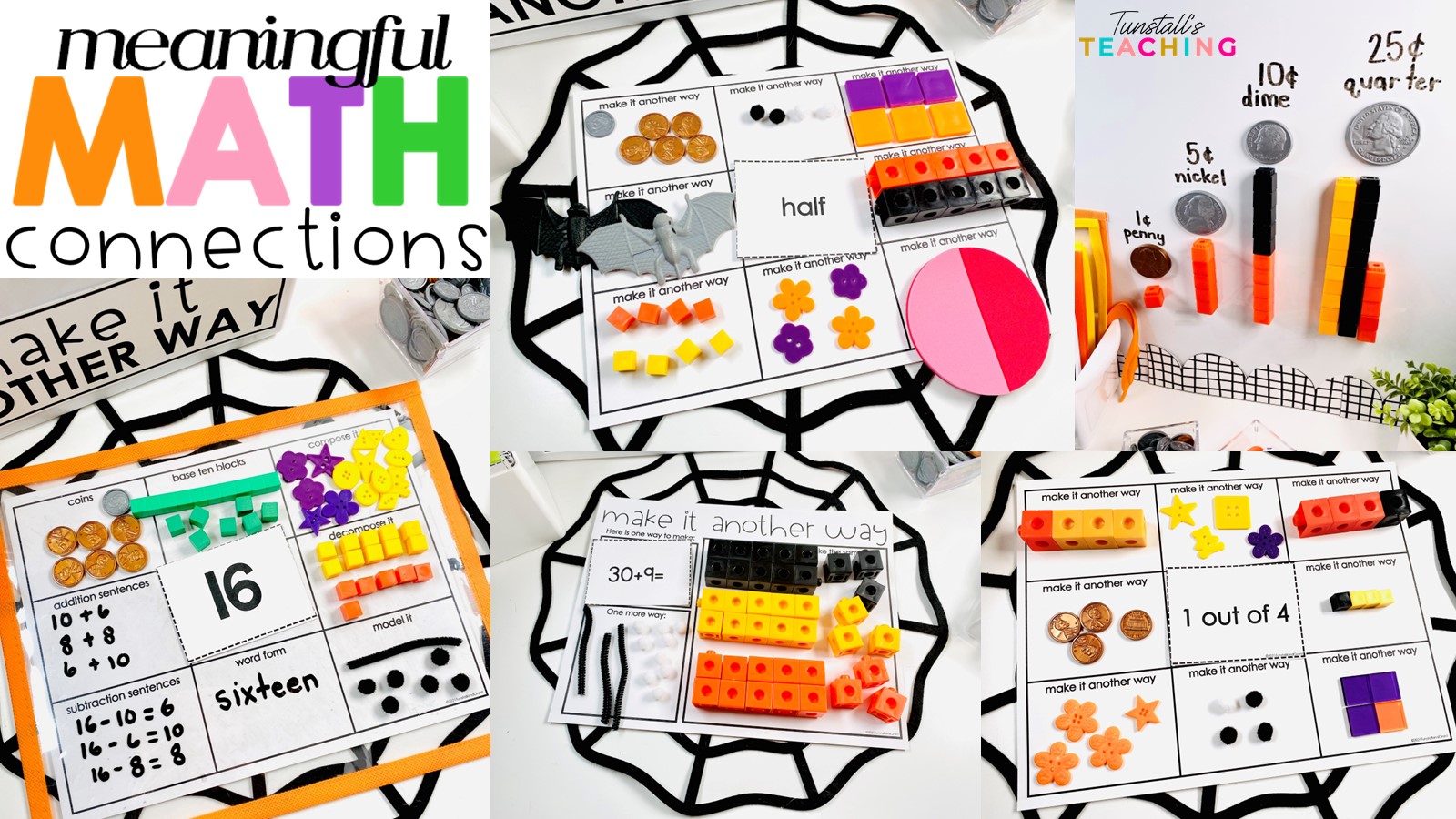
These materials may include math mats, task cards, handouts, or other lesson-based pages that connect directly to the skill being taught.
At the beginning of the year, student materials are also useful for teaching expectations. Students practice organizing their work, using tools appropriately, completing a task, and showing their thinking clearly.
These are the routines that help math workshop run more smoothly later in the year.
Grab the Free Back to School Math Lessons
You can grab the free Guided Math lessons below by grade level.
Use the sample lessons to introduce your math structure, practice routines, and help students begin the year with confidence.
Building Independence During Math Workshop
One of the biggest goals at the beginning of the year is helping students understand how to work during math time. This independence takes practice. Students must learn your expectations for how to:
- listen during a math mini lesson
- participate in math discussion
- use materials correctly
- transition to a small group or workstation
- complete a task with care
- show thinking with numbers, words, and models
- ask for help appropriately
- reflect on their learning
When these expectations are taught early, students are better prepared for the rest of the year.
Need help teaching the routines before starting full rotations?
Use the free 20-day Math Workshop Launch Guide to introduce expectations, build independence, and gradually begin small groups and stations.
More Back to School Math Support
After you grab the free Guided Math lessons, you may also want to gather beginning of the year math data so you know where students are starting. The free lessons have a math topic preassessment included. For a full beginning of the year math benchmark, you can read more about beginning of the year math assessments for K to 5.
You may also want to read more about:
- Small Group Math Instruction Best Practices
- What Students Do During Math Workshop
- Math Rotation Slides and Schedules
- Math Strategy Posters and Slides for K to 5 Classrooms
Starting math in grades 3–5 does not have to feel like a scramble. With a clear lesson structure, meaningful routines, and ready-to-use Guided Math support, your first days of math can build the confidence and independence students need for the year ahead.
Ready to start planning your first math lessons?
Choose your grade level and download the free Guided Math lesson sample.