 Contact
Back to School Math Lessons for K–2: Your First Days of Math Are Planned
The first days of math can feel tricky to plan because we are also teaching students how to listen, share, use tools, work with partners, build stamina, and become part of a math community. If you have ever wondered, “What should I actually teach during the first days of math?” this free sample was created for you.
I put together a free K to 2 Total Math Unit 1 sample so you can start the year with ready to use math lessons, student pages, slides, and routines. These lessons help students begin the year as mathematicians while giving you a clear plan for your math block.
Ready to plan your math lessons?
Choose your grade level and download a free Total Math sample with lesson plans, teaching slides, student pages, hands-on activities, vocabulary support, and math routines.
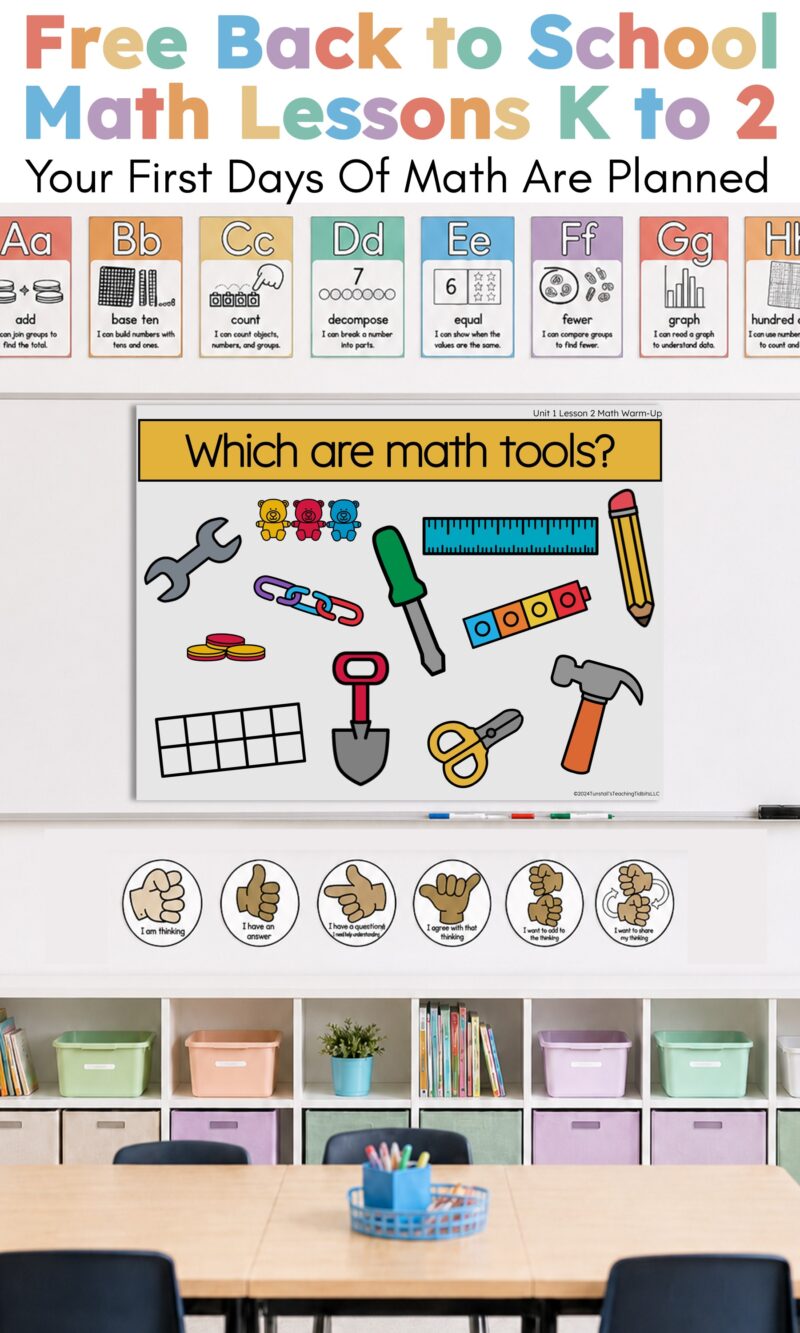
Back to School Math Lessons That Build Community
The first math lessons of the year set the tone for everything that follows. Before students can work independently in math stations, participate in small group instruction, explain their thinking, or use math tools with purpose, they need time to learn what math looks like in your classroom.
That is why Unit 1 of Total Math begins with building math community. Each lesson naturally addresses these expectations, while also reviewing key math content to set students up with a foundation for success.
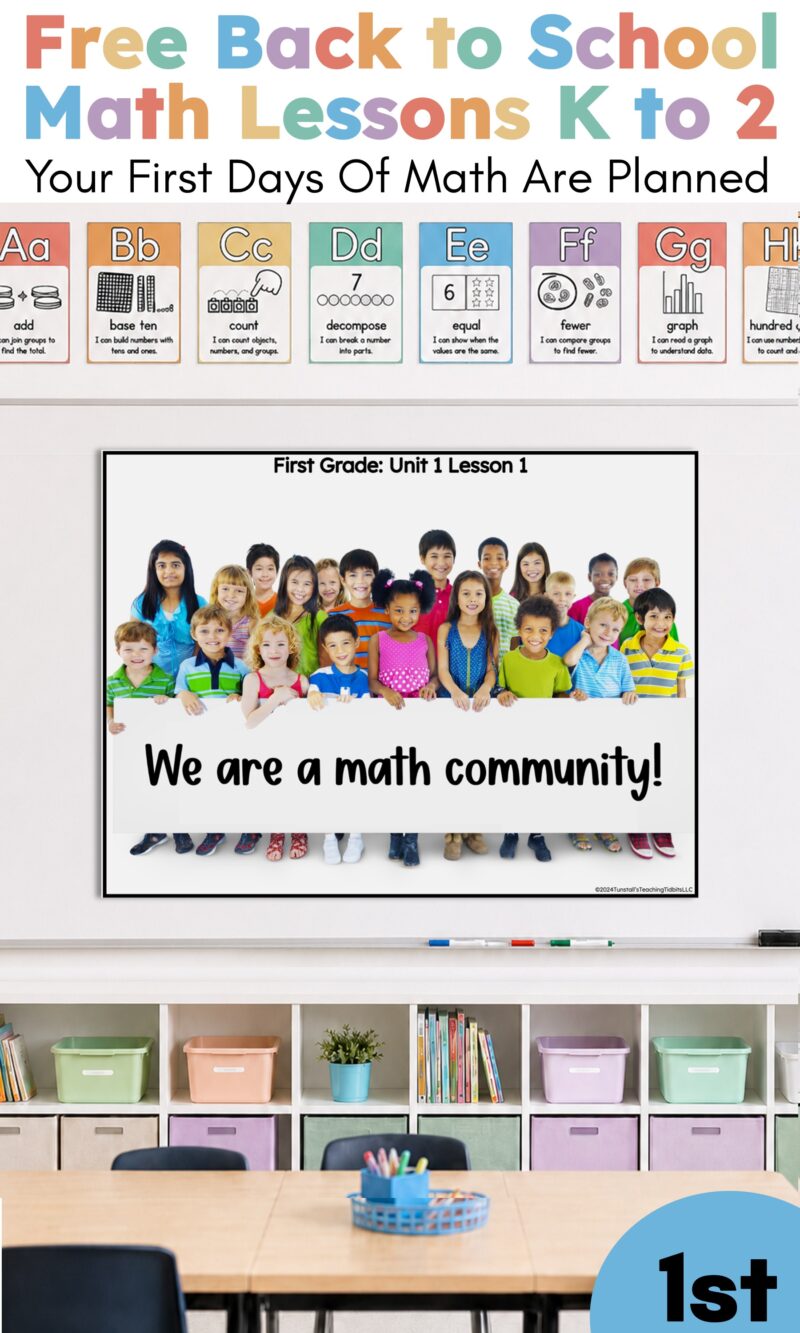
While reviewing foundational math skills, students are introduced to important expectations and ideas like:
communicating mathematical ideas
working as part of a math community
using math tools strategically
sharing reasoning
listening to the thinking of others
building independence with math routines
These are the kinds of routines that make the rest of the year run more smoothly. Students begin by learning how to participate in a thoughtful and engaging math block.
What Is Included in the Free K to 2 Math Sample?
The free sample below includes the first lessons from Total Math Unit 1 for Kindergarten, First Grade, and Second Grade.
Each grade level sample gives you a look at the major components of Total Math so you can see how the math block works together. You will get lesson plans, slides, vocabulary support, student pages, hands-on math activities, and reflection opportunities.
Here is what is included.
Teacher Guide Lesson Plans
We begin with the teacher guide. This document houses the lesson plans. The teacher guide gives you a clear and detailed plan for the math block. Each lesson includes all the components of the full math block from your warm-up slide to your reflection slide.
This is the part that helps answer the question, “What do I teach first?”
The lesson plans guide you through the math warm up, number fluency, vocabulary, strategy focus, teaching slides, teacher led learning, student practice, stations, and reflection. The goal is to make the first days of math feel planned without making them feel scripted or rigid.
You can follow the lesson closely or choose the parts that fit your schedule and classroom needs. This is why Total Math can be your full program or can supplement any other program. The individual components support the math standards and are organized and aligned so they are easy to find.
Math Warm Ups
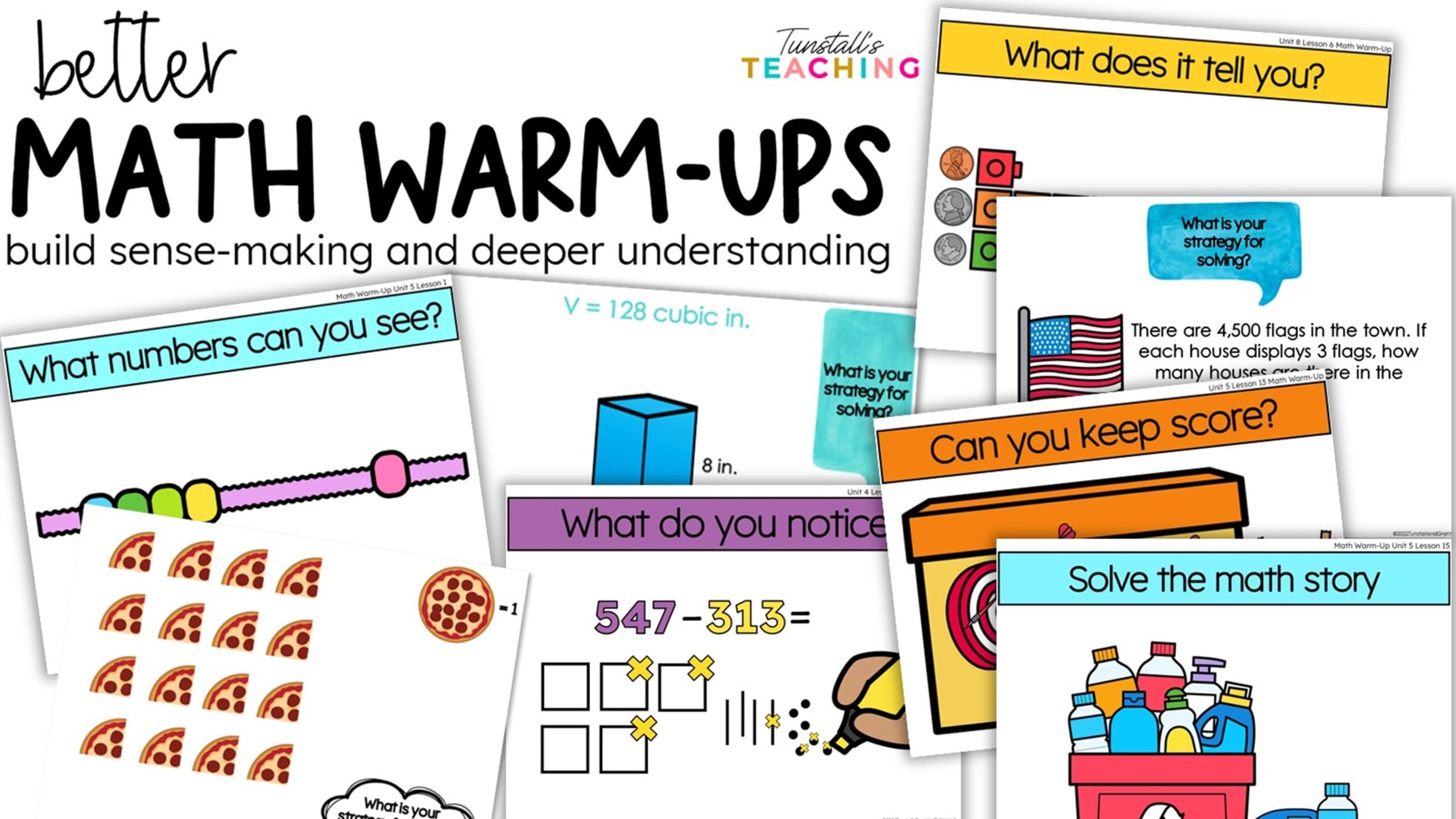
Math warm ups help students ease into the math block with thinking, noticing, and discussion. These short routines are a simple way to begin math with student engagement instead of jumping straight into a worksheet or full lesson. The Math Warm-Up documents in the free sample downloads provide more information about how these are used. In the image below, a math warm-up slide is projected and students can use the free hand signals to show their thinking without shouting out or interrupting.
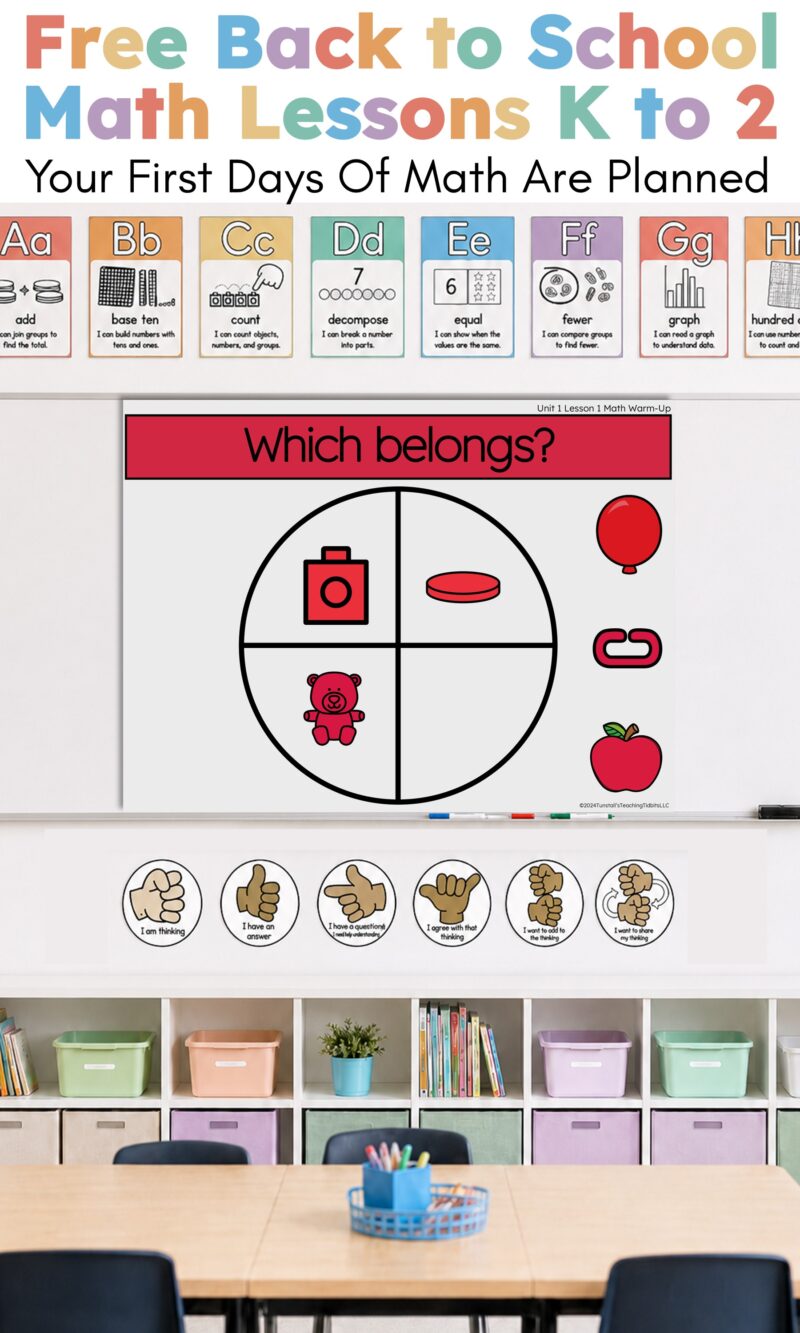
During the first days of school, math warm ups are especially helpful because they allow you to observe how students participate, explain, listen, and respond.
They also help students understand that math is not just about getting an answer. Math is about thinking, noticing patterns, explaining ideas, and learning from others.
Vocabulary Cards
Math vocabulary cards are included to support the academic language students need during each lesson. The cards include math words, visuals, and student friendly definitions.
In the first unit, vocabulary connects to the math community focus. Students learn words that help them talk about themselves as mathematicians, use math tools, describe patterns, and explain their thinking.
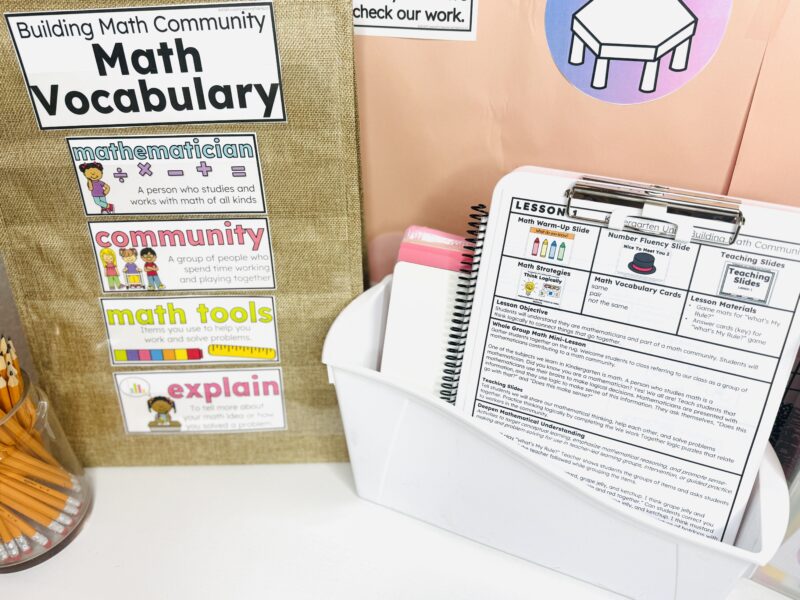
You can display the vocabulary cards on a math focus wall, keep them on a ring near your teacher table, or use them during whole group lessons and small group instruction.
Number Fluency Slides
Number fluency slides give students quick, consistent practice with number sense and counting routines. These slides are designed to build fluency in a way that is active and engaging.
For the beginning of the year, this matters because students are not only practicing math skills. They are also learning how to respond, participate, and move through a routine.
Number fluency becomes a predictable part of the math block and helps students build confidence with numbers over time.
Teaching Slides
The teaching slides support the whole group portion of the lesson. They give you a visual way to introduce the lesson focus, model thinking, and guide students through discussion.
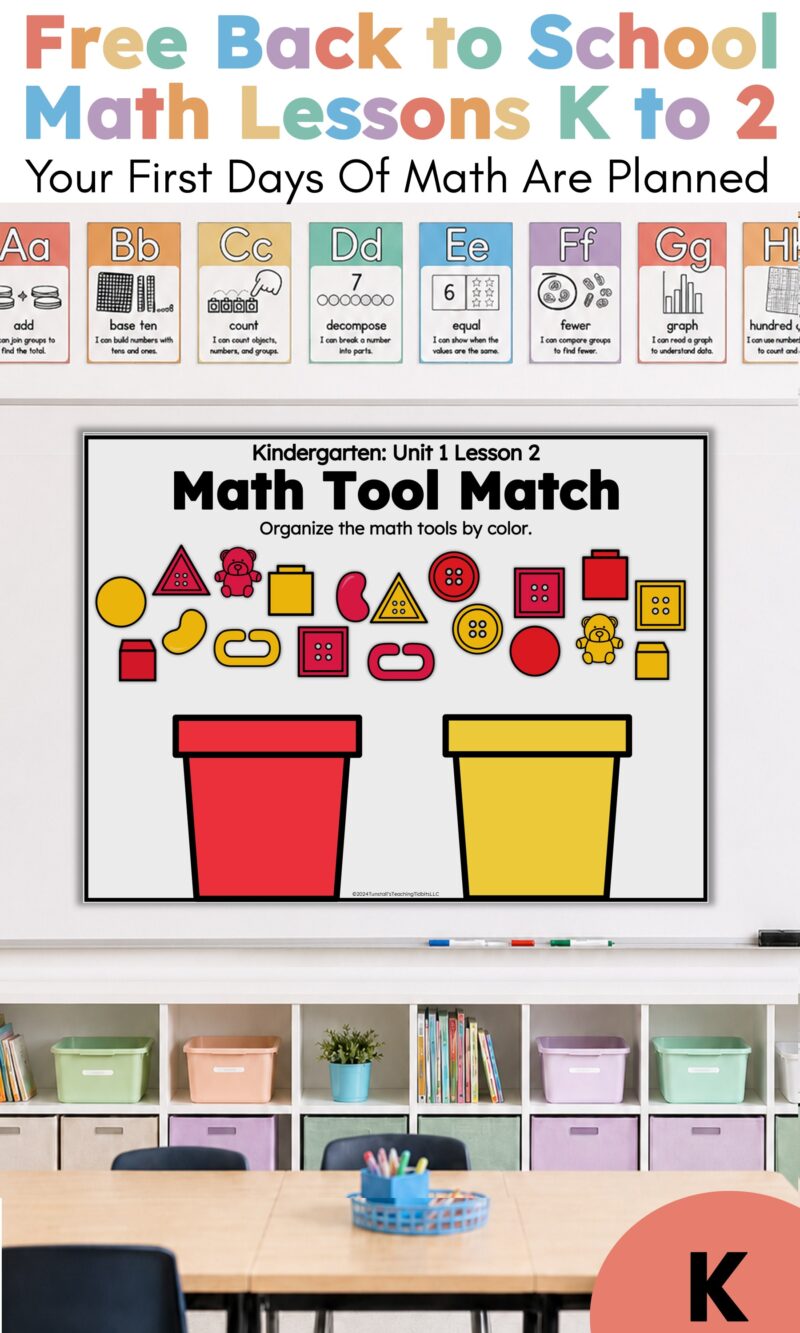
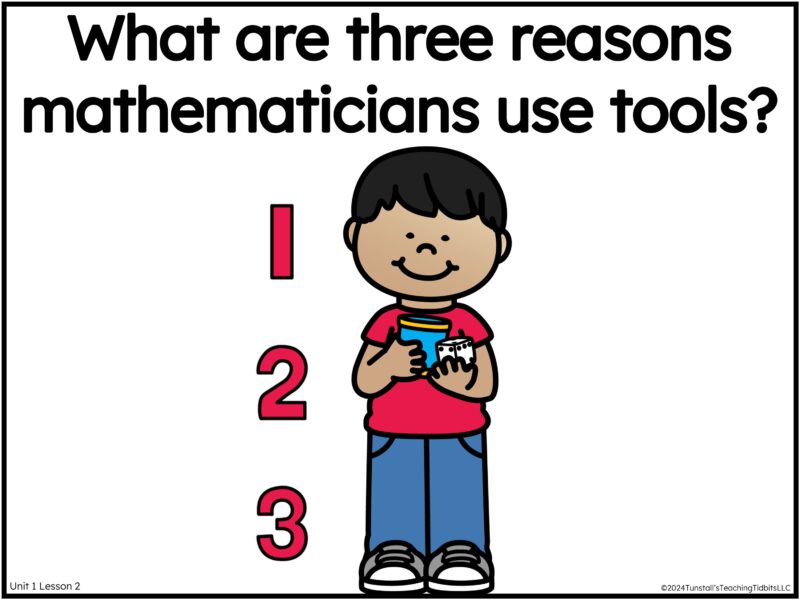
During the first days of math, the teaching slides help students understand what it means to be part of a math community. Students may sort examples, discuss ideas, identify math tools, or practice explaining their thinking.
The slides make the lesson easier to teach because you are not starting from a blank board. You have a visual path to follow while still leaving room for student discussion.
Math Strategy Support
The sample also includes math strategy support to help students begin thinking like mathematicians. These strategies are not taught as one required way to solve. Instead, they give students options, language, and tools for working mathematically.
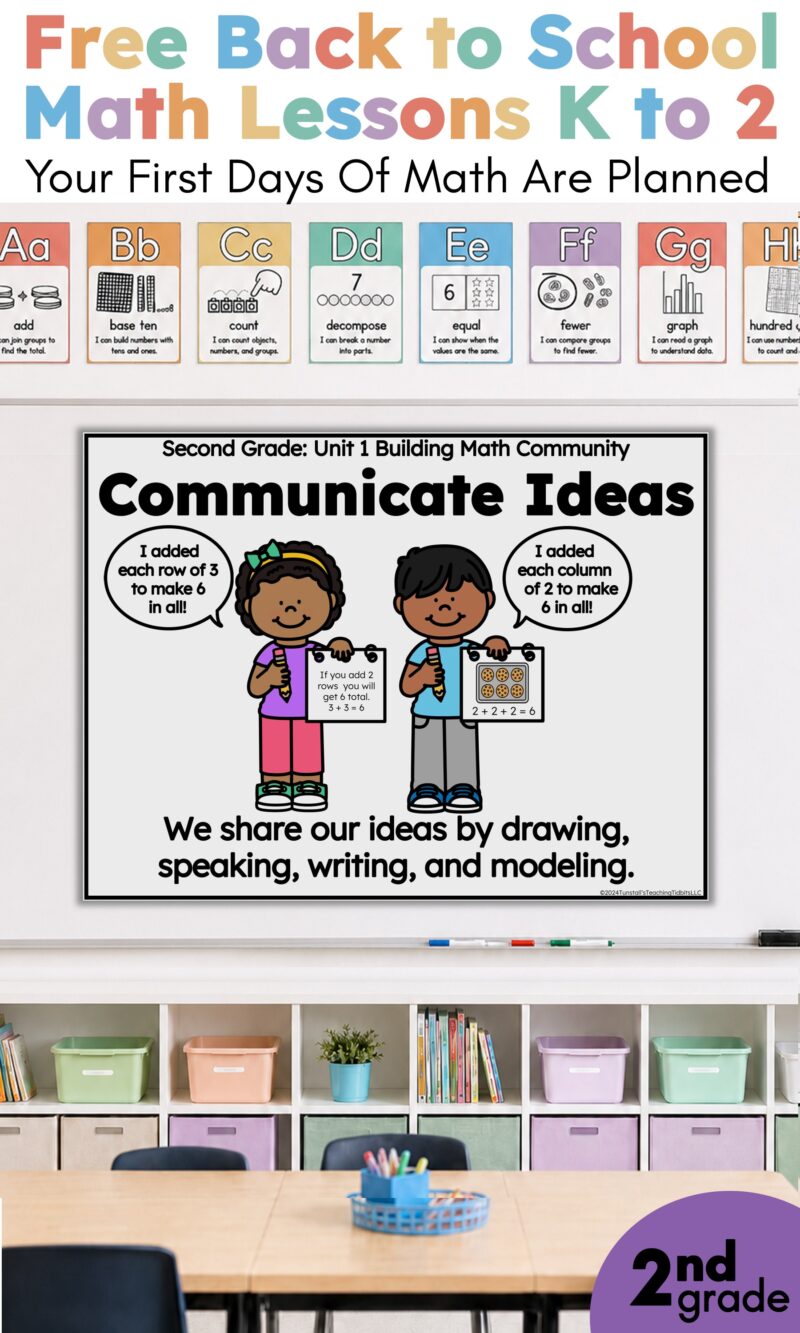
In Unit 1, students focus on strategies such as communicating ideas and using tools strategically. These are powerful beginning of year strategies because they support the routines students will use all year long.
You can display strategy visuals near your math area so students can refer back to them during lessons, small group work, and independent practice.
Application Pages
Application pages give students independent practice connected to the lesson. These pages help you see how students are applying the skill after instruction and guided practice.
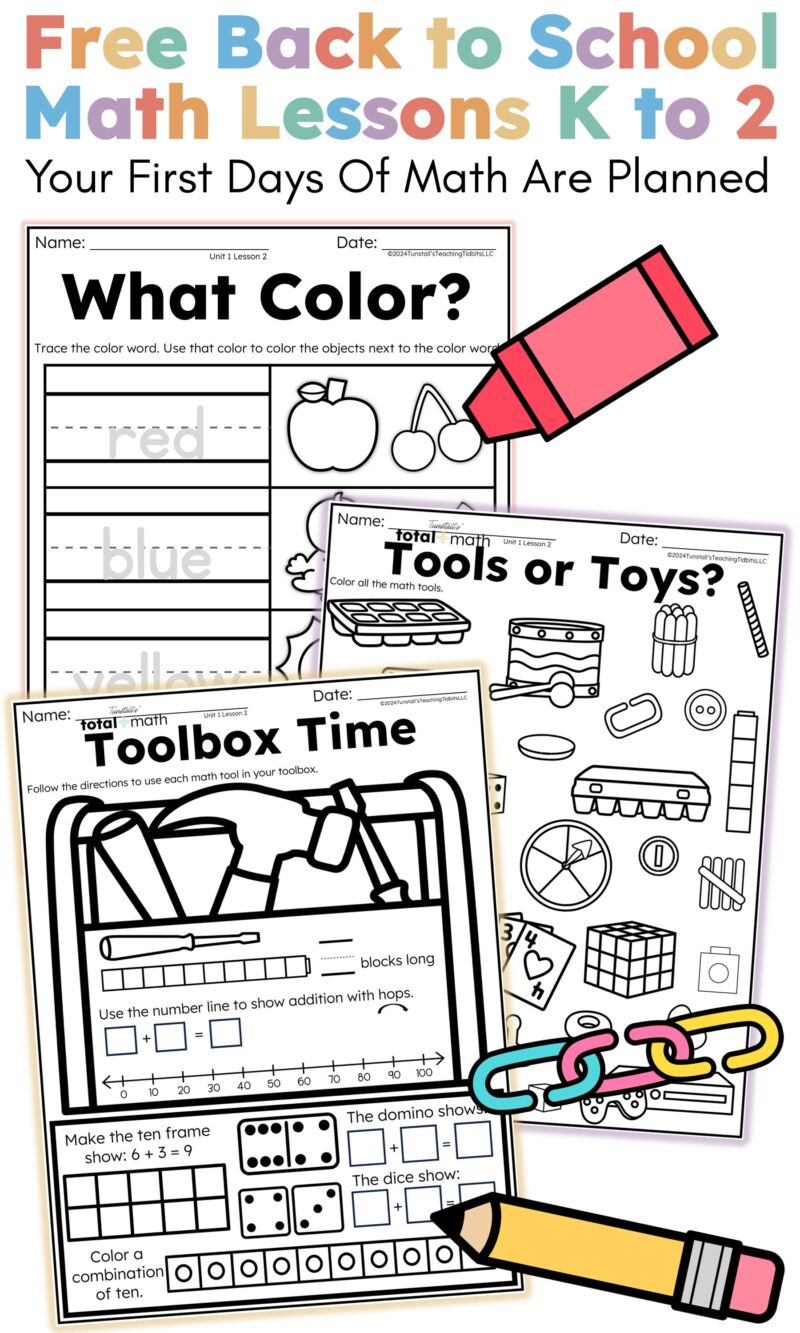
At the beginning of the year, application pages can also help you observe work habits, fine motor skills, attention to directions, and student confidence.
The goal is not to rush students into independence before they are ready. Instead, these pages give students a meaningful way to practice while giving you information about what they understand and what support they may need next.
Learning Log
The learning log gives students a personal math journal experience. Students cut, glue, write, draw, sort, or respond to show their math thinking. 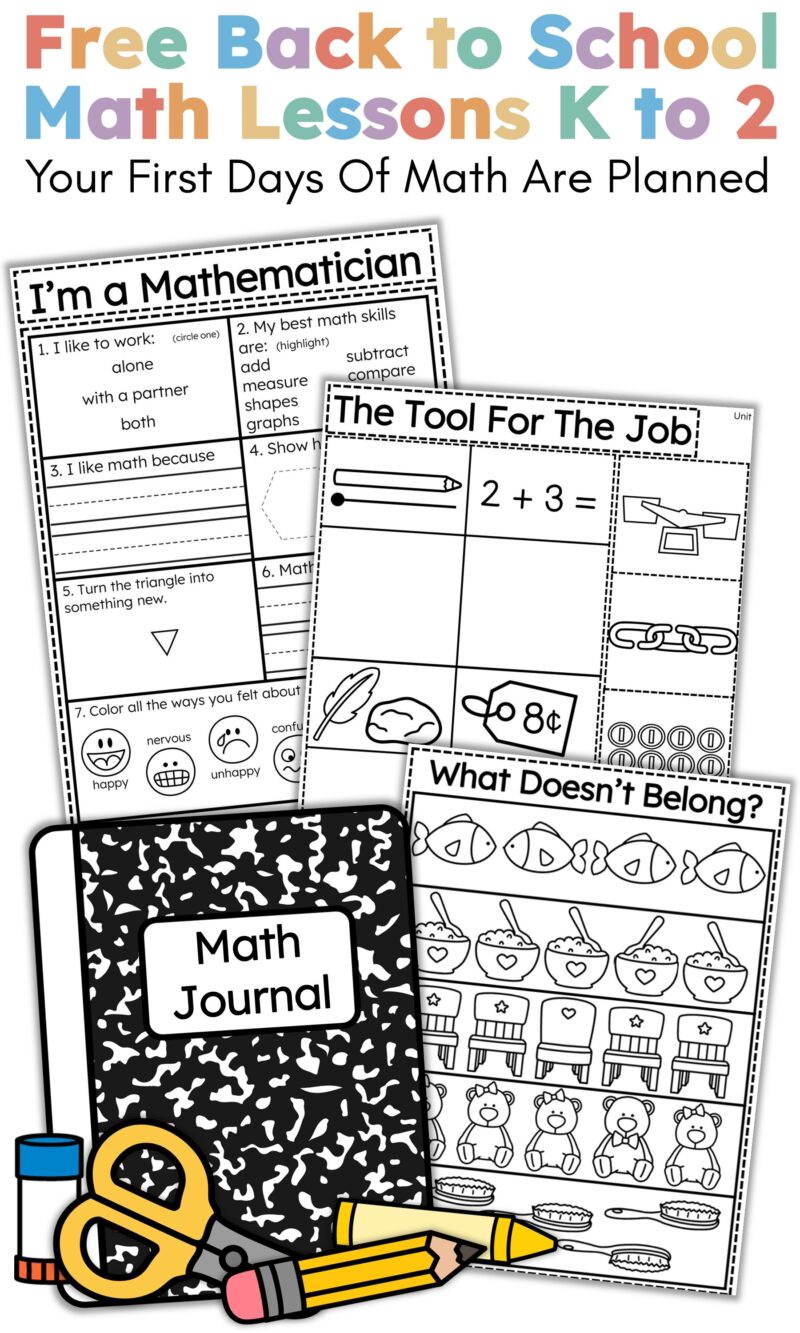
This component is especially valuable at the beginning of the year because it helps students create a record of their learning while also practicing organization and math communication. This later becomes a math station where students can go apply learning in their journal to create a record of math learning through the year. This quiet station has built in accountability too. The learning log is more than a notebook page. It helps students apply skills, show understanding, and build ownership of their math learning.
Hands-On Math
Hands-on math gives students the chance to use materials, create models, and physically show their thinking. These activities are designed to support problem solving, reasoning, and engagement. Because the beginning of the year in K-2 is about exploring manipulatives and expectations, you can see that the hands-on activity reinforces that but also gives some structure to this time of exploration.
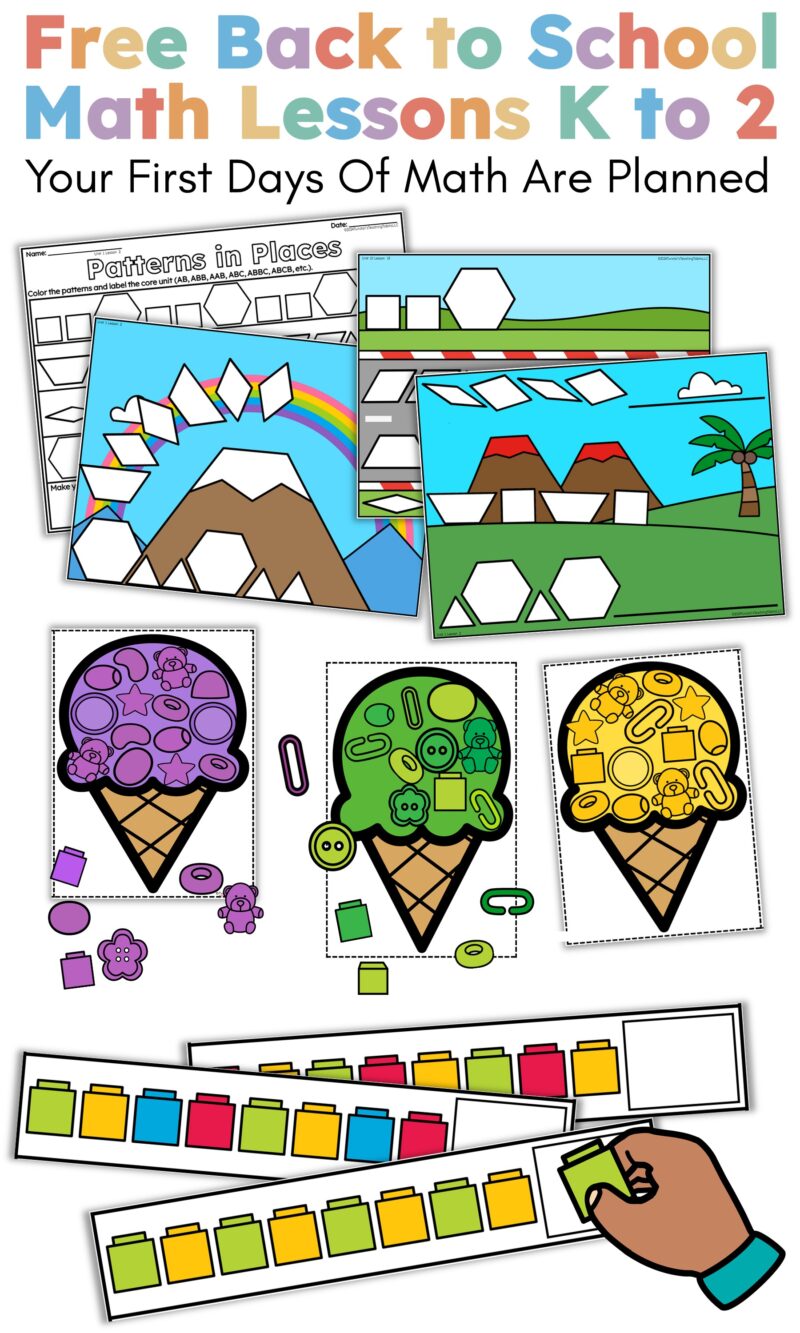
During the first days of school, hands-on math also helps you teach routines for using materials. Students can practice how to work with a partner, how to manage manipulatives, how to clean up, and how to talk about what they are doing.
This makes hands-on math both instructional and practical for classroom management.
Reflection Slide
The reflection slide helps students pause and think about the math they just practiced. This is a simple but powerful way to build math communication from the start.
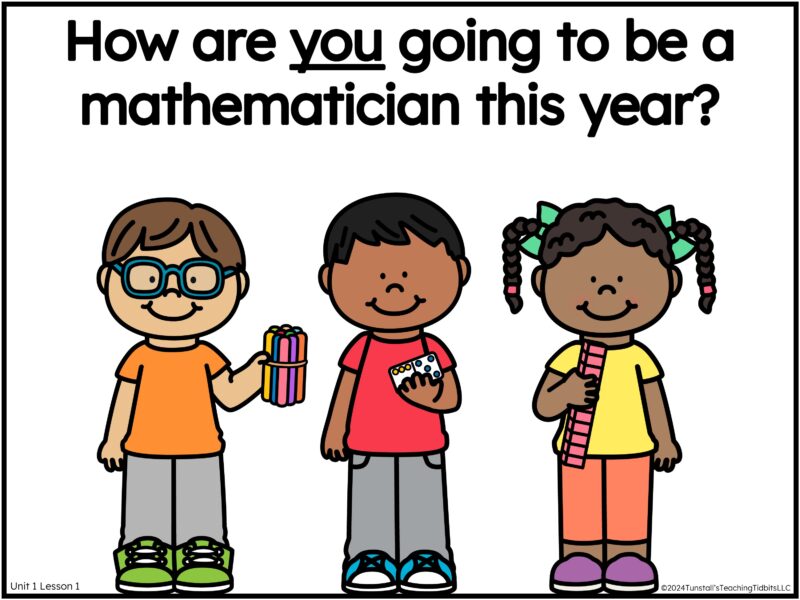
Students might turn and talk, respond to a prompt, explain their thinking, or share what they noticed. These reflection moments help students understand that their ideas matter in math.
They also give you a quick window into student understanding before moving on.
How to Use the Free Sample
You do not have to use every piece at once. At the beginning of the year, it is perfectly fine to choose the parts that help you introduce your math block slowly and intentionally. You might use the warm up and teaching slides on the first day, then add the teacher led activity or learning log the next day. You might introduce one station at a time rather than trying to launch every component immediately.
The goal is to help students learn the routines, language, and expectations of your math classroom.
Use the sample to:
plan your first days of math
introduce math community routines
practice student discussion
teach students how to use math tools
begin math warm ups and number fluency
model how to work in a math journal
introduce hands-on math expectations
try a Total Math lesson before choosing the full unit
Grab the Free Back to School Math Lessons
The free sample includes K to 2 back to school math lessons from Total Math Unit 1.
You can choose your grade level below and start with the lessons that match your classroom.
Ready for the Full Unit?
The free sample gives you a look at how Total Math brings the math block together. If you want the complete Unit 1 experience, the full units include the complete set of lessons, slides, stations, application pages, learning logs, assessments, and teacher support for building math community.
Ready for a complete year of Total Math?
Choose your grade level to explore the full curriculum with daily lessons, teaching slides, workstations, learning logs, assessments, and teacher support.
More Back to School Math Support
After you grab the free sample lesson in this post, you may also want to read more about building a strong math community from the start of the year. If you want to collect data right away be sure to read our post on beginning of the year assessments
Need help introducing math workshop routines?
Use the free Math Workshop Launch Guide to teach expectations, build independence, and gradually begin small groups and stations.
Ready to plan your first K–2 math lessons?
Choose your grade level and download the free Total Math lesson sample.