 Contact
First Week of School Activities for 3rd–5th Grade
The first week of school in upper elementary has its own kind of energy. Third, fourth, and fifth graders may already know how school works, but they are still walking into a new classroom with new expectations, new classmates, and plenty of questions about the year ahead.
I want those first days to feel welcoming without making every activity feel too young. I also want enough structure to keep the day moving while we learn names, practice routines, talk about expectations, and begin creating a classroom community together.
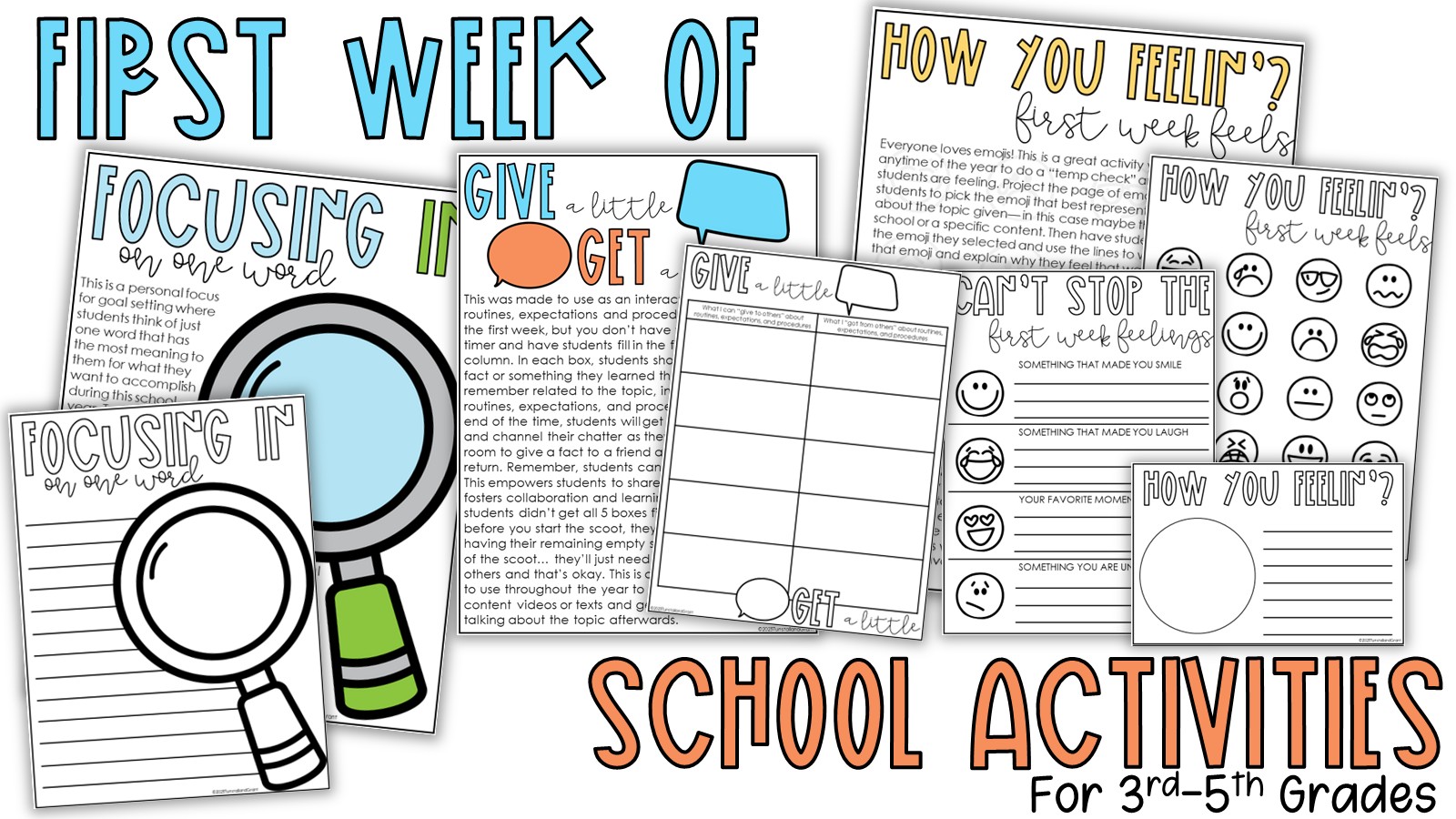
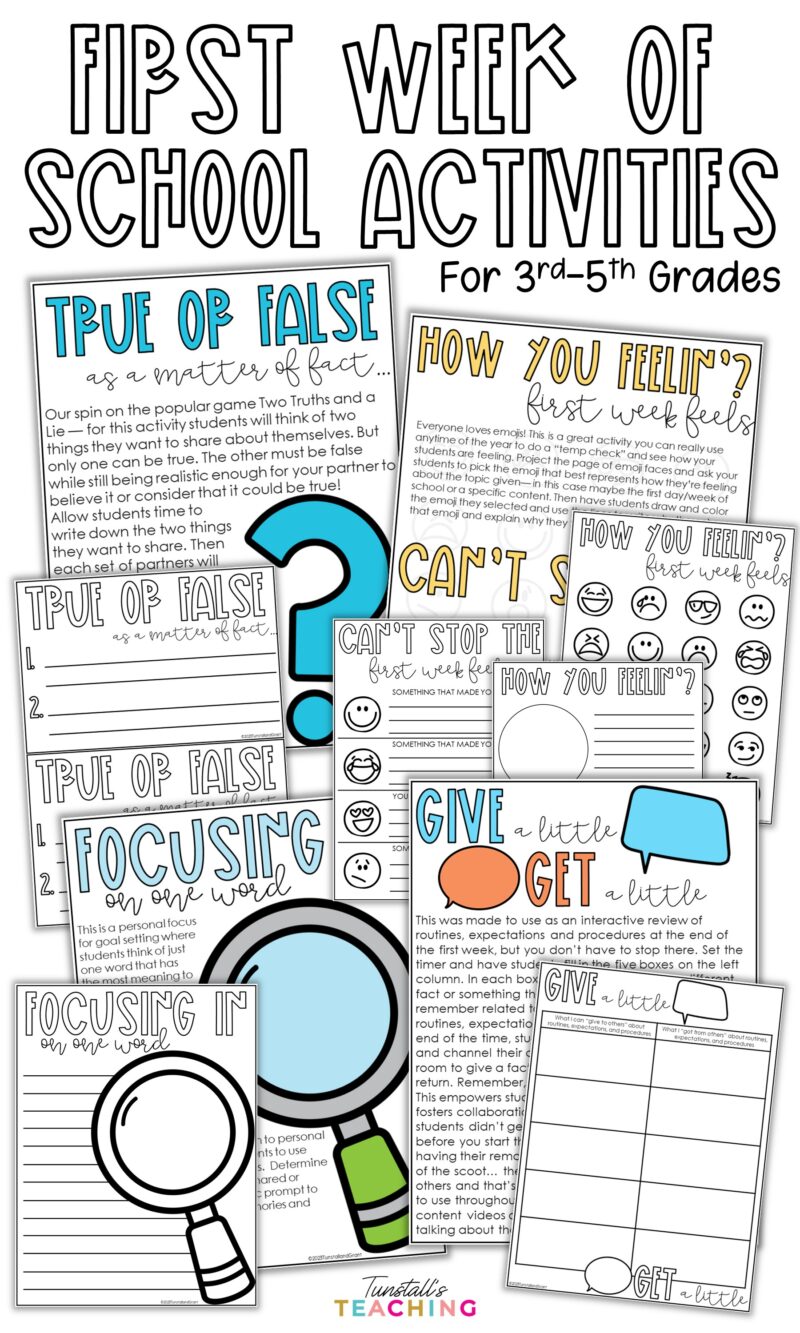
First Week of School Activities for 3rd–5th Grade includes two weeks of upper elementary activities with morning meeting ideas, conversation cards, friendship lessons, goal setting, first-week reflection, classroom community activities, and plenty of opportunities for students to talk, write, move, and connect.
See First Week Favorites 3rd–5th
First Week of School Activities for Upper Elementary
Upper elementary students in third, fourth, and fifth grades need time to settle in just as much as their younger grade counterparts.
Some first week activities get students up and moving. Others give them a chance to write or reflect. Some help us laugh and learn names. Others lead into more meaningful conversations about friendship, goals, feelings, and the kind of classroom we want to create together.
Morning Meeting Activities for the First Week of School
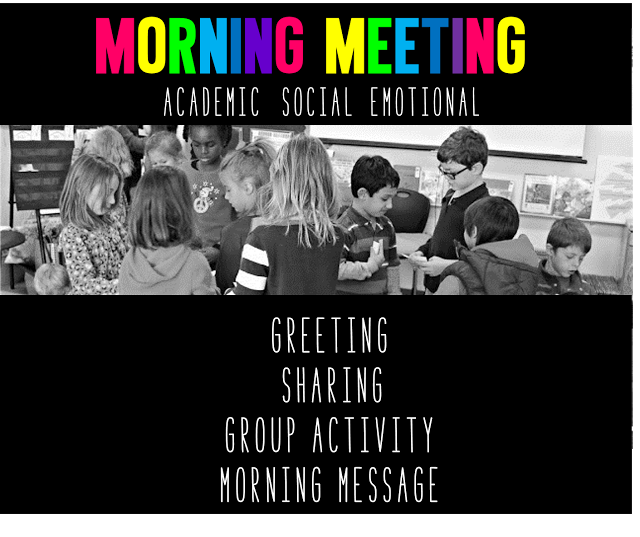
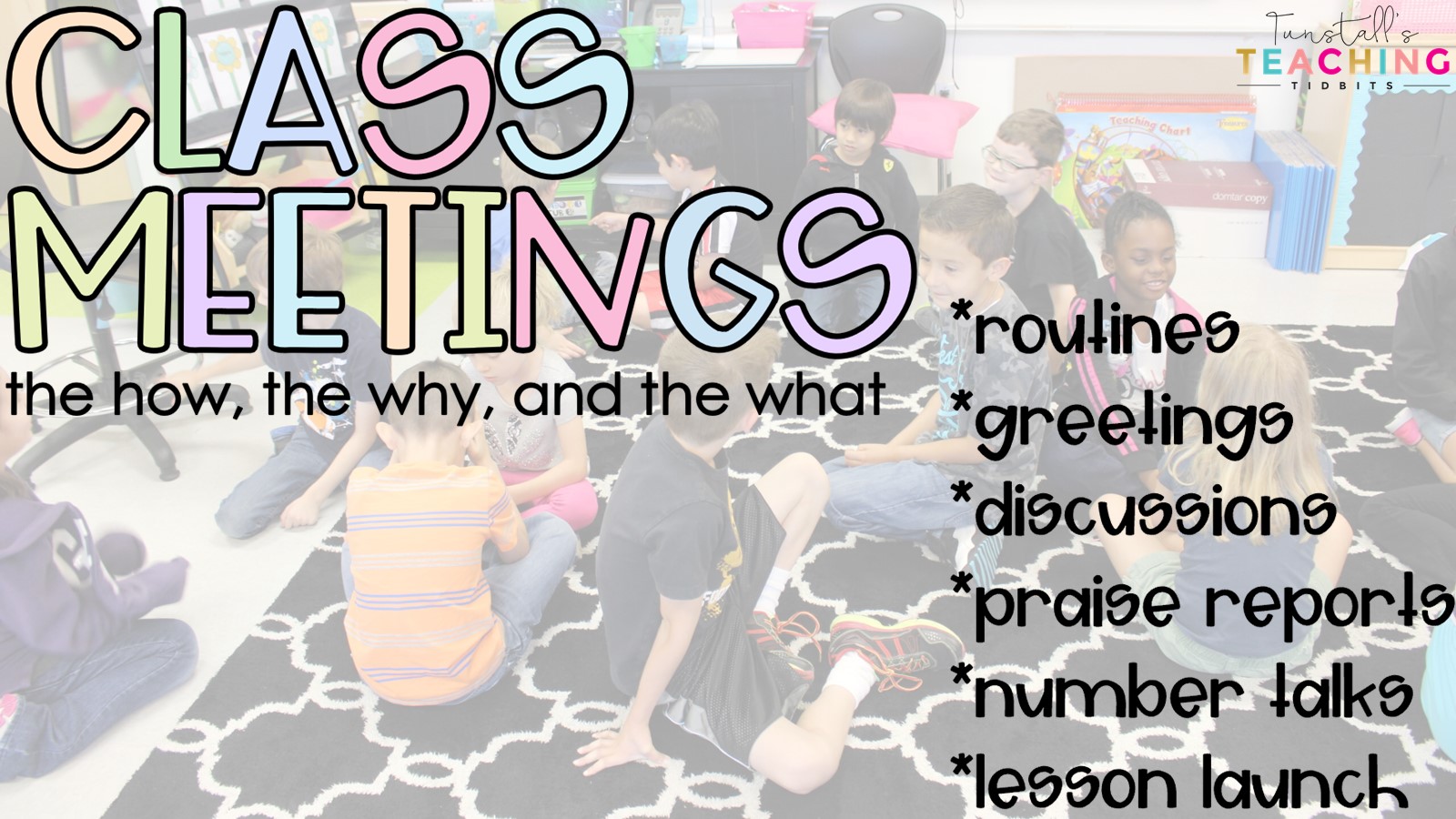
Morning meeting can give the first days of school a steady place to begin.
Students come together, talk, respond, and begin learning how classroom conversations will work. For upper elementary students, I like prompts and activities that give them something real to discuss without forcing every student into a long introduction on the first morning.
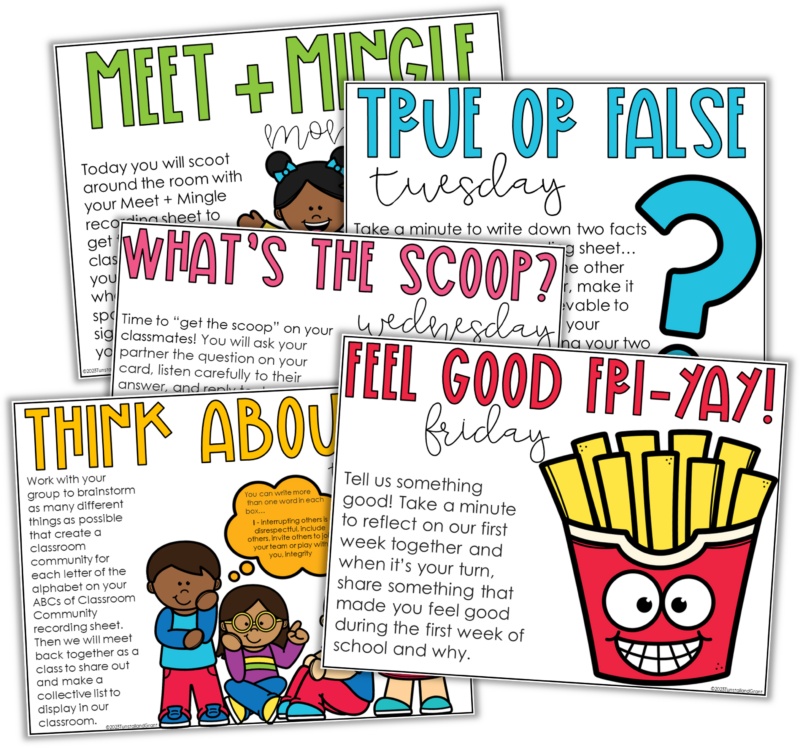
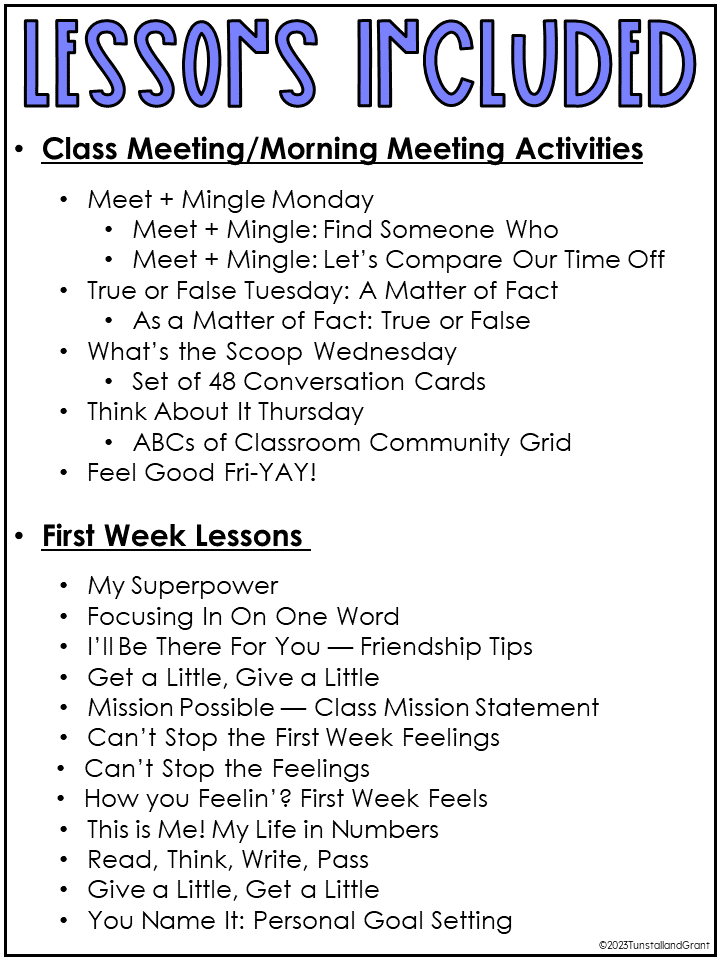
The resource includes a full set of themed class meeting and morning meeting activities:
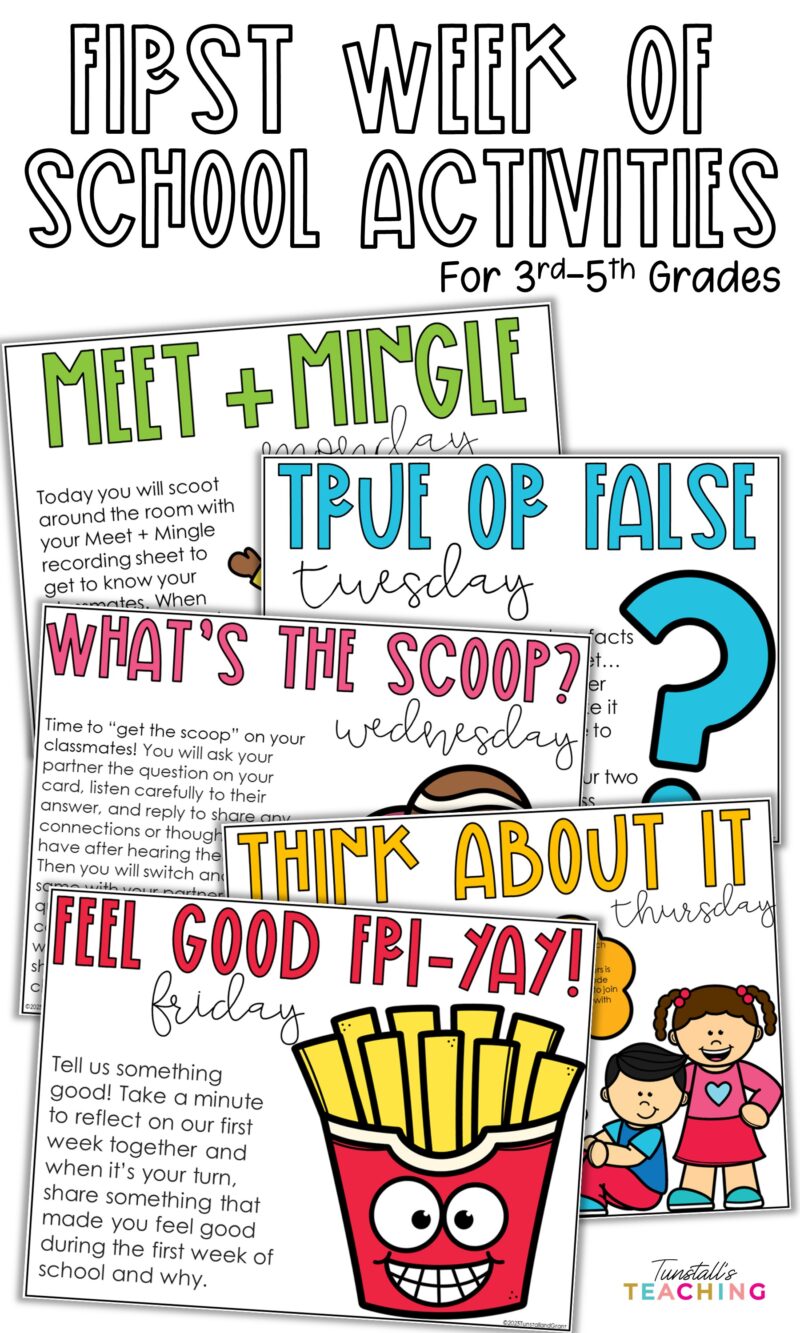
Meet + Mingle Monday
Students begin making connections through interactive getting-to-know-you activities.
Activities include options such as:
- Find Someone Who
- comparing time away from school
- moving, mingling, and learning about classmates
These activities are especially helpful when students know a few people in the room but not everyone.
True or False Tuesday
Students use facts and personal information to continue learning about one another through true-or-false style activities.
I like this kind of structure because it gives students a clear reason to talk while leaving room for plenty of personality to come through.
What’s the Scoop Wednesday
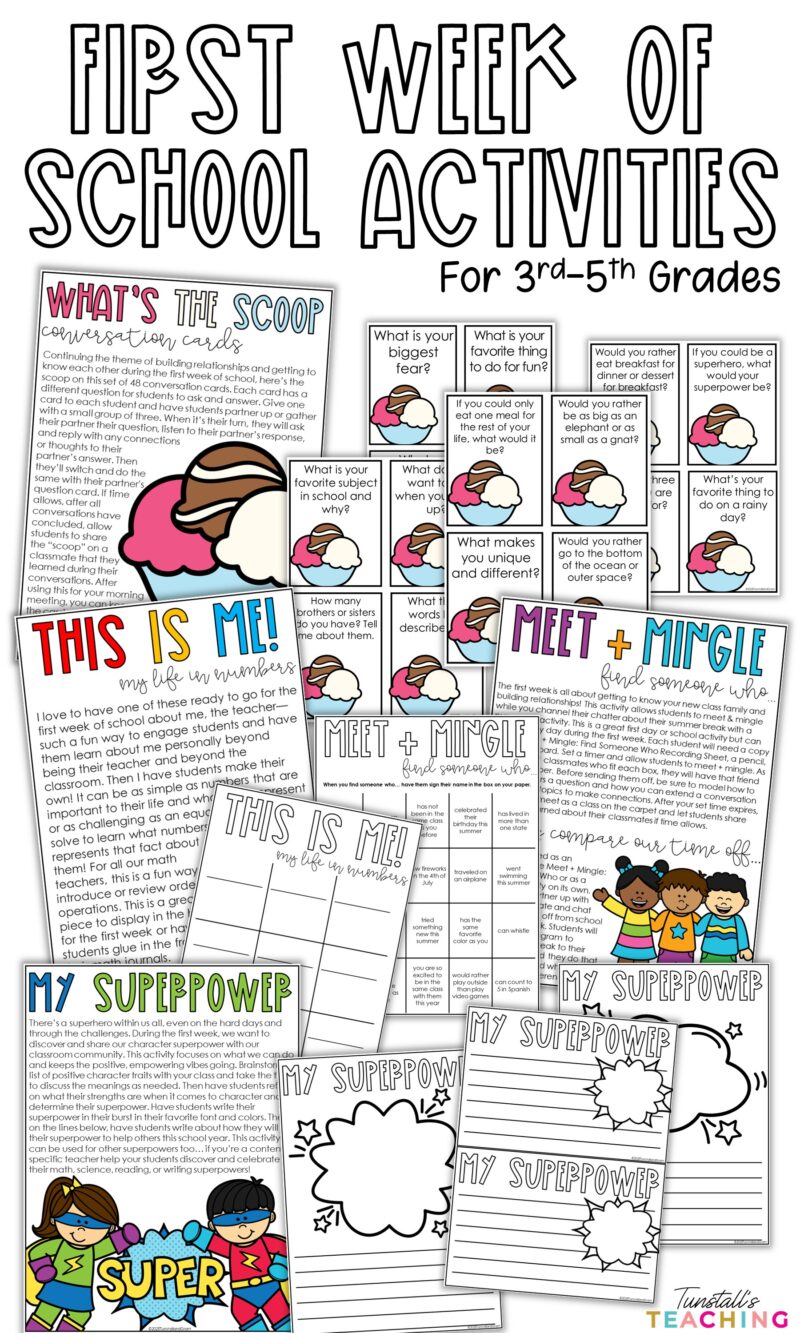
The resource includes 48 conversation cards for upper elementary students.
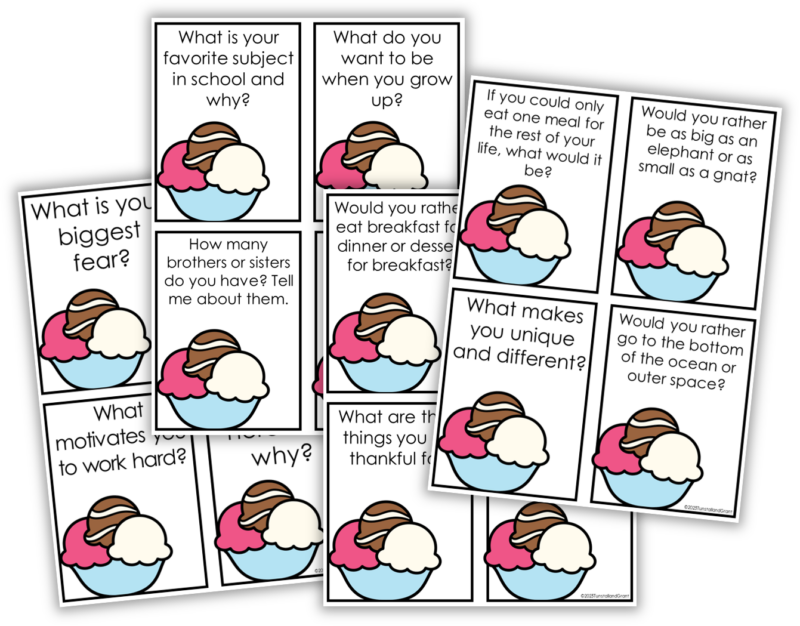
The questions can be used with:
- partners
- table groups
- morning meeting
- class meetings
- early finishers
- community-building time
Conversation cards are one of my favorite ways to take the pressure off “Tell us about yourself.” Students have an actual question to respond to, and the conversation can grow naturally from there.
Think About It Thursday
As the week continues, students move beyond simple introductions and begin thinking more intentionally about themselves and the classroom community.
The ABCs of Classroom Community activity gives students a structure for considering the words, actions, and ideas that contribute to a positive learning environment.
Feel Good Fri-YAY!
By Friday, everyone has taken in a lot.
This part of the week gives students another opportunity to connect and end the first stretch of school with a positive community focus.
Get-to-Know-You Activities That Feel Age-Appropriate
Third, fourth, and fifth graders still want to tell us who they are.
They just may not want to complete the same All About Me page they have seen every year since kindergarten.
That is why I like giving upper elementary students different ways to share.
They can:
- compare experiences
- answer conversation questions
- write about personal strengths
- reflect on goals
- talk with a partner
- work with a small group
- share only part of a response with the class
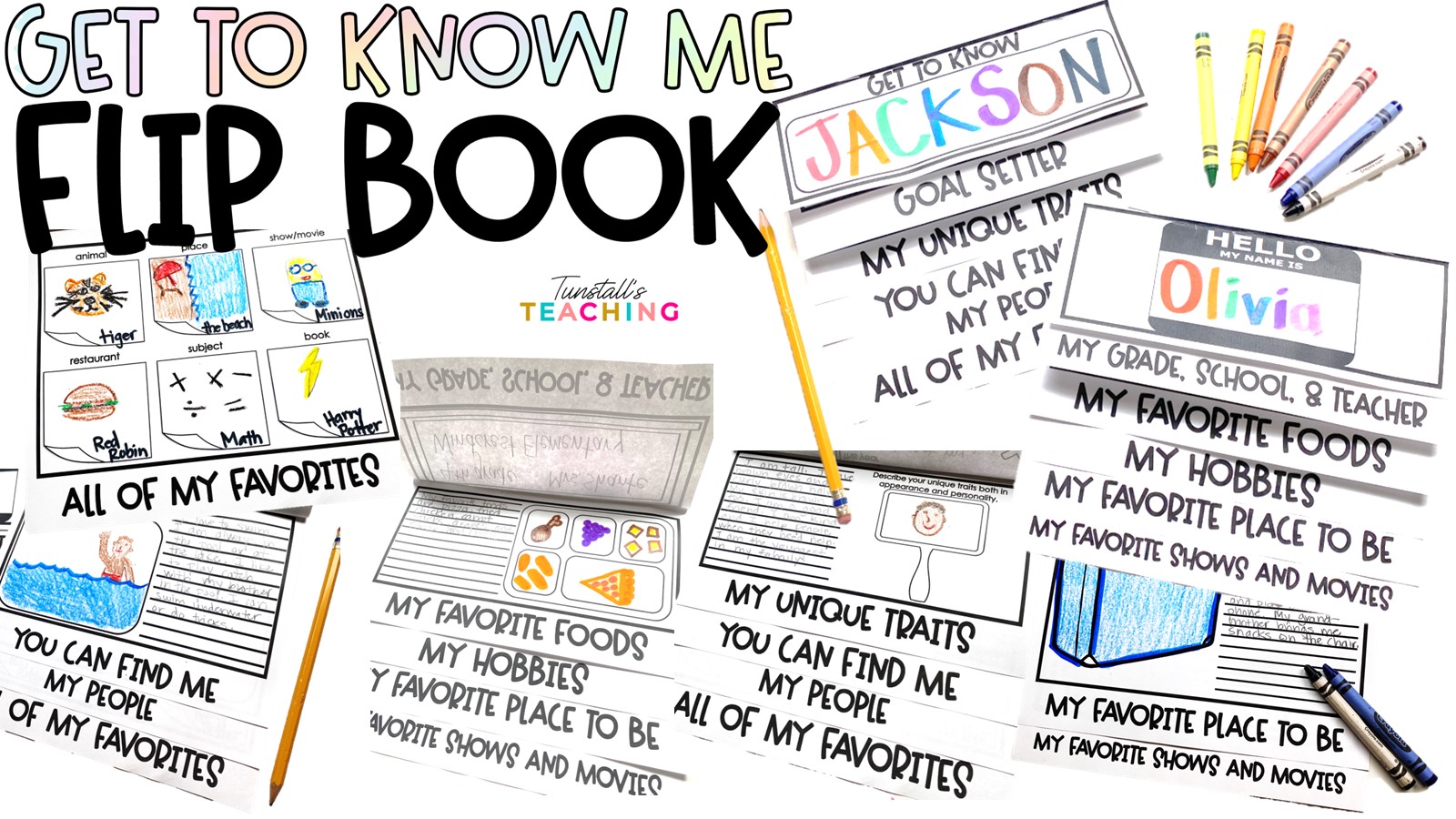
Some students walk in ready to talk to everyone. Others need time. A mix of speaking, writing, movement, and reflection gives more students a way into the community without making the first day one long round of forced introductions. For another option focused specifically on student reflection, my Get to Know Me Flip Book for grades 3–5 can also be spread across the first week.
Help Students Identify Their Strengths
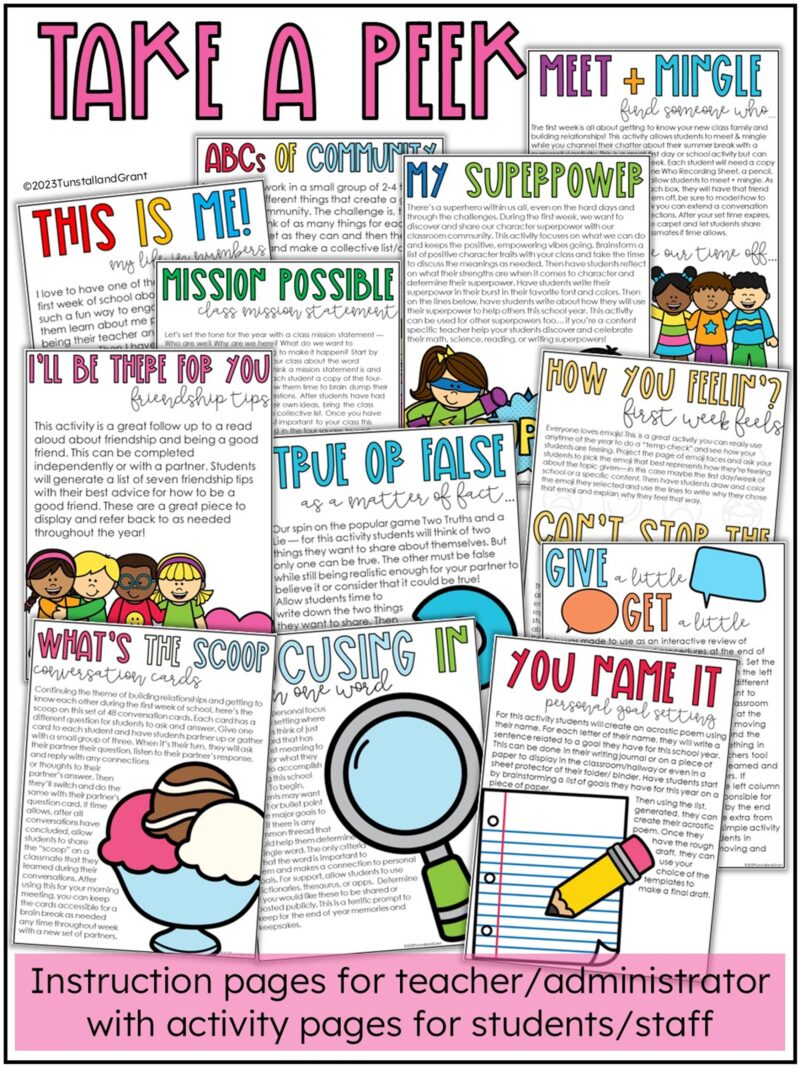
One of the included first-week lessons is My Superpower.
Students think about their own strengths and the positive qualities they bring into the classroom. I like beginning the year this way because upper elementary students are often quick to focus on what they are not good at.
My Superpower shifts the conversation. Students have an opportunity to think about a strength they already carry with them. That strength may be academic, but it does not have to be.
A student may be:
- a good listener
- creative
- persistent
- funny
- organized
- encouraging
- curious
- calm under pressure
- willing to help
Those strengths matter in a classroom community too.
Choose One Word for the Year
Focusing In On One Word gives students a chance to think about the kind of year they want to have.
Rather than beginning with a long list of resolutions, students can focus on one meaningful word.
Their word might represent:
- a goal
- a habit
- a feeling
- a personal quality
- something they want more of this year
This can become a simple starting point for beginning-of-year reflection and goal setting.
Friendship Activities for the First Week
Friendship can feel complicated during the first days of school.
Some students arrive with a best friend already in the room. Others do not know anyone. Friend groups may have shifted. New students may be trying to figure out where they fit.
The I’ll Be There for You friendship activity gives students space to think about what friendship actually looks like.
Rather than only saying, “Be kind,” students can talk and write about specific actions that help friendships grow.
The resource also includes interactive activities such as Get a Little, Give a Little, giving students more opportunities to share ideas and learn from one another.
Create a Class Mission Statement Together
One of my favorite upper elementary activities in the set is Mission Possible.
Students think about questions such as:
- Who are we?
- Why are we here?
- What do we want to accomplish?
- How are we going to make it happen?
Then the class can use those ideas to create a shared mission statement.
I like this approach because the classroom expectations are not introduced only as a list of things the teacher has decided.
Students have an opportunity to think about the kind of class they want to be part of and what it will take from everyone to create it.
The finished mission statement can become something you return to later when the class needs a reminder or reset.
Talk About First Week Feelings
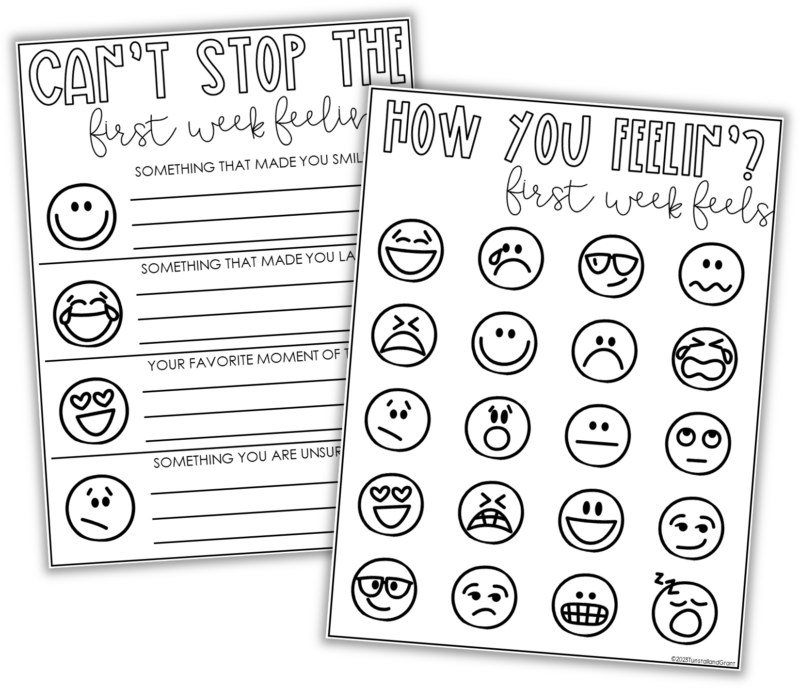
The first week can hold a lot of different feelings at once. The included first-week feelings activities give students ways to identify, discuss, and reflect on those experiences.
Activities include:
- Can’t Stop the First Week Feelings
- Can’t Stop the Feelings
- How You Feelin’? First Week Feels
I do not need every student to feel the same way about coming back to school.
I do want students to understand that there is room for different experiences in the classroom.
Use My Life in Numbers for a Different Kind of Get-to-Know-You Activity
This Is Me! My Life in Numbers gives students a more age-appropriate way to share personal information by connecting it to numbers.
This type of activity can work especially well in upper elementary because students are still sharing about themselves, but the format feels different from a traditional All About Me worksheet.
It can also provide natural conversation starters as students explain what their numbers represent.
Goal-Setting Activities for Grades 3–5
The beginning of the year is a natural time to talk about goals, but I like keeping that conversation manageable.
You Name It: Personal Goal Setting gives students a structured way to think about a goal and what they want to work toward.
For some students, the goal may be academic.
For others, it may involve:
- organization
- participation
- confidence
- friendship
- independence
- persistence
The important part is giving students time to think about where they are beginning and where they would like to grow.
First Week Activities That Include Talking, Writing, and Movement
The included activities give teachers options for different parts of the day.
Students can:
- mingle
- talk with a partner
- respond to conversation cards
- reflect independently
- write
- compare ideas
- pass and respond
- build a class mission
- discuss friendship
- set goals
Activities such as Read, Think, Write, Pass and Give a Little, Get a Little give students structured ways to interact while still keeping the activity purposeful.
That variety is useful during the first days when attention, energy, and schedules can all be unpredictable.
How to Plan the First Week of School With These Activities
A simple first-week structure might look like this:
The days of the week don’t matter and the slides have both options with and without the days listed.
Monday
- Meet + Mingle activity
- one simple class conversation
- introduce My Superpower
- begin learning routines between activities
Tuesday
- True or False Tuesday
- partner conversation
- friendship activity
- reflect on one classroom expectation
Wednesday
- What’s the Scoop conversation cards
- This Is Me! My Life in Numbers
- partner or table sharing
Thursday
- Think About It Thursday
- ABCs of Classroom Community
- begin class mission work
Friday
- Feel Good Fri-YAY!
- first week feelings reflection
- personal goal setting
- revisit the class mission
Then continue into the second week with any activities you did not use, more conversation cards, deeper community discussions, and additional reflection.
The resource is designed to give you options rather than force every classroom into an identical script.
Use First Week Activities to Teach Routines Naturally
Students may know how to line up or work with a partner in a general sense, but they do not know how those things work in your classroom yet.
First-week activities give you authentic opportunities to teach and practice expectations.
Before a partner activity, you can model:
- how to choose or move to a partner
- what an appropriate voice level sounds like
- how to take turns
- how to listen
- what to do when finished
Before independent reflection, you can teach:
- where materials belong
- what students should do when they need help
- how completed work is handled
- what early finishers do next
The activity gives students something meaningful to do while the routine gives the class a structure they can reuse later.
For more intentional partner systems, I also shared my student partner and pairing ideas for making classroom partnerships easier to manage.
Build Classroom Community Beyond the First Week
For more community-building support, I also created Our Class Is a Family activities for back to school with class meeting scenarios, student reflection, reading response activities, a collaborative banner, and class book options.
These resources can work well together because one helps you launch the year with varied first-week activities while the other gives you more ways to revisit what it means to belong to a classroom community.
Start Upper Elementary Math With Clear Routines Too
Once the classroom community and general routines begin taking shape, I also start thinking about how students will work during specific academic blocks.
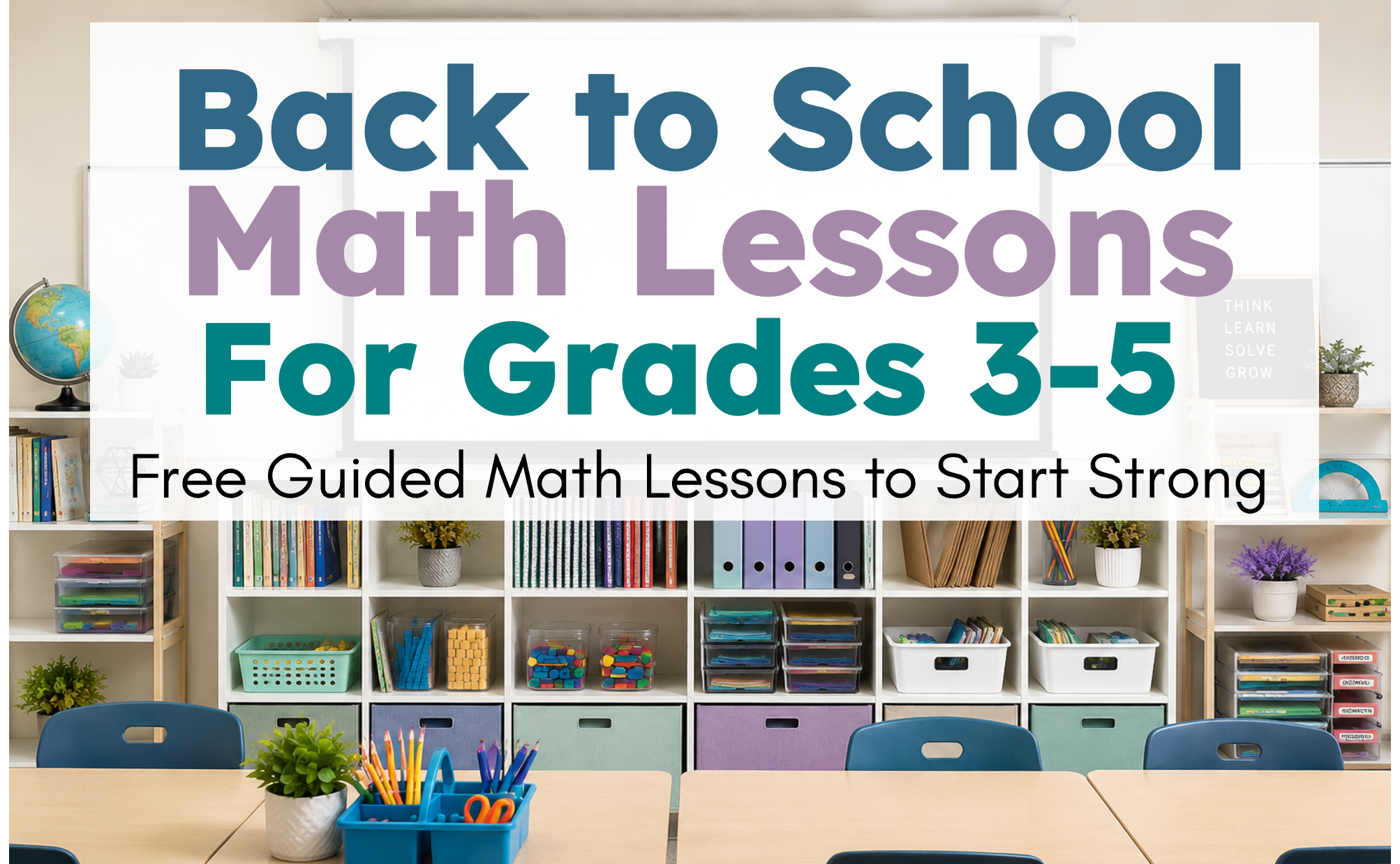
For grades 3–5, I have free back-to-school Guided Math lessons that can help introduce math routines, discussion, small groups, student materials, and the structure of math workshop.
Need First Week Activities for K–2?
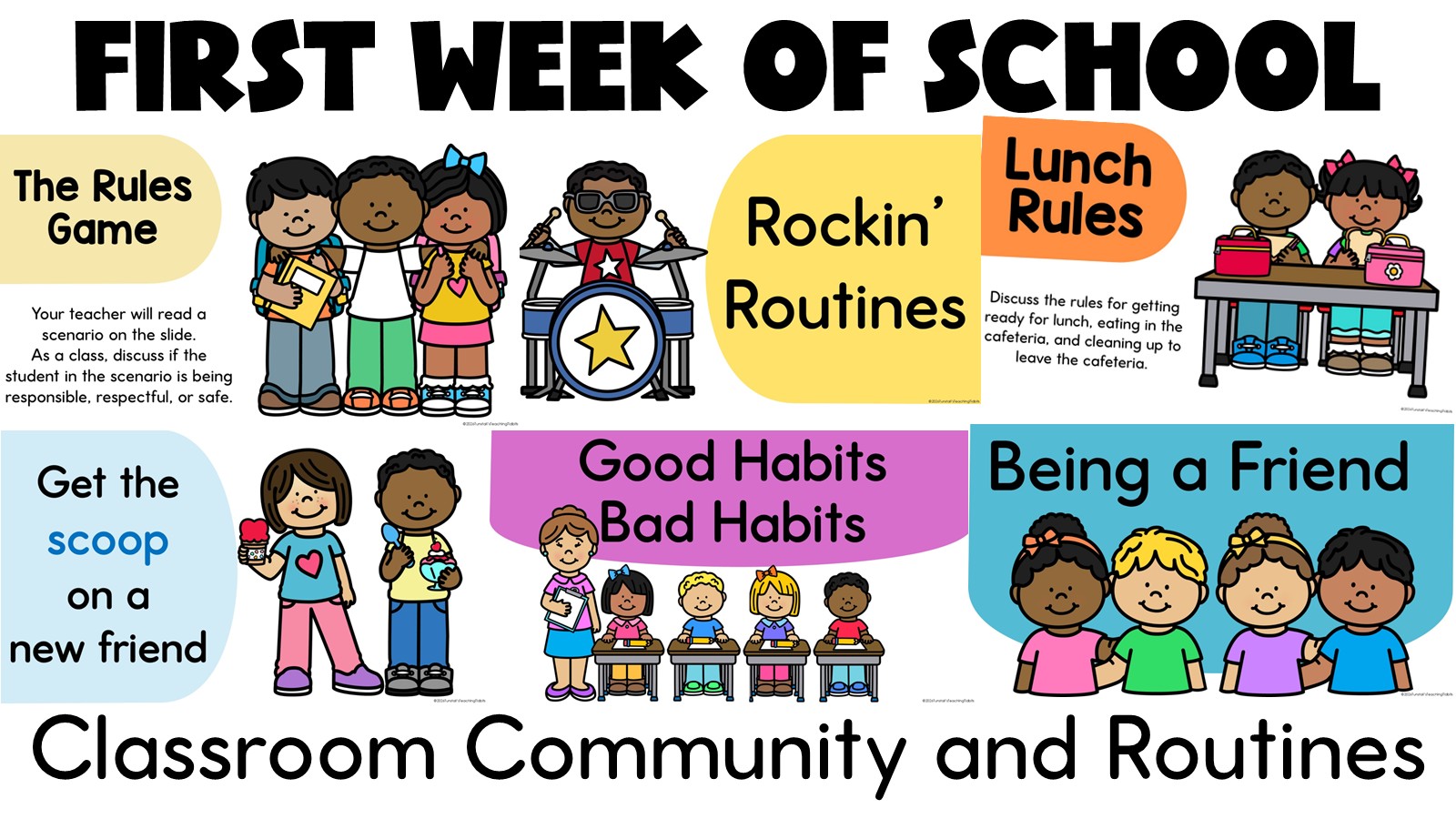
Younger students need a different kind of first-week support. The K–2 version includes activities created specifically for kindergarten, first grade, and second grade classrooms, with class meetings, routines, friendship lessons, first-day pages, printables, and activities for those little pockets of time that always appear during the first week.
First Week of School Activities for 3rd, 4th, and 5th Grade
The first week does not need to be a choice between nonstop icebreakers and jumping straight into a full academic schedule.
That is what I wanted these First Week of School Activities for 3rd–5th Grade to provide: enough structure to help teachers feel ready, with enough variety to respond to the students actually sitting in front of them.
The resource includes 100 pages of upper elementary activities designed to support the first two weeks of school through morning meetings, classroom community lessons, friendship activities, conversation cards, reflection, goal setting, and get-to-know-you experiences.