
Free Fall Math Centers for Comparing, Ordering, and Adding 10 and 100
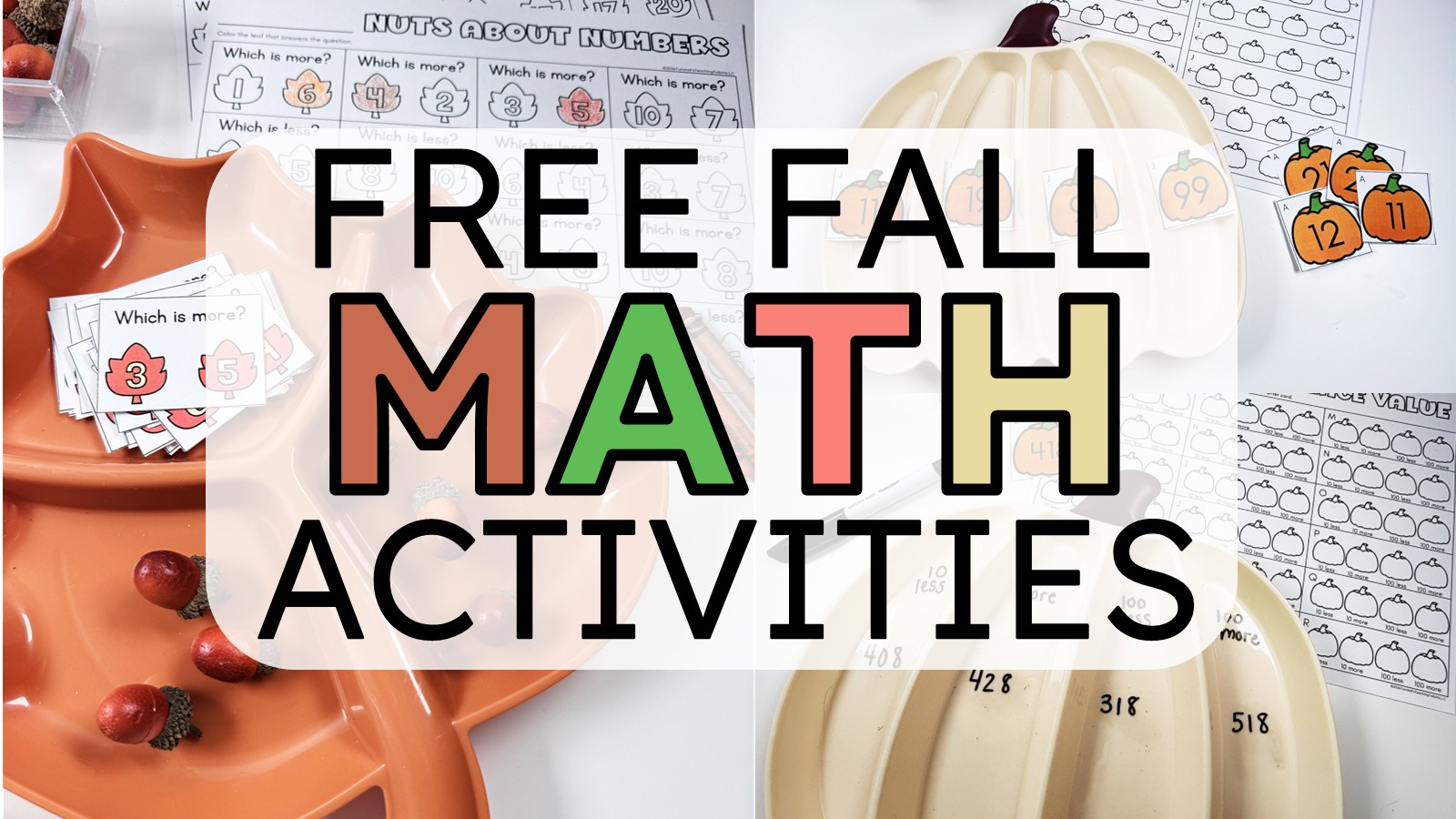
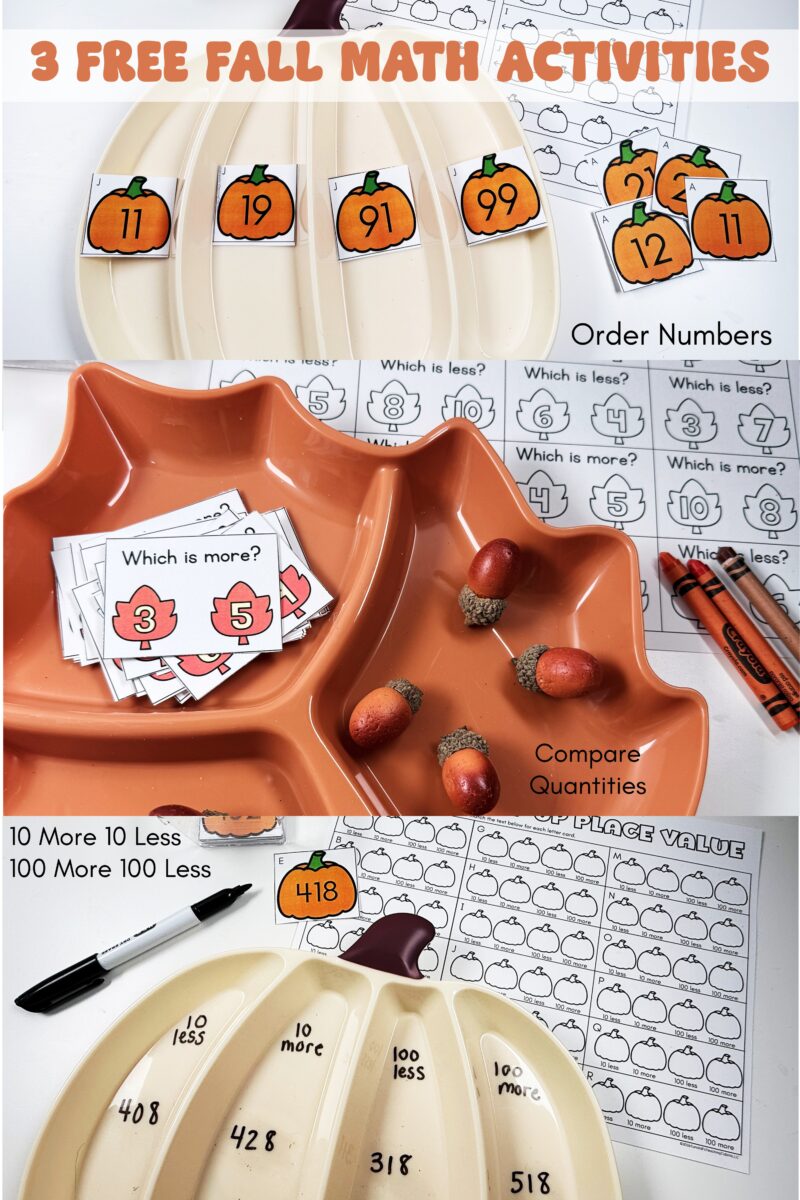
Fall math centers can give students another opportunity to practice the skills you’re teaching. I created three free fall math centers that focus on comparing quantities, ordering numbers, and adding and subtracting 10 and 100.
Nuts About Numbers, Pumpkin Order, and Pump Up the Place Value bring those skills into hands-on practice with a few seasonal materials. Introduce an activity at the small-group table, listen to how students explain their thinking, and then use it for partner practice or a math station.
Choose the free fall math center that fits your students’ current learning. These centers can support a new lesson or provide another round of practice with a previously taught skill.
Download the Free Fall Math Activities
Choose your skill: comparing quantities, ordering numbers, or adding and subtracting 10 and 100.
Nuts About Numbers: Comparing Quantities to 20
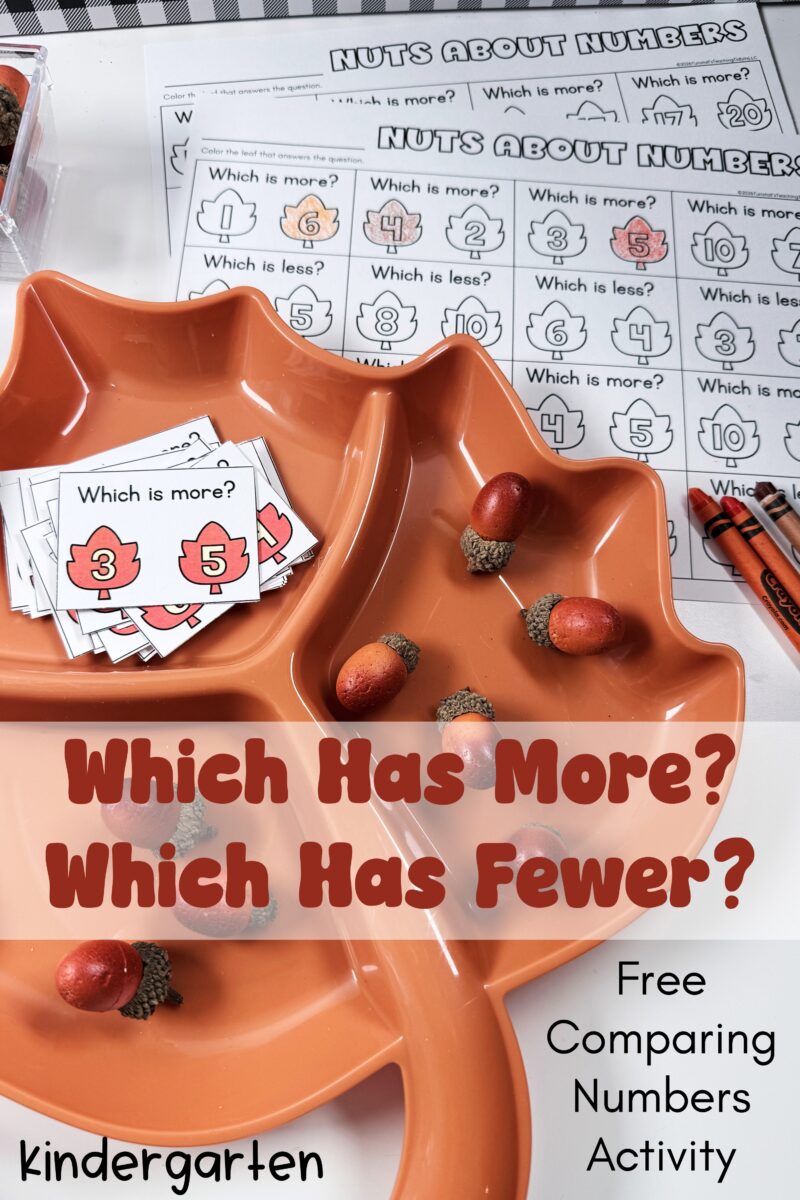
Which group has more? Which has fewer? How can you prove it? Nuts About Numbers gives students practice comparing two groups with quantities up to 20. Students count, compare, and describe the groups using more, fewer, and the same number.
Make the Comparison Visible
Start with two groups of objects. Have students determine how many are in each group and explain how the quantities compare. Students can check their thinking by matching the objects one-to-one. This helps them see whether one group has objects left over or whether every object has a match. Try spreading one group farther apart. Does that change how many objects it contains? Have students check rather than relying on how much space the group takes up.
Questions to Ask
- Which group has more? How do you know?
- Which group has fewer?
- How could you make the groups equal?
After modeling the activity, have partners take turns comparing and checking. Listen for students connecting the number of objects to the comparison they make.
Continue the Learning
For connected lessons and additional practice with comparing numbers, explore the unit linked below.
Try Nuts About Numbers Free
Practice comparing quantities to 20 using more, fewer, and the same number. Download the free activity, or explore Kindergarten Total Math Unit 8 for related comparing-numbers instruction and practice.
Pumpkin Order: Ordering Numbers from Least to Greatest
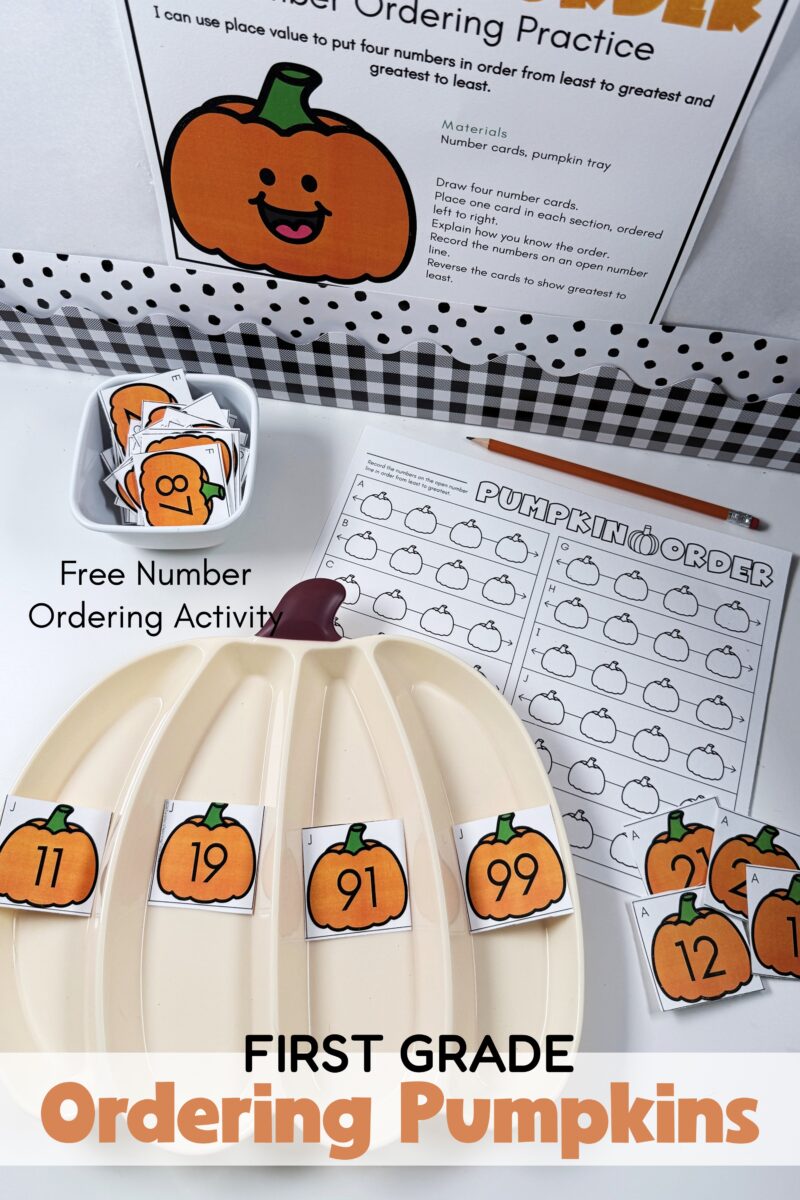
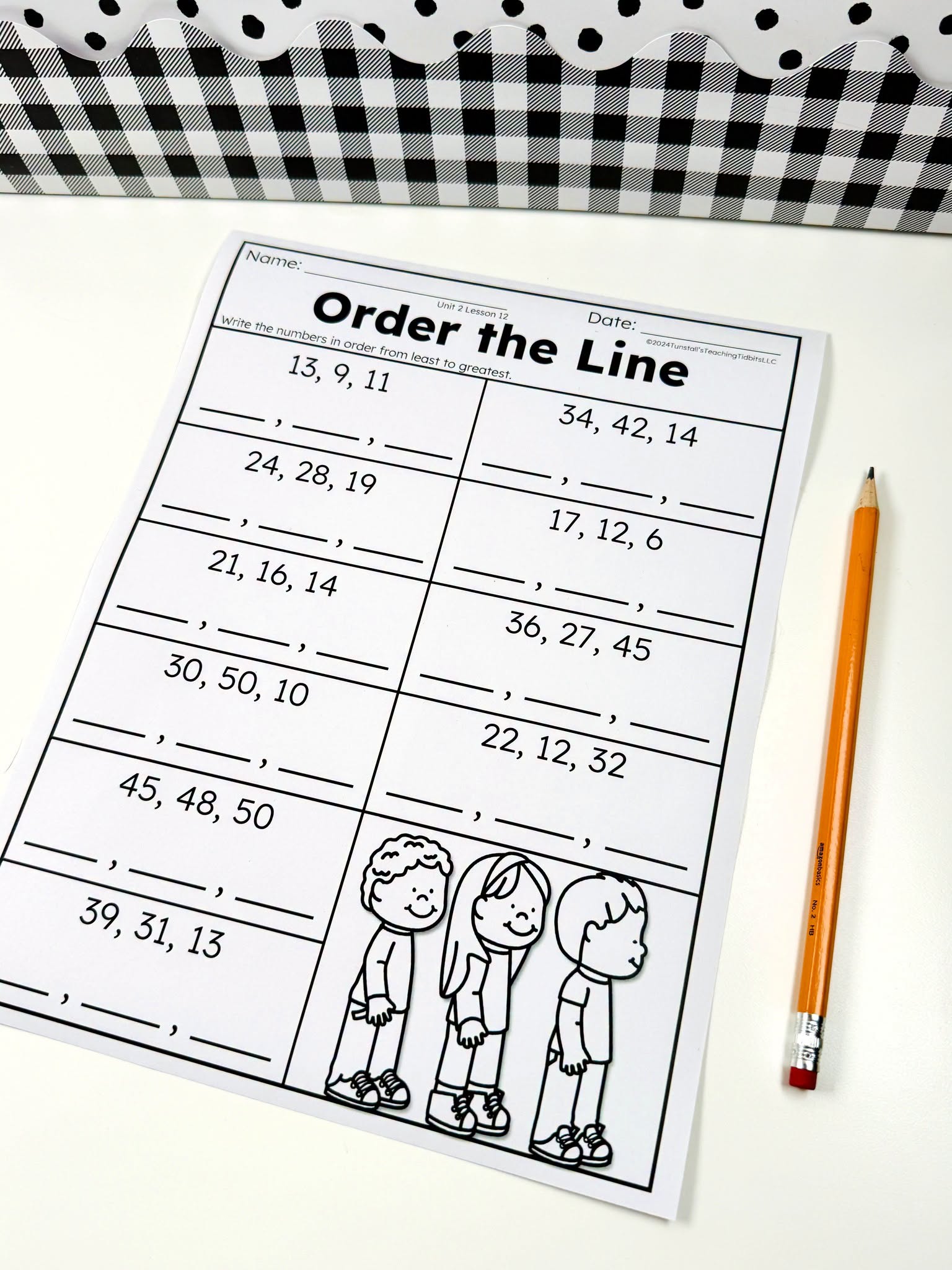
Pumpkin Order gives students practice arranging four numbers from least to greatest or greatest to least. Students need to consider how the numbers relate to one another, place them in order, and check the completed sequence.
Compare, Place, and Check
Begin by naming the direction students will use. Have them identify which number belongs first and explain why. Students who need support can compare two numbers, then add the remaining numbers one at a time. A number line can help them check their decisions. Once all four numbers are in place, have students read the sequence aloud. Then reverse the direction. The numbers stay the same, but their positions change.
Questions to Ask
- Which number belongs first? Why?
- How do you know this number belongs between these two?
- What changes when you switch from least to greatest to greatest to least?
Use Pumpkin Order when number order fits your instruction or when students need a review. The seasonal materials give students a new way to revisit the skill.
Try Pumpkin Order Free
Practice ordering four numbers from least to greatest and greatest to least. For related instruction on number relationships and place value, explore First Grade Total Math Unit 4.
Adding and Subtracting 10 and 100: A Free Second Grade Math Activity
As second graders work on addition and subtraction within 1,000, adding and subtracting tens and hundreds gives them an opportunity to use their understanding of place value. Pump Up the Place Value focuses on finding 10 more, 10 less, 100 more, and 100 less than a starting number.
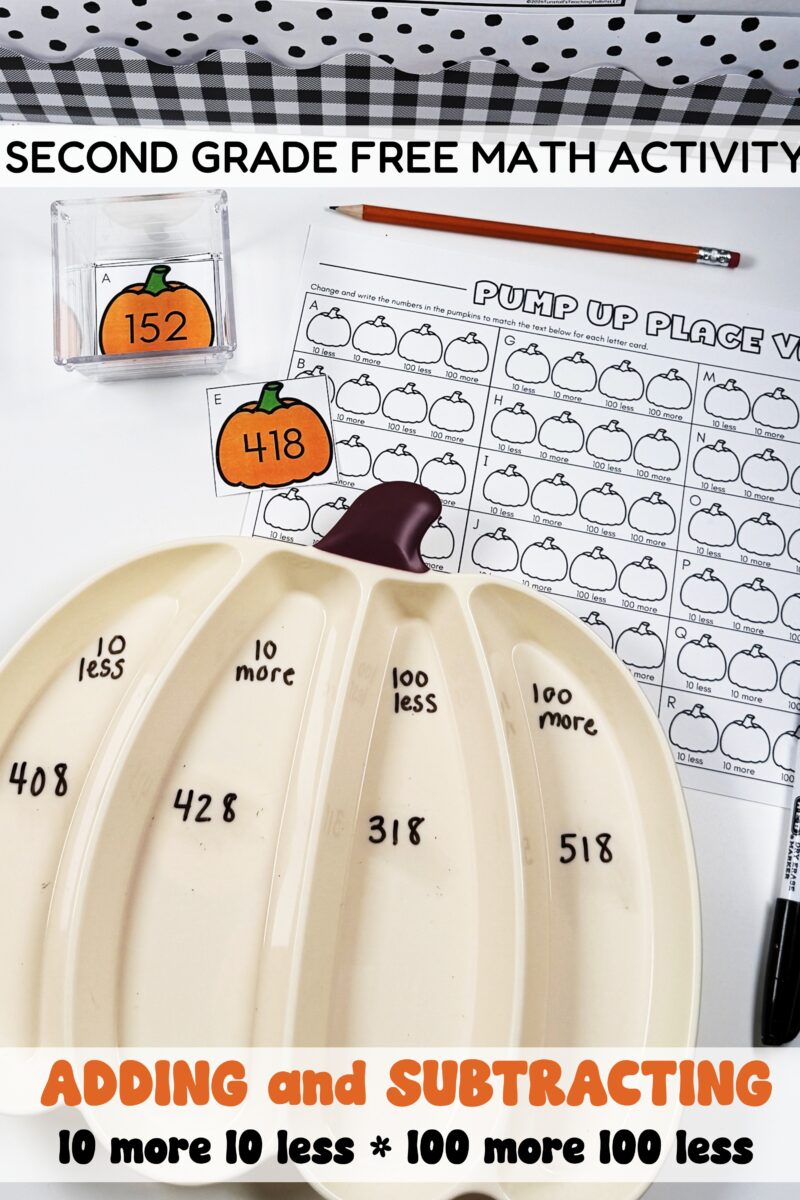
The four sections of the pumpkin tray organize those changes. Students determine each new number and explain how it relates to the starting number.
Connect More and Less to Addition and Subtraction
Make the operation explicit:
- 10 more: add 10.
- 10 less: subtract 10.
- 100 more: add 100.
- 100 less: subtract 100.
For example, begin with 243. Students find:
- 10 more: 243 + 10 = 253
- 10 less: 243 − 10 = 233
- 100 more: 243 + 100 = 343
- 100 less: 243 − 100 = 143
Connect the equations to base-ten blocks or drawings so students can explain the change in value.
Go Beyond Naming the Answer
Ask students to describe what they added or removed. “I added one ten” connects the answer to the quantity changing.
When students are ready, include examples that cross a hundred, such as 195 + 10 = 205. Use a model to show why adding one ten can also change the hundreds digit.
Questions to Ask
- What did you add or subtract?
- How could you show that change with a model?
- How can you check your answer using the opposite operation?
This activity provides focused practice with adding and subtracting 10 and 100. Use it alongside your broader instruction on addition and subtraction within 1,000.
Practice Adding and Subtracting 10 and 100
Download Pump Up the Place Value for practice finding 10 more, 10 less, 100 more, and 100 less. Connect each change to adding or subtracting tens and hundreds.
For an additional teaching resource, try the free 100 Less, 100 More second-grade sample lesson. Explore Total Math Unit 2: Place Value for related place-value instruction that supports this work.
Introduce the Activity, Then Move It to a Math Center
Before placing an activity in a math center, model one example and solve another together. Have students explain both the math and the directions.
During partner practice, listen for the reasoning behind an answer. Can students explain which group has fewer, why a number belongs in a particular position, or what changes when they subtract 100?
Those explanations can help you decide who is ready to practice independently and who needs another example at the small-group table.
Download the Free Fall Math Centers
Choose the skill your students need next: comparing quantities, ordering numbers, or adding and subtracting tens and hundreds.
Download the Free Fall Math Activities
Choose your skill: comparing quantities, ordering numbers, or adding and subtracting 10 and 100.
More Fall Learning Ideas
Keep your fall planning going with these related activities:
- November Math Centers: Explore seasonal math centers, journals, and practice pages, with skill lists for kindergarten, first grade, and second grade.
- Fall Centers and Printables: Find more practice with comparing and ordering numbers, place value, and addition.
- Fall Math and Literacy Workstations: Extend the seasonal practice into both your math and literacy rotations.
- Pumpkin Themed Learning: Connect your pumpkin math activities to science explorations, books, and writing.
- Navigating November: Find additional November ideas for math, literacy, writing, science, and classroom routines.
Never miss a tidbit
Teach More. Plan Less.
Get FREE research-based K-5 resources and fresh classroom and teaching ideas that help you make learning engaging and meaningful for your students!

18 years in the classroom, K-5 math PD presenter, and author of Guided Math AMPED. More about me


I would love to know where you got the leaf and pumpkin for the centers!