 Contact
Independent Literacy Stations: Simple K–5 Routines
Independent Literacy Stations: Simple K–5 Routines That Work
It can be a challenge to find meaningful work students can manage independently while you meet with a small group. The activities need to reinforce important literacy skills, but the routines also need to be familiar enough that students can work without repeated help.
Independent literacy stations consisting of a few purposeful, repeatable routines can make the literacy block more manageable for students and teachers.
The plan is simple: begin the literacy block together, provide clear instruction, and then give students meaningful ways to practice reading, writing, and word work with less teacher support.
What Current Reading Research Tells Us About Literacy Stations
The Science of Reading is not one program or set of activities. It is a large body of research about how students learn to read and write. This research supports explicit, systematic instruction along with opportunities for students to apply what they have learned.
The UFLI Foundations lesson routine provides a helpful example of this progression. Students review previously taught concepts, receive explicit instruction in a new concept, practice with guidance, and then apply the learning through word work, irregular words, reading, and writing in connected text.
That sequence helps clarify the role of independent literacy stations. A station should not be the first place students encounter a new phonics pattern, comprehension strategy, or writing skill. It should provide a familiar place to practice and apply instruction that has already occurred.
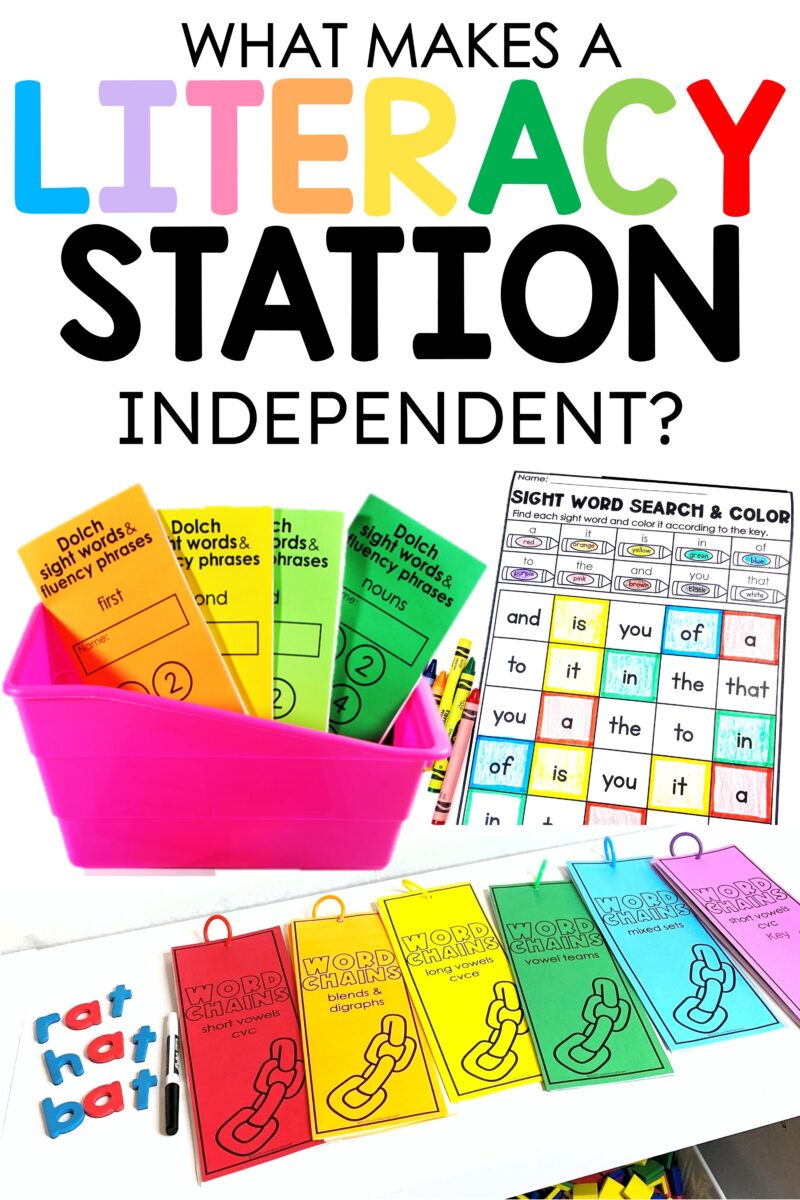
What Makes a Literacy Station Independent?
An engaging activity is not necessarily ready for independent use. If students still need repeated directions, help locating materials, or support understanding the skill, the activity may need more teacher modeling before it becomes a station.
Independent literacy activities are more manageable when:
- The skill has already been explicitly taught.
- Students have practiced the activity with teacher support.
- The directions and format are familiar.
- Students can access and return the materials.
- The task connects to a clear reading or writing purpose.
- Students have a simple way to show or reflect on their work.
Familiarity is important. When students already understand how an activity works, they can give more attention to the phonics, vocabulary, fluency, comprehension, grammar, or writing skill they are practicing.
Start the Literacy Block Together
Before students move into independent literacy stations, begin with a short shared routine. An ELA or writing warm-up can bring the class together for a quick reading, language, vocabulary, phonics, or writing prompt.
This is a useful time to review an earlier skill, model your thinking, address a misconception, and remind students of strategies they may need during independent work.
The warm-up does not need to take over the lesson. Keep it brief, focus the discussion on how students reached an answer, and then move into the day’s explicit instruction and small-group work.
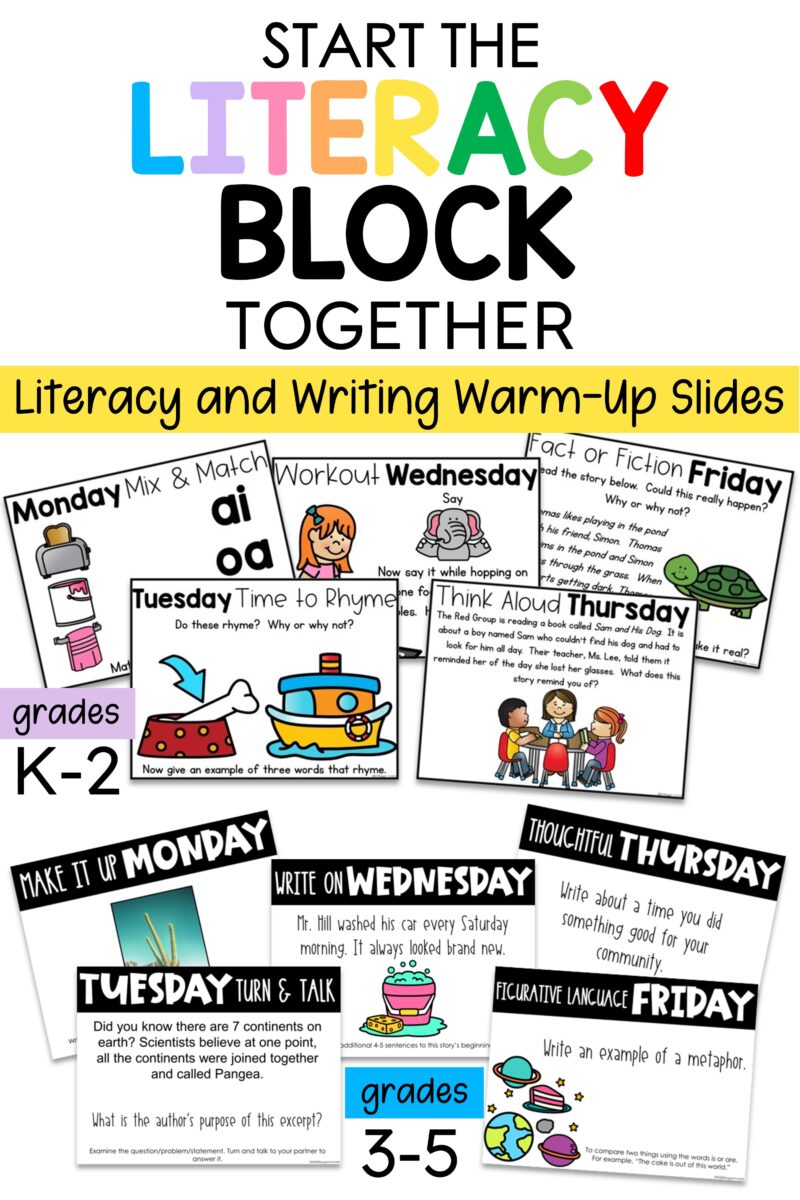
UFLI uses the beginning of each lesson to review previously taught phonemic-awareness and phonics concepts before introducing new learning. A literacy warm-up can serve a similar review purpose across the broader ELA block.
For a closer look at this routine, read how to use literacy warm-ups for spiraled review.
EXPLORE K–5 ELA WARM-UP SLIDES
Simple, Independent Practice: The Lit Kit K–5
Once a skill has been introduced and practiced together, students need opportunities to apply it with less teacher support. This is where the Lit Kit K–5 can anchor independent literacy practice.
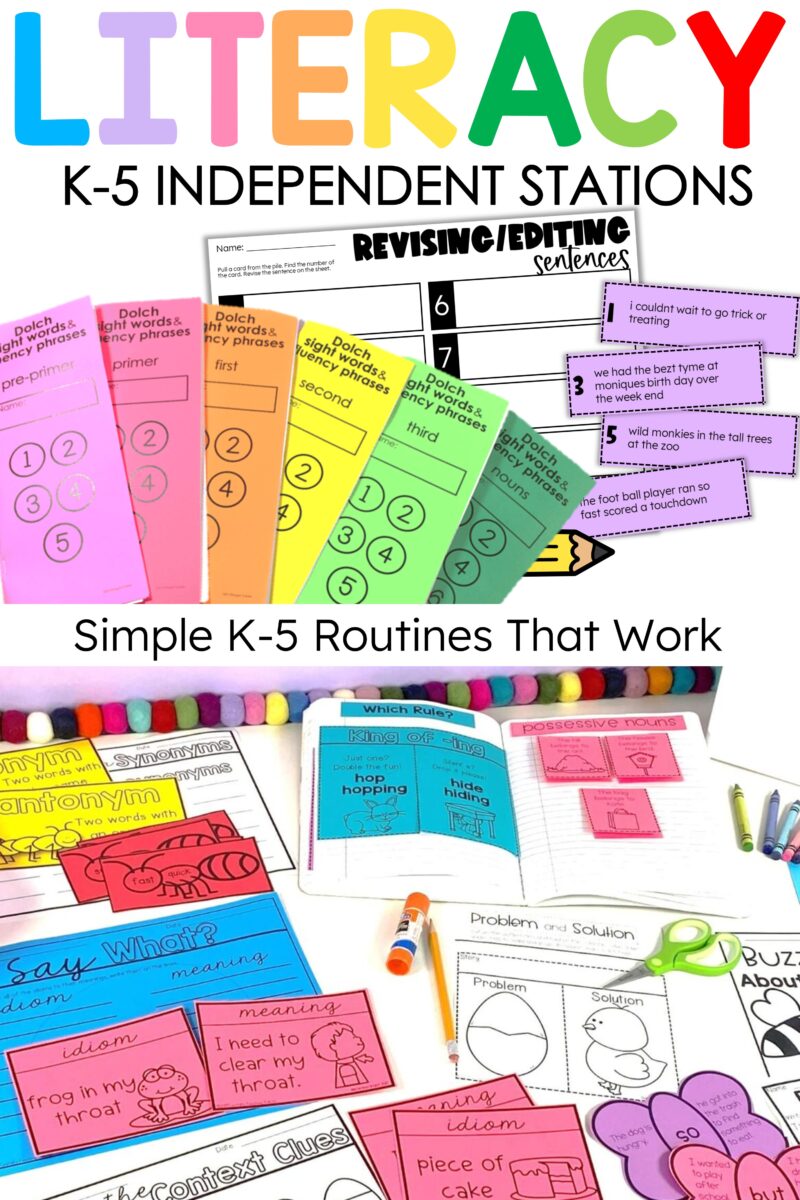
The Lit Kit includes standards-based activities for reading, phonics, grammar, vocabulary, comprehension, and writing. Teachers can introduce an activity during a whole-group mini-lesson or complete it with support in a small group. Once students understand the skill and routine, that familiar activity can move into an independent literacy station.
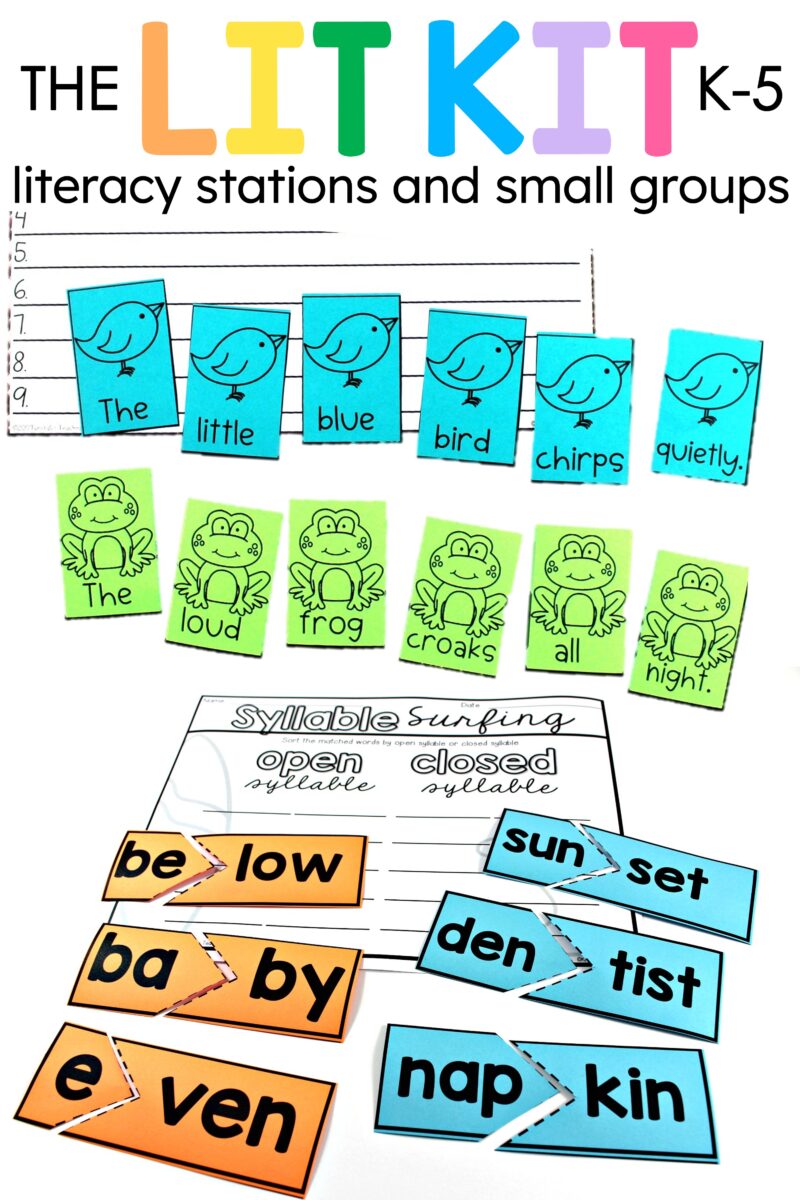
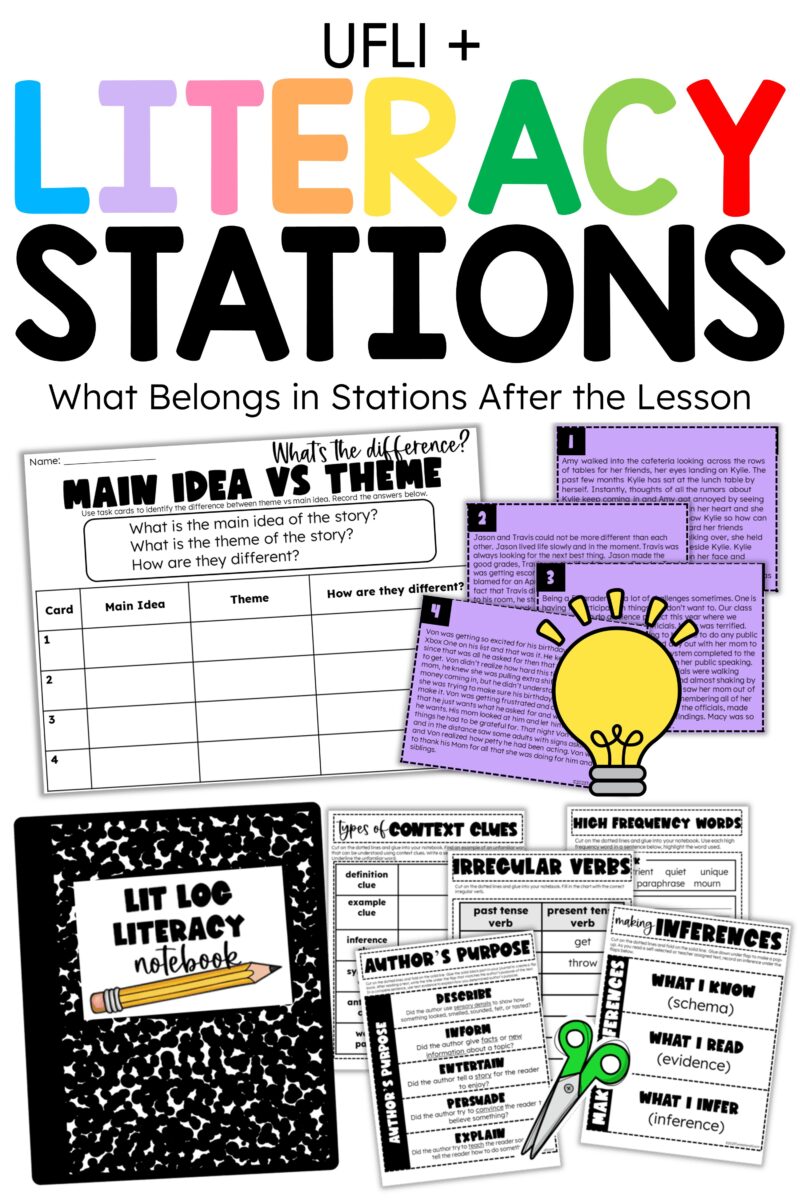
Each Lit Kit also includes Lit Log activities. Students complete these activities in a composition book to create an all-year record of their literacy learning. The Lit Log is one component of the larger Lit Kit, providing a consistent place for students to apply and keep their work.
Depending on the skill and the needs of the class, teachers can use Lit Kit materials for:
- Whole-group teaching
- Teacher-led small groups
- Partner practice
- Independent literacy stations
- Lit Log notebook responses
- Review and intervention
The Lit Kit is not intended to replace a school’s explicit phonics or structured literacy program. Instead, it provides additional reading, writing, language, and comprehension practice that can work alongside the required curriculum.
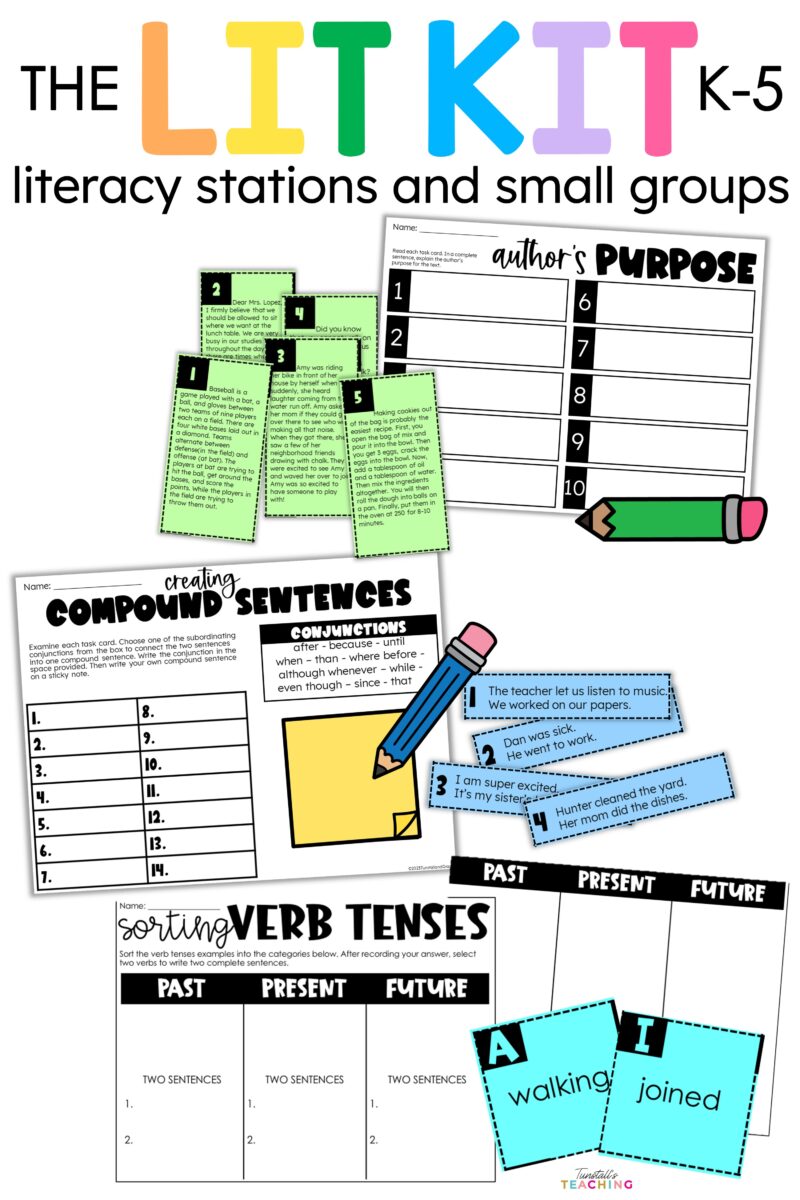
This distinction is important because UFLI describes Foundations as a program for foundational skills, including phonemic awareness, decoding, encoding, and fluency. UFLI also states that it should be paired with instruction in language comprehension and written expression. The broader activities in the Lit Kit can help teachers provide practice across those additional areas of the literacy block.
For upper elementary classrooms, these literacy activities for grades 3–5 show how the Lit Kit grows with older readers and writers.
Reinforce Phonics and Word Work
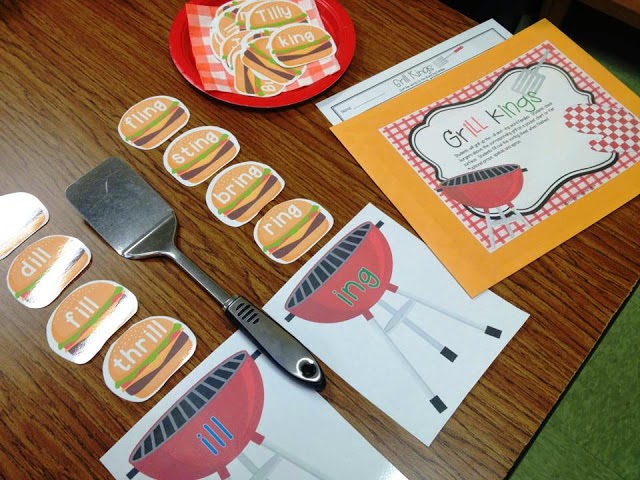
Phonics and word work are natural choices for independent literacy stations when the activities reinforce patterns that have already been explicitly taught.
If your school uses UFLI Foundations or another systematic phonics program, the independent practice should follow that instructional sequence. Students should work with sound-spelling patterns they have already learned rather than encountering an unrelated list of words at a station.
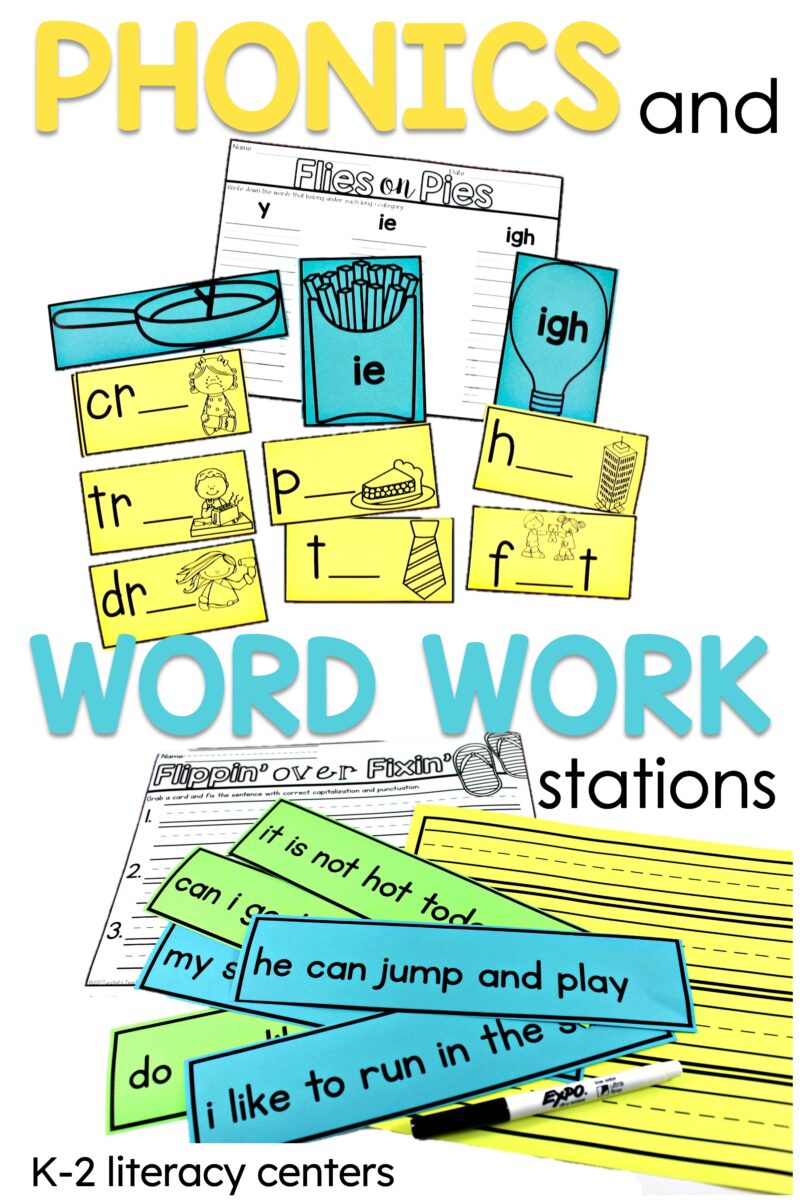
Depending on the current instructional focus, students might:
- Build and change words with letter tiles.
- Sort words by a taught spelling pattern.
- Read and spell words with known sound-spelling correspondences.
- Practice decoding and encoding.
- Work with previously taught irregular words.
- Read familiar words in sentences or connected text.
The purpose is not simply to complete an activity. Students are applying the sound-spelling knowledge developed during explicit instruction.
Teachers looking for hands-on K–2 practice organized by grade-level skills can explore ELA Stations by Standard. These stations provide targeted practice with phonics, vocabulary, grammar, language, and comprehension standards.
High-Frequency Word and Fluency Practice
Once high-frequency words have been explicitly taught, students benefit from seeing and reading them again in familiar routines. Independent literacy stations can provide this continued practice without introducing new words or spelling patterns.
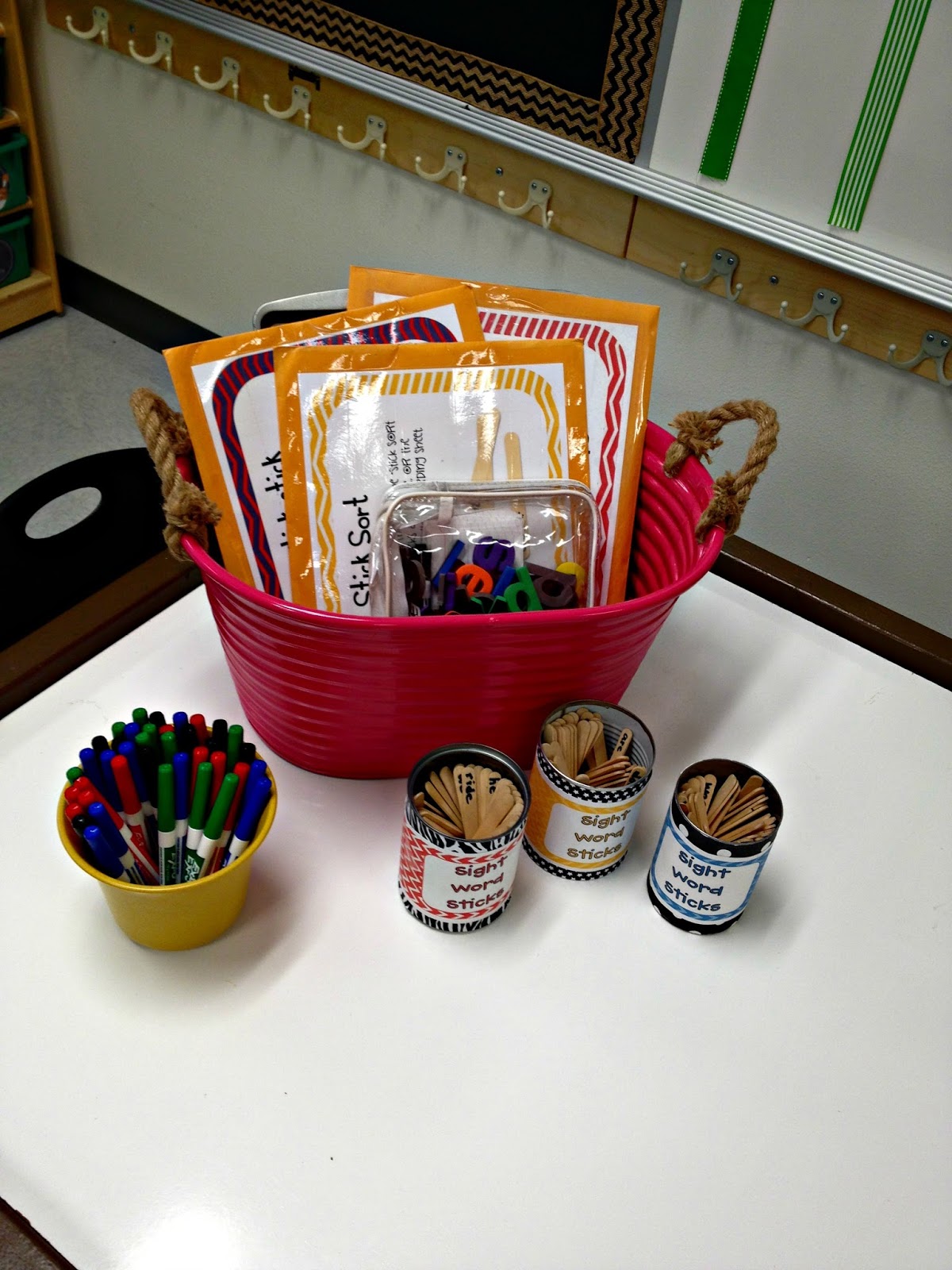
Sight Word and Dolch Books give students a predictable way to revisit previously taught words and build more automatic recognition through repeated reading. Fluency phrase books can extend that practice by placing familiar words into short phrases rather than presenting them only in isolation.
These resources support high-frequency word recognition and fluency practice. They are not decodable readers or a replacement for the explicit phonics instruction and connected-text practice provided through UFLI or another core reading program. Add the books to a station after students have received the instruction needed to use them successfully and independently.
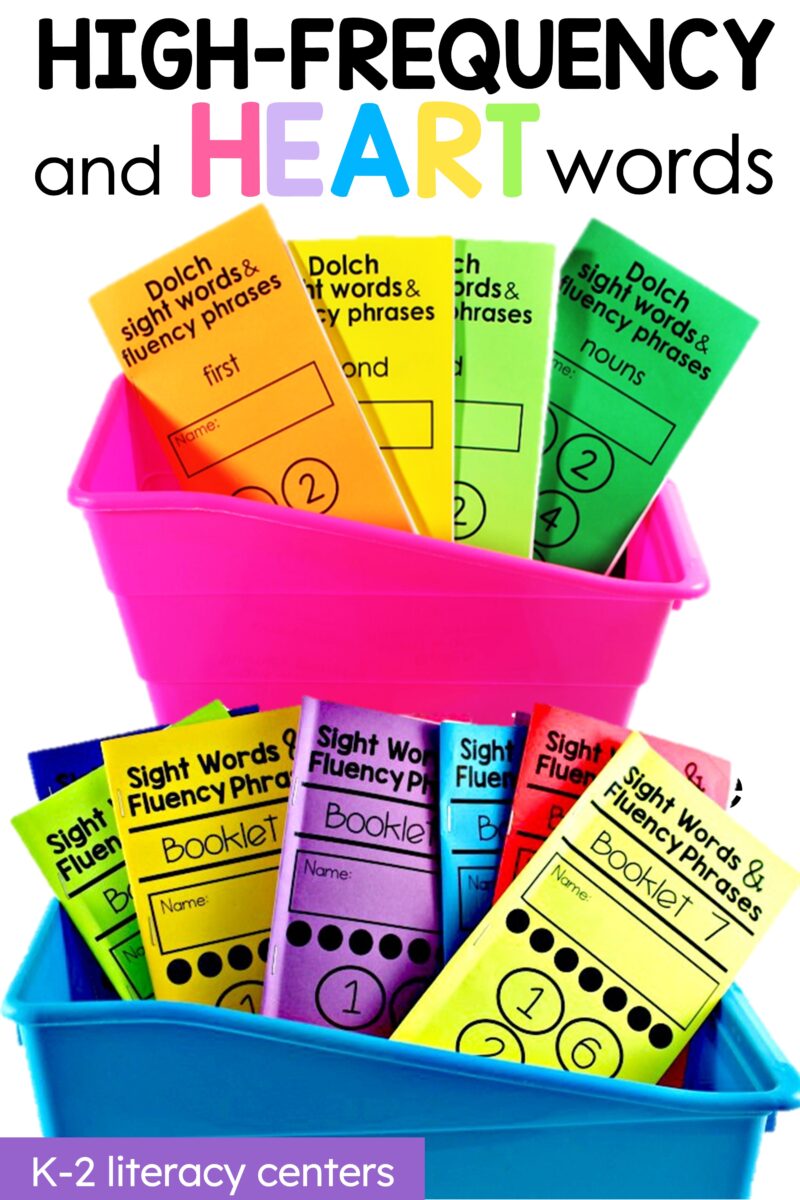
If you want to look more closely at sight words, high-frequency words, and heart words, read Teaching Sight Words Through Phonics. That post explains the instructional process in more detail.
Read and Respond
Science of Reading research includes more than phonics. Skilled reading also requires language comprehension, vocabulary, background knowledge, and the ability to make meaning from text.
UFLI Foundations focuses specifically on foundational skills and recommends pairing that instruction with a comprehensive approach to language comprehension and written expression. Reading-response activities can support this part of the literacy block after the comprehension skill has been explicitly taught and modeled.
Students can use notebook activities, response flip books, or graphic organizers with books they are already reading. If instruction has focused on character traits, text structure, main idea, summarizing, or comparing information, the independent response can ask students to apply that same thinking to another familiar text.
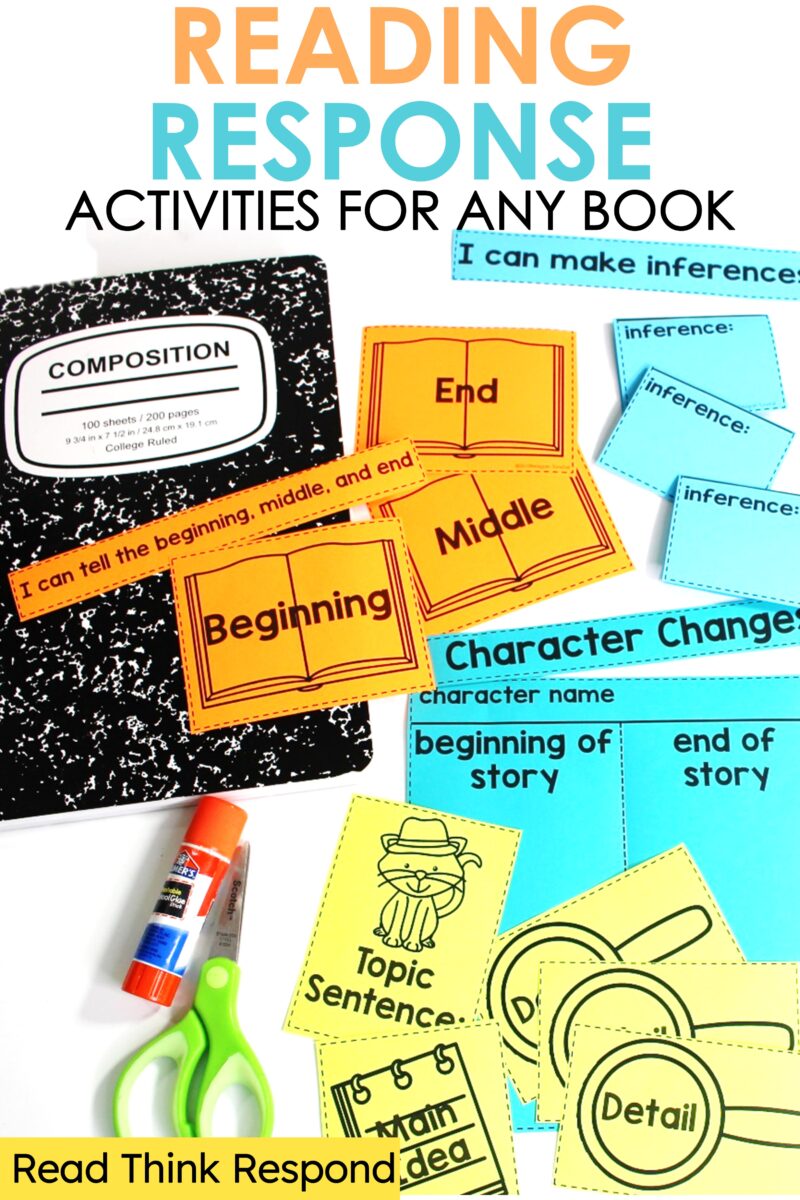
The response should match the student’s reading and writing development. A kindergarten student may draw, label, and explain an idea orally. An older student may write a response using details or evidence from the text.
The purpose is not to assign writing after every book. It is to give students a structured opportunity to think about, organize, and communicate what they understood.
For more formats and grade-level options, explore these reading-response flip books for guided reading, literature circles, and independent reading.
EXPLORE K–5 READING-RESPONSE RESOURCES
Write Independently
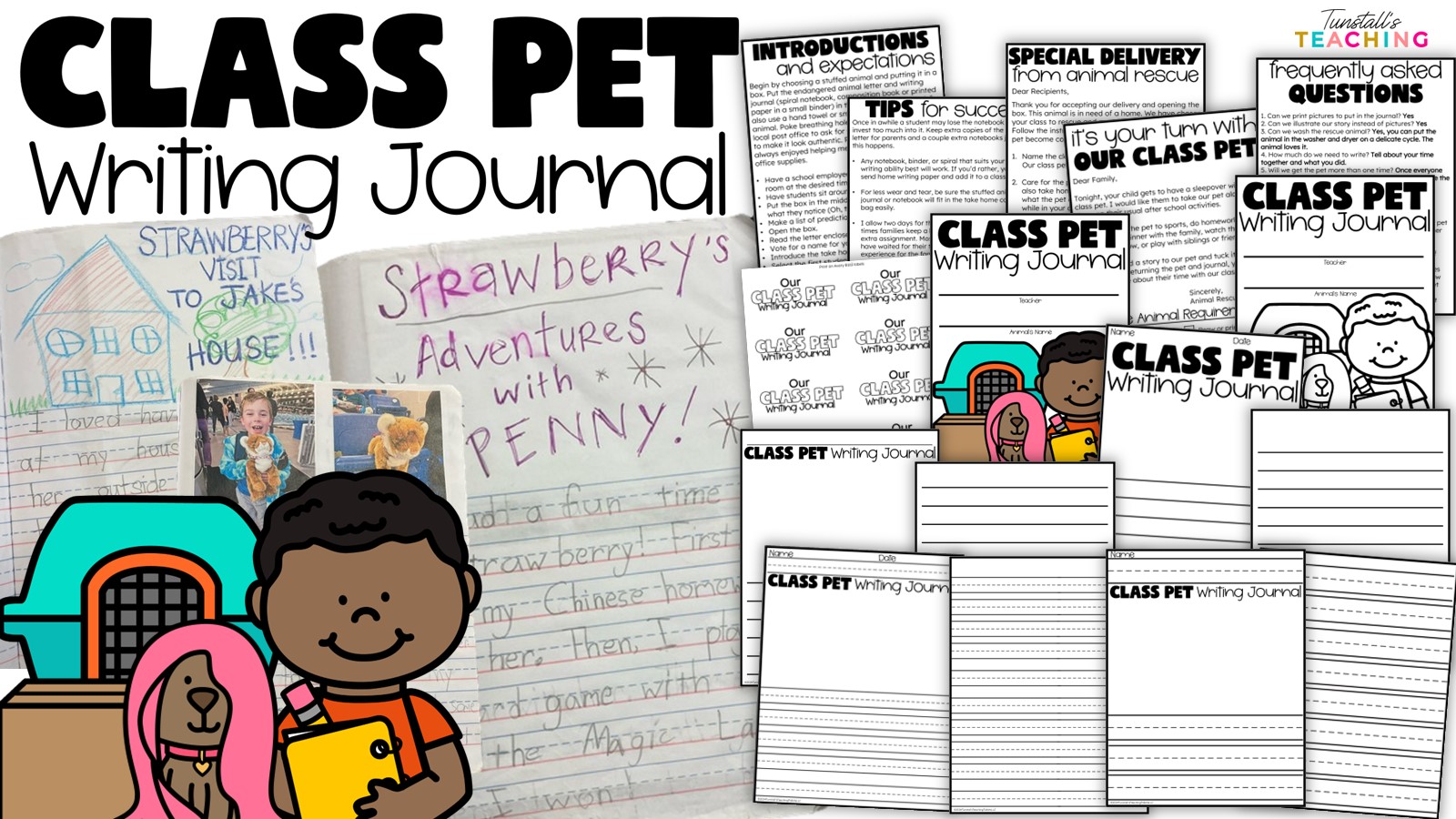
A writing station or protected independent writing time gives students a consistent place to generate ideas, build sentences, and use the writing process.
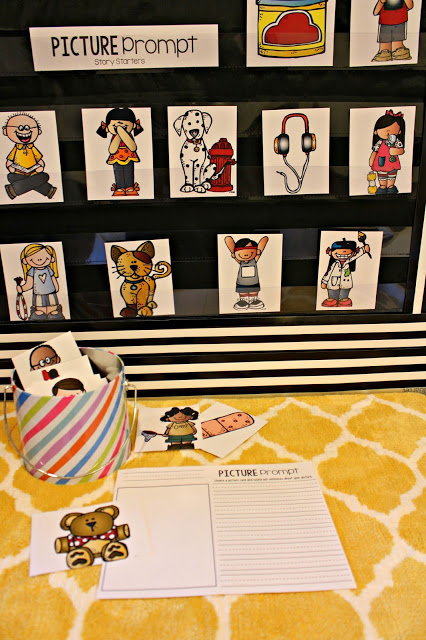
Students are more likely to work independently when they can choose from familiar paper, prompts, vocabulary supports, planning tools, or pieces already in progress. Mini-lessons provide the instruction. Independent writing gives students time to apply the skill.
In K–2, independent literacy stations usually require shorter routines, visual directions, and phonics practice matched to patterns students have already learned. In grades 3–5, students may be ready for longer reading, written responses, vocabulary, morphology, and more responsibility for managing their work.
Some older students may still need explicit decoding, encoding, or fluency support. The activity should match the students’ instructional needs rather than the grade-level label alone.
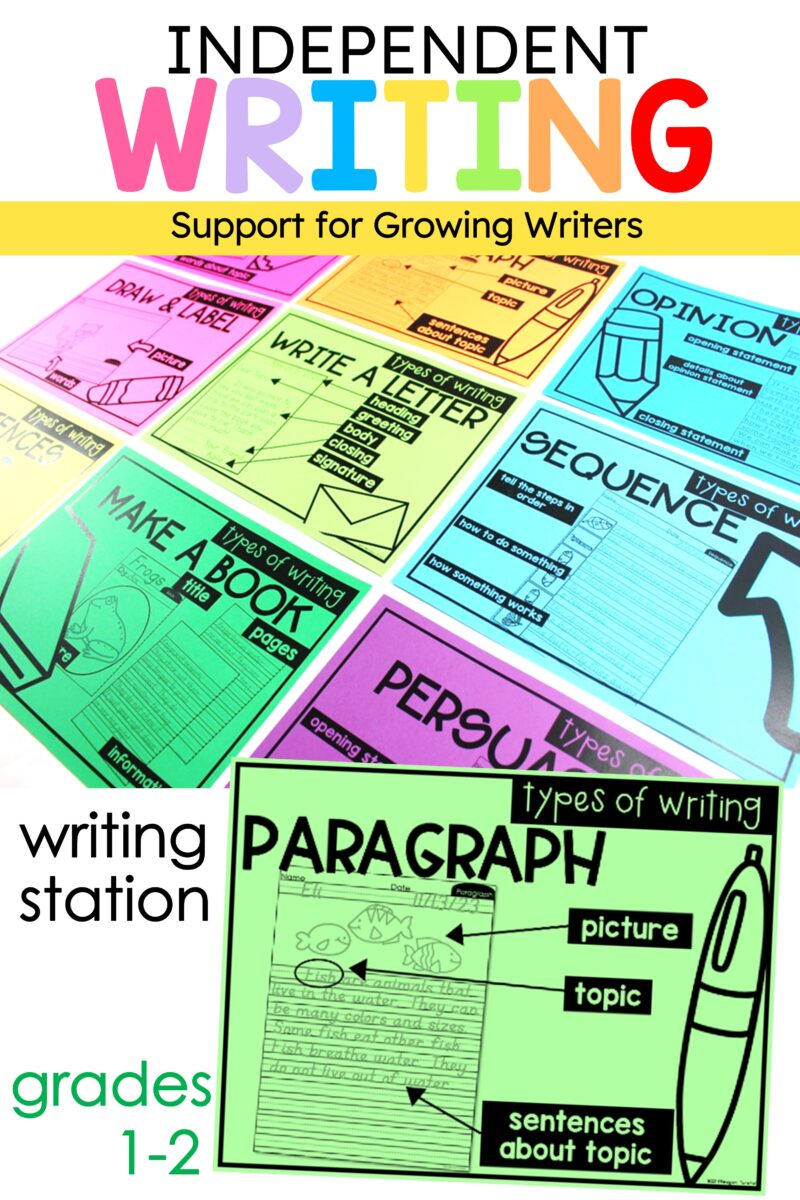
Writing remains an important part of an evidence-aligned literacy block. UFLI’s current guidance specifically notes that its foundational-skills program should be paired with instruction addressing written expression.
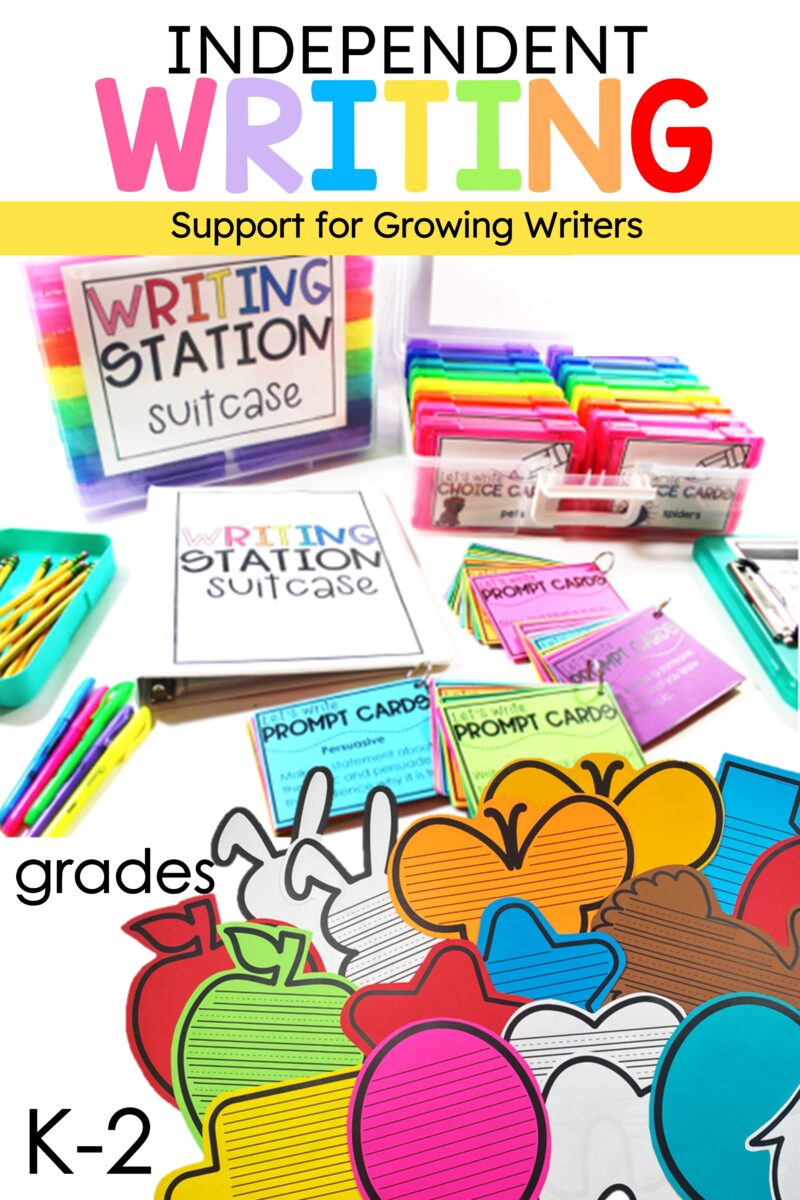
You can see how mini-lessons, independent writing time, and a writing station work together in Create the “Write Climate” in Your Classroom. For a closer look at the primary resource, visit the complete Writing Station Suitcase guide.
How Many Literacy Stations Do You Need?
You do not need every type of station running at once.
Begin with one or two routines students already understand. Practice how to begin, where to find materials, what to do when help is needed, and how to clean up. Add another station after the first routines are working successfully.
A simple literacy block might include:
- A short class warm-up
- Explicit whole-group or small-group instruction
- Teacher-led small-group practice
- Independent connected-text reading
- One familiar word-work, Lit Kit, reading-response, or writing routine
Some teachers rotate students through several stations in one day. Others spread the routines across the week. The number and length of the rotations should reflect the students’ independence, attention, instructional needs, and available literacy time.
Frequently Asked Questions About Independent Literacy Stations
Should students learn a new skill at a literacy station?
New phonics patterns, comprehension strategies, and writing skills should generally be introduced through explicit teacher-led instruction. The independent station can then provide additional practice with the taught skill.
Can literacy stations work with UFLI?
Yes. Independent practice can reinforce the phonemic-awareness, decoding, encoding, irregular-word, and connected-text work taught through UFLI. Station activities should match concepts students have already learned in the UFLI scope and sequence.
Additional stations can address language comprehension, vocabulary, reading response, and written expression because UFLI is not intended to be a complete ELA curriculum.
How can students be held accountable without grading everything?
Use one simple form of accountability that matches the task. This might be a Lit Log entry, a short response, a completed word sort, a reading record, a partner check, or an occasional teacher conference. Not every activity needs a grade.
How often should stations change?
The content can change as students learn new skills, but successful activity formats can stay consistent. A familiar routine containing new words, texts, or prompts generally requires less procedural reteaching than a completely new activity.
Are literacy centers, stations, and workstations the same thing?
Teachers and schools use these terms differently, but they often describe a similar structure: students work independently or with partners on purposeful literacy practice while the teacher provides focused instruction elsewhere.
Building an Evidence-Aligned Literacy Block
Independent literacy stations should connect directly to instruction.
Begin together. Explicitly teach the skill. Provide guided practice. Then move familiar activities into independent reading, phonics, word work, reading response, Lit Kit, or writing time.
UFLI and other systematic foundational-skills programs provide explicit instruction in how words work. Independent practice gives students additional opportunities to apply those skills. Reading, comprehension, vocabulary, and writing activities complete the broader literacy experience.
You do not need every option running at once. Choose the routines students can manage, teach the procedures clearly, and build from there. This protects small-group teaching time while keeping independent practice connected to meaningful literacy learning.