 Contact
Daily Phonics Review: A Quick Routine for Building Sound-Spelling Automaticity
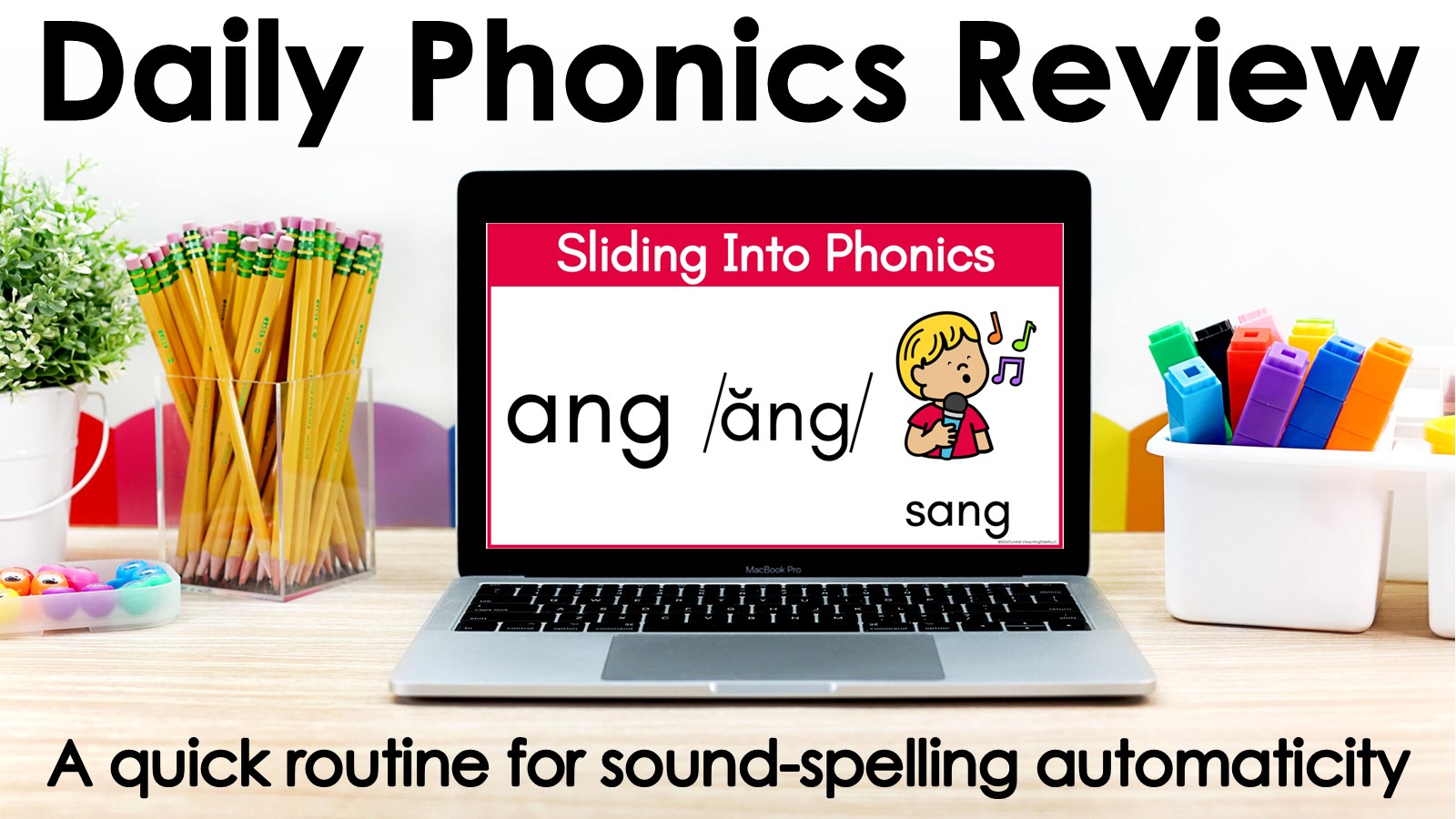
There is a big difference between a phonics skill students have been taught and a phonics skill they can retrieve automatically when they need it. A student may know that sh represents /sh/ during a phonics lesson but hesitate when the pattern appears later in a word. Another student may successfully read words with beginning blends one week and then need extra processing time when those same blends appear several weeks later. That does not necessarily mean the skill needs to be taught all over again. Daily phonics review is a perfect quick routine to support learned skills.
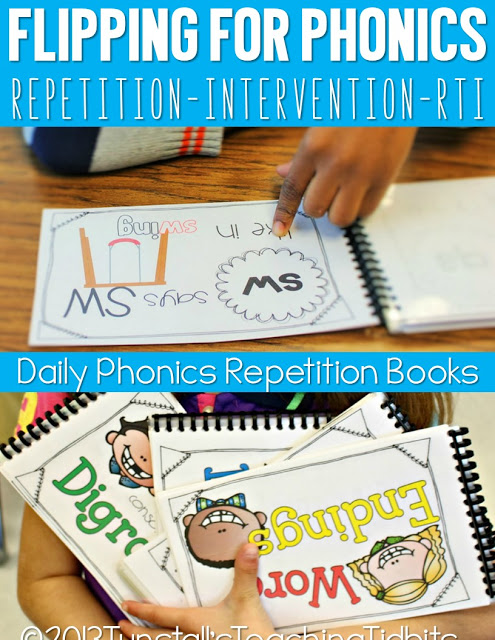
A short daily phonics review can help students continually retrieve previously taught sound-spelling relationships while new phonics skills are being added. The routine does not need to take over the literacy block. In fact, one of the reasons I like quick visual phonics review is that it can happen in just a few minutes. Students see the spelling, retrieve the sound, connect the sound to a familiar keyword, say it, and keep going. Over time, previously taught phonics skills remain part of the conversation rather than disappearing as soon as the class moves on to the next pattern.
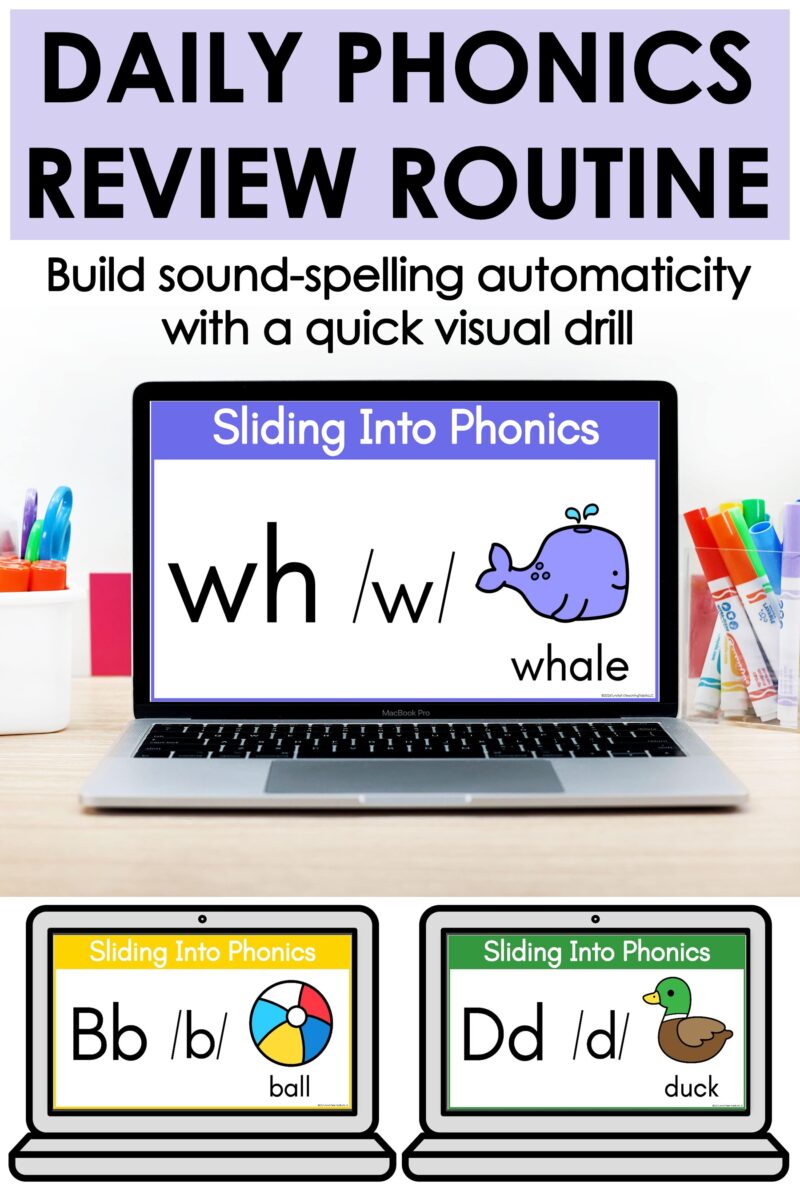
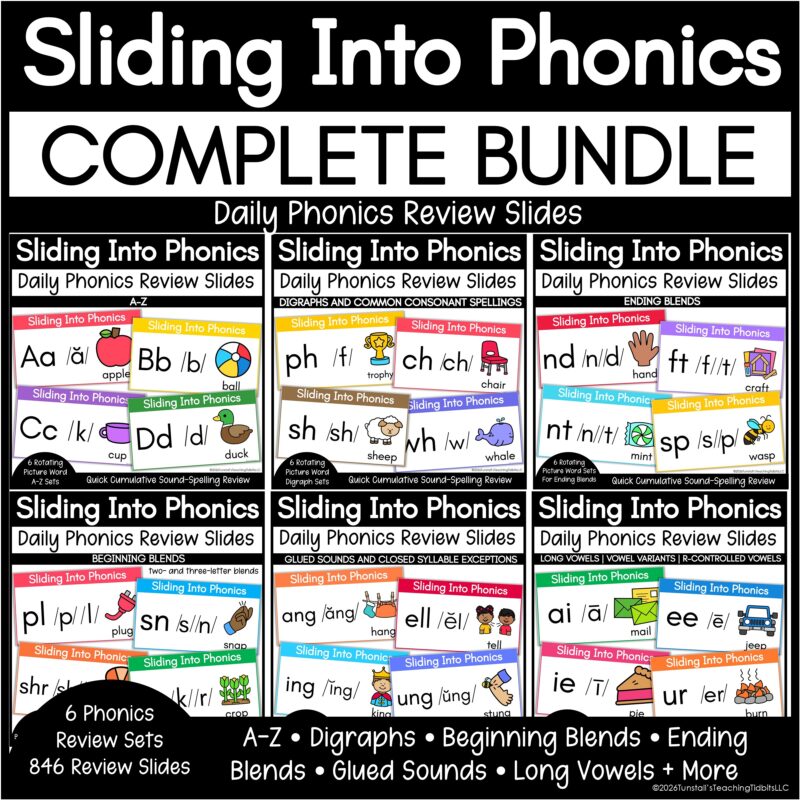
Looking for the ready-made phonics visual drill shown here? Sliding Into Phonics includes daily review slides from letters and sounds through blends, digraphs, glued sounds, vowel patterns, and more. Explore Sliding into Phonics
Why Phonics Skills Need to Keep Coming Back
Phonics instruction naturally builds from simpler sound-spelling relationships to increasingly complex patterns. Students may begin with individual consonants and short vowels before moving into digraphs, blends, glued sounds, long vowels, vowel variants, r-controlled vowels, and other common spelling patterns. But the brain does not organize that learning into tidy weekly folders. Learning something new does not mean earlier learning is finished.
A student working on long vowel patterns still needs quick access to consonant sounds, digraphs, and blends. A student learning r-controlled vowels still needs to recognize the vowel patterns taught before them. That is why cumulative phonics review matters. Instead of asking students to remember a pattern only during the week it is introduced, cumulative review repeatedly brings previously learned patterns back into practice. This does not mean reteaching every skill every day. It means giving students short opportunities to retrieve what they already know.
What Is a Phonics Visual Drill?
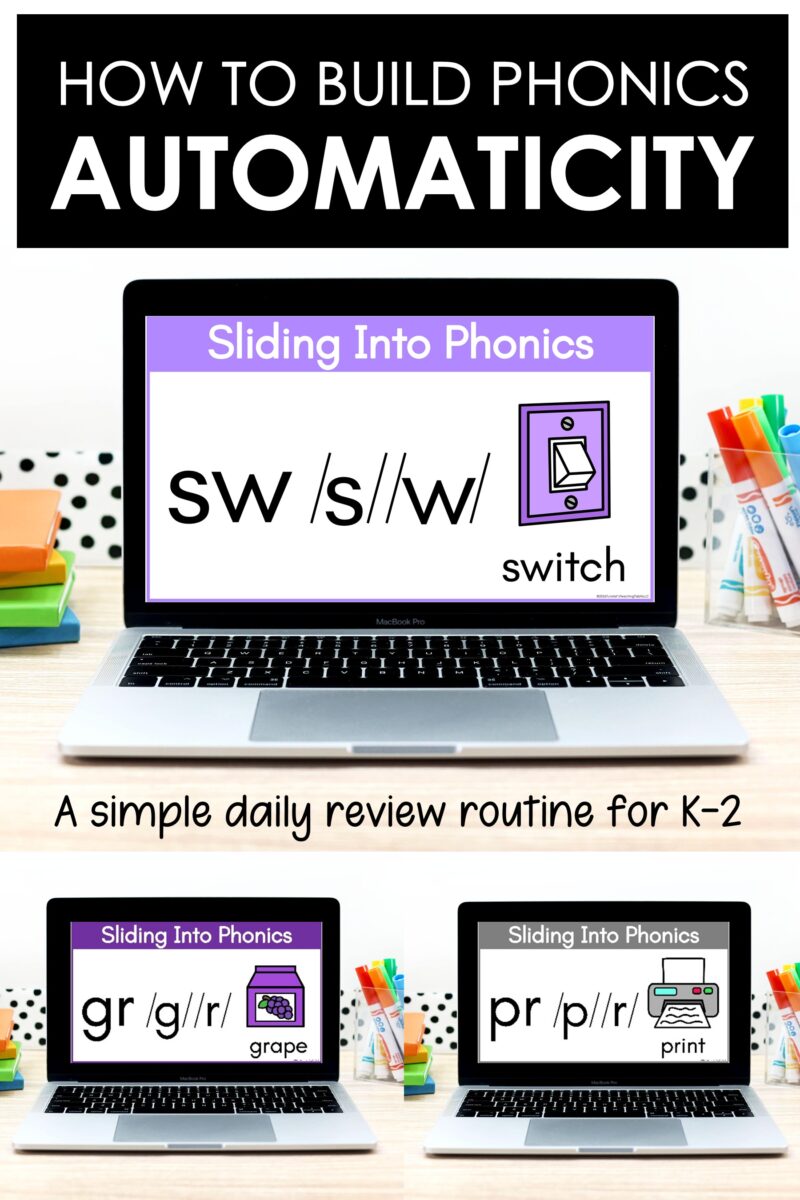
A phonics visual drill is a quick routine in which students see a grapheme or spelling pattern and retrieve the sound connected to it. For example, a teacher might display m and students respond with the sound /m/. Later, the prompt might be sh and students retrieve /sh/. As phonics knowledge grows, the same type of routine can include more complex spelling patterns students have already learned.
The simplicity is part of what makes the routine useful. Students do not need directions for a new activity, there is no worksheet to explain, and there is no game format to learn. The cognitive work stays focused on the phonics connection you want students to retrieve.
How To Use a Daily Phonics Review Routine
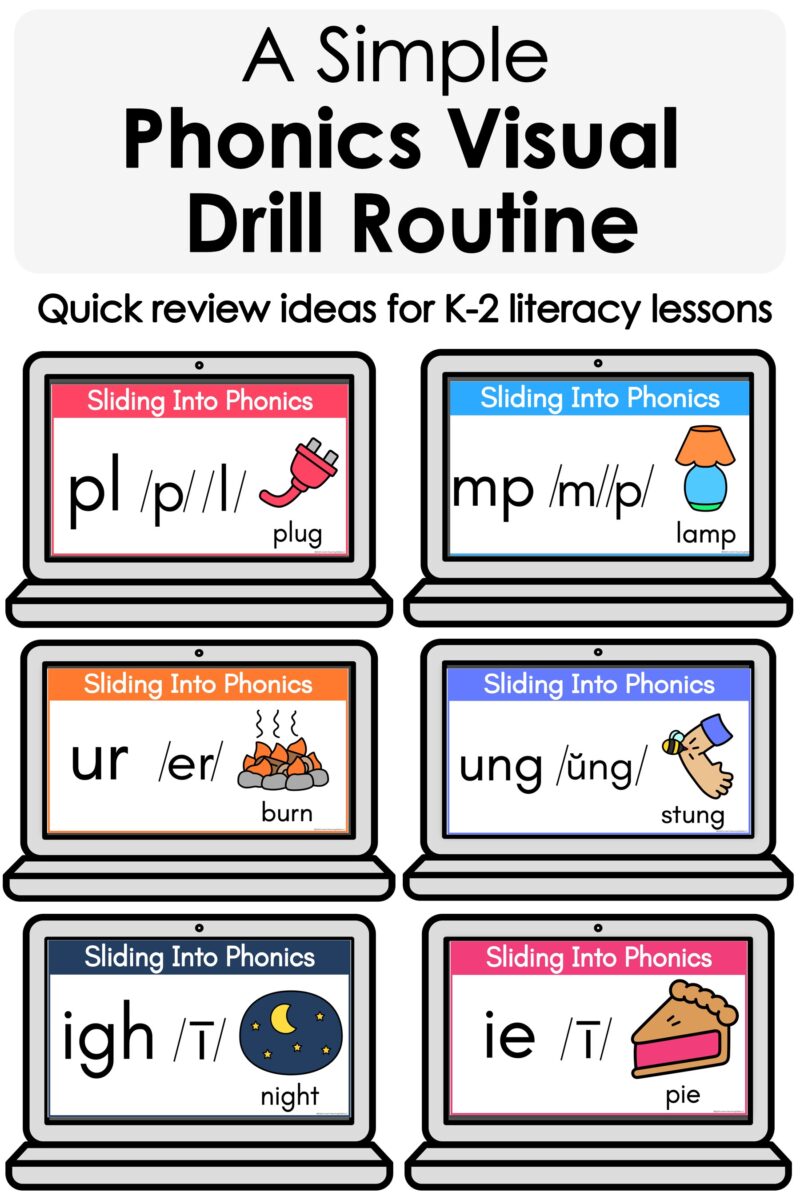
A quick review can follow four simple steps. First, display the letter or spelling pattern students are reviewing so they recognize what they see in print. Next, ask students to retrieve and produce the sound connected to that spelling. The goal is quick retrieval rather than a lengthy explanation.
A familiar picture or keyword can then help reinforce the sound-spelling connection. This can be especially helpful when students are still developing automaticity or when a spelling pattern can represent more than one sound. Then move on to the next pattern and keep the pace going. A phonics visual drill is review, not the entire phonics lesson.
If students consistently struggle with one pattern, that gives you useful information. You can pull that skill out for more explicit instruction or targeted small-group practice rather than turning every review into a full lesson.
READY-MADE DAILY PHONICS REVIEW SLIDES
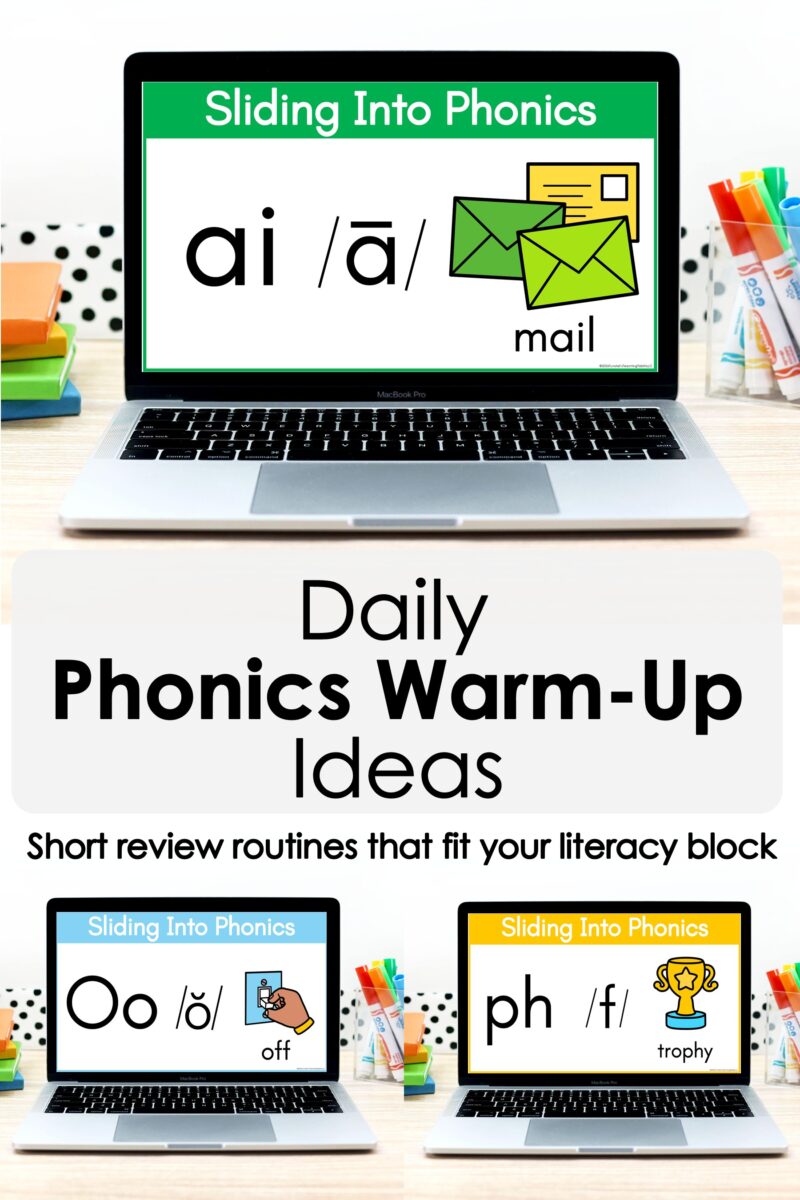
Keep Previously Taught Phonics Skills in Rotation
One of the easiest ways to make phonics review more effective is to resist the temptation to review only the newest skill. If students are currently learning beginning blends, a review could still contain previously taught letters and digraphs. Later, when students move into more complex vowel patterns, blends and digraphs can continue to appear.
Think of phonics knowledge as something students are accumulating rather than replacing. A review sequence might gradually grow through letters and sounds, digraphs and common consonant spellings, beginning and ending blends, glued sounds, closed syllable exceptions, long vowels, vowel variants, and r-controlled vowels. The exact sequence should follow the phonics instruction students are receiving. The important part is that previously taught patterns continue to reappear.
Review Comes After Explicit Instruction
Quick phonics visual drills work best when it is truly review. Students should not be expected to retrieve sound-spelling relationships they have never been explicitly taught. First comes instruction, then practice, and then continued retrieval.
That distinction is important because a fast-paced drill should not become a guessing exercise. When students know the pattern but need more automatic retrieval, a quick visual review is a good fit. When students do not yet understand the pattern, they need instruction. If you’re building a literacy block around explicit instruction, guided practice, and independent reinforcement, you can see how I organize those pieces in Science of Reading Literacy Centers K–2.
How Long Should Daily Phonics Review Take?
It does not need to be long. A few focused minutes can be enough to revisit several previously learned patterns without reducing the time available for explicit instruction, decoding, encoding, word work, or connected reading.
The goal is not to fit every phonics skill students have ever learned into one review. Rotate them. You might emphasize recently taught patterns while sprinkling in older ones. You can also adjust the review based on what you are noticing from students. If a pattern is automatic for nearly everyone, it may appear less frequently. If students hesitate on another pattern, it can return more often.
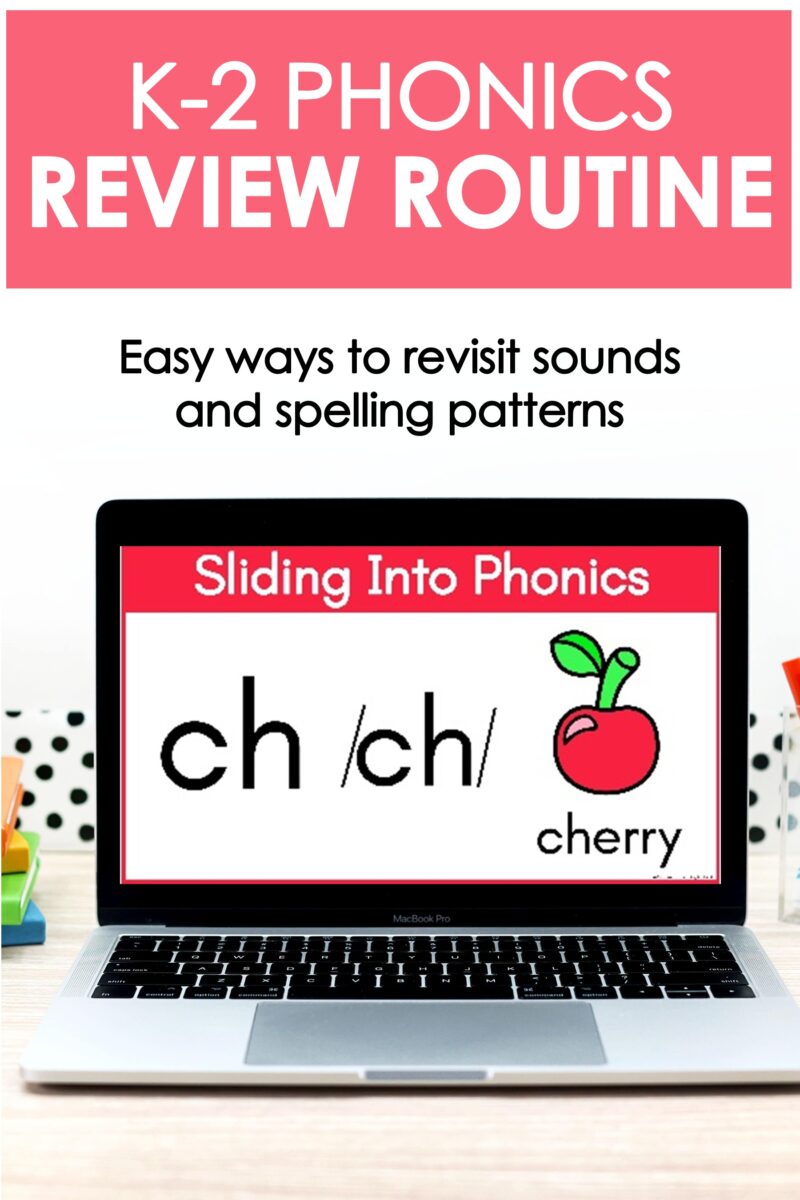
Phonics Review Can Also Be Informal Assessment
One of the most useful parts of a phonics visual drill routine is what the teacher learns from it. You can hear when responses are immediate, and you can also hear the hesitation. Maybe students instantly recognize sh but stumble over th. Perhaps beginning blends are strong, but ending blends are less secure. Maybe a vowel pattern that seemed solid during last month’s lessons is no longer coming back quickly.
Those moments provide useful instructional information without giving another formal assessment. They can help you determine which phonics patterns need more attention next.
Using Phonics Review in Small Groups
The same routine can be even more targeted during small-group instruction. One group may need continued work with individual letter sounds, another may be ready for digraphs and blends, and a more advanced group may need cumulative review of vowel patterns. Rather than giving every student exactly the same review, small groups make it possible to narrow the practice to the patterns students need most.
A quick visual drill can also make a natural beginning to a small-group lesson before students move into word building, decoding, encoding, or connected text. Word chains are another easy way to extend this sound-spelling work in whole group or small group. You can see the routine and examples in Word Chains for Reading Skills.
What If Students Give the Wrong Sound?
Keep the correction clear and efficient. The purpose of review is to strengthen an accurate connection, so you do not want students repeatedly practicing an incorrect response. Give the correct sound, have students repeat it, reconnect it to the spelling pattern or keyword as needed, and continue.
If the same pattern causes difficulty again and again, that is a sign the student may need more than retrieval practice. That skill may need to return to explicit instruction.
Visual Supports Should Support the Sound, Not Replace It
Pictures and keywords can be useful memory supports, especially during early phonics learning, but the ultimate goal is not for students to see a grapheme and name the picture. The goal is for them to see the grapheme and retrieve the sound. The picture simply helps establish and reinforce that connection. Over time, the spelling itself should become the cue.
For another way to anchor those sound-spelling connections visually, take a look at Phonics Posters to Support Structured Literacy.
Where Can Daily Phonics Review Fit?
A quick phonics review routine is flexible enough to fit several places in the school day. It could be used at the beginning of a phonics lesson, as part of a literacy warm-up, before decoding practice, during a teacher-led small group, during intervention, or as a quick transition into word work.
There is no need to create a completely separate instructional block for it. The best placement is the one that allows the routine to happen consistently.
Sound-spelling work also carries directly into high-frequency word instruction. If that is part of your literacy block, read Teaching Sight Words Through Phonics: High Frequency Words, Heart Words, and Word Work.
Making Daily Phonics Review Easy to Maintain
The biggest challenge with cumulative review is usually not understanding why students need it. It is maintaining it. Teachers already have enough materials to organize, so for a review routine to last beyond the first few weeks, it needs to be easy to pull up, easy for students to understand, and easy to adjust as their phonics knowledge grows.
That was the reason I created Sliding Into Phonics.
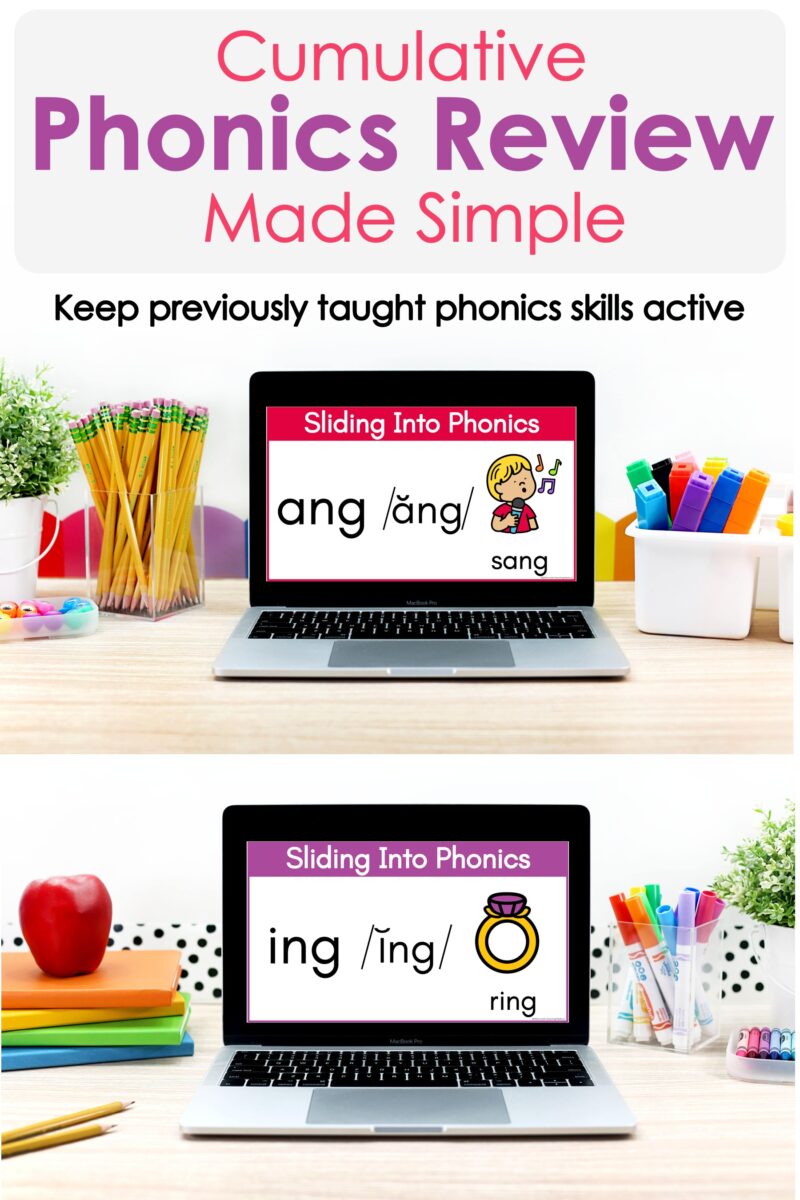
Sliding Into Phonics is a collection of visual phonics review slides that follows the progression from early letter-sound relationships into more advanced phonics patterns. The slides provide the visual prompt and keyword support so the routine itself stays simple.
You can use the slides alongside the phonics curriculum or scope and sequence you already teach. Introduce skills explicitly through your core instruction, then add the corresponding patterns into your cumulative review.
A Phonics Review Progression
If you want ready-made slides for this type of routine, the Sliding Into Phonics collection is organized into six sets.
Letters A–Z provides letter-sound review for early phonics learning and continued automaticity practice.
Sliding Into Phonics A–Z
Digraphs & Common Consonant Spellings provides visual review of common consonant spelling patterns students encounter as phonics instruction progresses.
Digraphs & Common Consonant Spellings
Beginning Blends provides review for consonant blends appearing at the beginning of words.
Beginning Blends
Ending Blends provides focused practice recognizing consonant blends at the ends of words.
Ending Blends
Glued Sounds & Closed Syllable Exceptions supports continued review of common phonics chunks and spelling patterns students benefit from recognizing efficiently.
Glued Sounds & Closed Syllable Exceptions
Long Vowels, Vowel Variants & R-Controlled Vowels provides review for increasingly complex vowel spelling patterns.
Long Vowels, Vowel Variants & R-Controlled Vowels
Teachers can use one set to target a particular point in the phonics progression or combine the sets to create cumulative review across previously taught skills.
Keep Phonics Knowledge Active
Phonics instruction does not end when the lesson ends. Students need opportunities to retrieve sound-spelling relationships again and again until those connections become increasingly efficient. That does not require another complicated activity.
Sometimes the most useful routine is also one of the simplest: see the pattern, say the sound, make the connection, and keep going. A few minutes of intentional daily phonics review can help keep previously taught patterns active while students continue building the phonics knowledge they need for reading and writing.