 Contact
First Grade Addition and Subtraction Within 20: Strategies, Skills, and Intentional Practice
Teaching Addition and Subtraction Within 20 in First Grade
Addition and subtraction within 20 is a major instructional shift in first grade. At this point, students move beyond counting by ones and begin using number relationships and strategies to solve problems more efficiently and with greater understanding.
Effective instruction within this range focuses on helping students recognize patterns, make ten. Students use known facts, and reason about equations instead of memorizing procedures. When these skills are taught intentionally, students build flexibility with numbers and develop a strong foundation for future computation. This post builds on the instructional foundations shared in High-Yield Strategies for Addition and Subtraction in First Grade. In that post we outlined the core strategies students need for addition and subtraction within 10.
Total Math Unit 5 supports this progression by organizing addition and subtraction within 20 around clear skill development, hands-on practice, and consistent routines across the math block. The sections below outline the key skills addressed in this unit and how they are supported instructionally.
How First Grade Students Learn Addition Within 20 Using Doubles
Before students are expected to add within 20 fluently, they need strategies that help them move beyond counting by ones. Teaching doubles facts is one of the earliest and most powerful strategies for first grade. Doubles provide a predictable structure that allows students to focus on number relationships rather than procedures.
In Total Math Unit 5, teachers introduce doubles through explicit modeling and visual reasoning. Students build the same number twice using concrete and pictorial models, then connect that representation to a matching number sentence. As a result students see addition as combining equal groups rather than memorizing isolated facts.
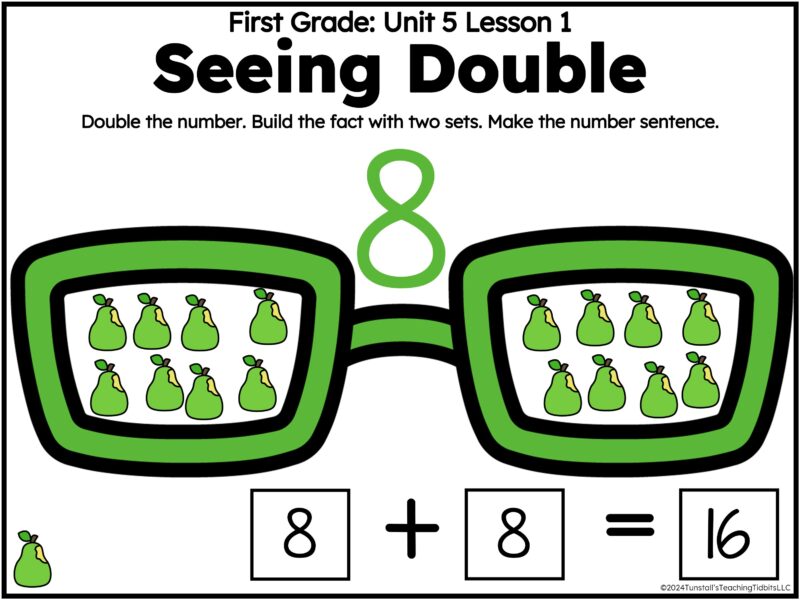
As students work with doubles beyond 10, they begin to recognize how this strategy supports addition within 20. Modeling problems such as 8 + 8 allows students to visualize larger sums while maintaining accuracy and efficiency. During instruction, students also notice patterns in the results, which strengthens number sense without shifting the lesson away from the goal of efficient addition.
Throughout the unit, doubles are reinforced across the math block through whole-group instruction, hands-on practice, application activities, and learning logs. This repeated exposure helps doubles become a reliable strategy.
How First Grade Students Learn Subtraction Within 20 by Making Ten
As students begin working with subtraction within 20, instruction must move beyond counting backward. Students spend time understanding how numbers are composed and decomposed. In first grade, effective subtraction instruction focuses on helping students reason about quantities, identify what is being taken away, and use structure to find the difference.
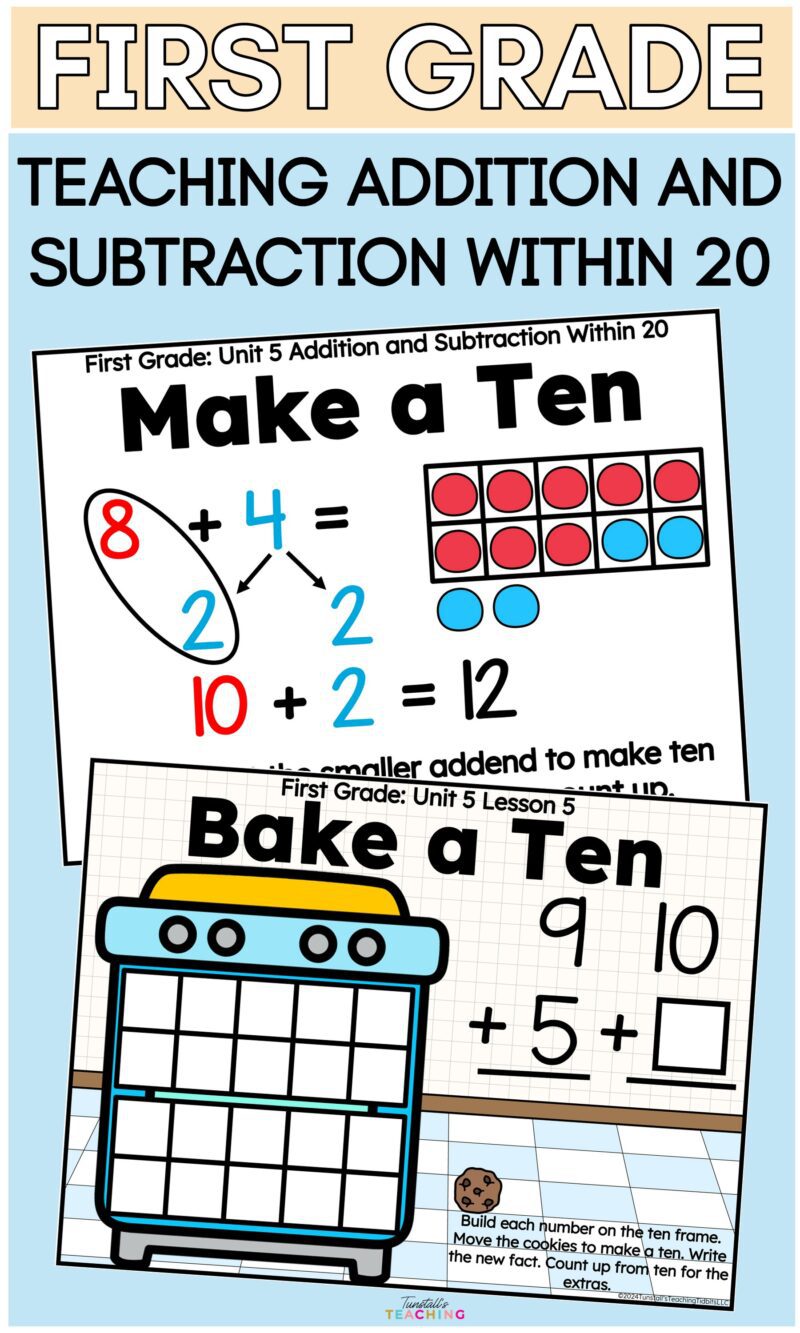
In Total Math Unit 5, teachers use make a ten and break apart strategies to teach subtraction within 20. Students learn to decompose numbers so subtraction can be anchored to a familiar and efficient structure. By breaking numbers apart to reach ten first, students are able to solve subtraction problems accurately while maintaining a clear understanding of how the numbers are changing.
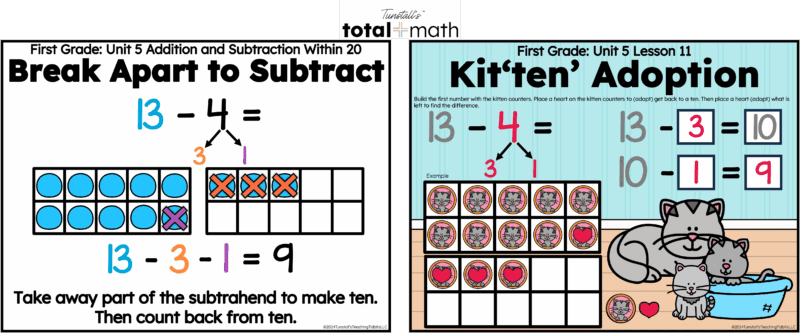
Using visual models such as ten frames and decomposed parts allows students to see subtraction as an intentional process. This approach supports flexible thinking and strengthens the connection between addition and subtraction, helping students recognize how the two operations are related.
Because subtraction within 20 can be challenging for many first graders, the strategy is practiced in engaging, highly supported ways during instruction and guided practice. Over time, students learn to rely on structure instead of guessing or reverting back to counting by ones.
Throughout the unit, this subtraction strategy is reinforced through whole-group modeling, guided practice, hands-on activities, and application opportunities. Students consistently return to visual structure and reasoning, building confidence as they solve subtraction problems within 20.
Solving Word Problems with Unknowns Using Part–Part–Whole Models
Once students have addition and subtraction strategies they can rely on, the focus shifts to figuring out what is unknown and deciding how to solve. In this part of Unit 5, students work with word problems where the starting amount, change, or total is missing.
Rather than being told whether to add or subtract, students use part–part–whole thinking and bar models to represent the situation and determine the correct operation. This supports deeper reasoning and helps prevent students from relying on keywords or guessing.
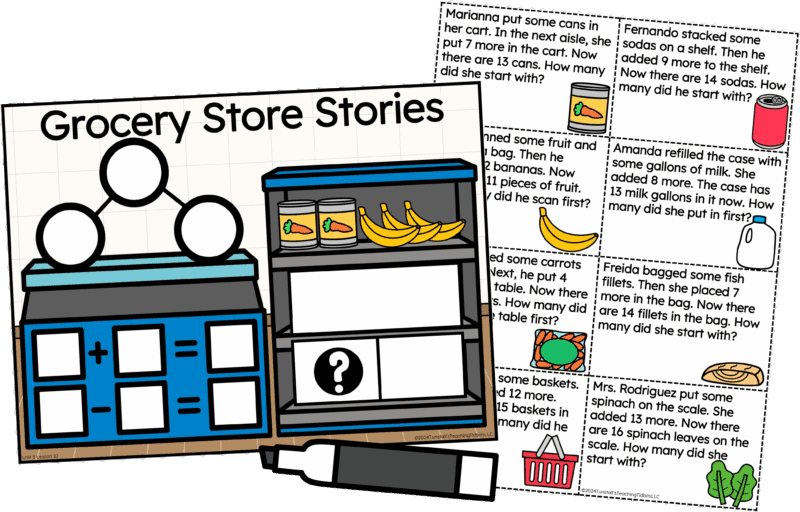
How the Grocery Store Stories Mat Supports This Skill
During small-group instruction, students use structured work mats like the Grocery Store Stories mat to slow the process down in a productive way. Students model the problem, place the known and unknown quantities intentionally, and use the model to determine whether the situation shows joining, separating, or comparison.
Students then record a matching number sentence and solve. Because the unknown can appear in different positions, students must rely on the structure of the model, not memorized steps, to work through the problem.
This is a critical bridge between computation practice and true problem solving, and it helps students explain their thinking with clarity.
Maintaining Balance with Equations and Expressions
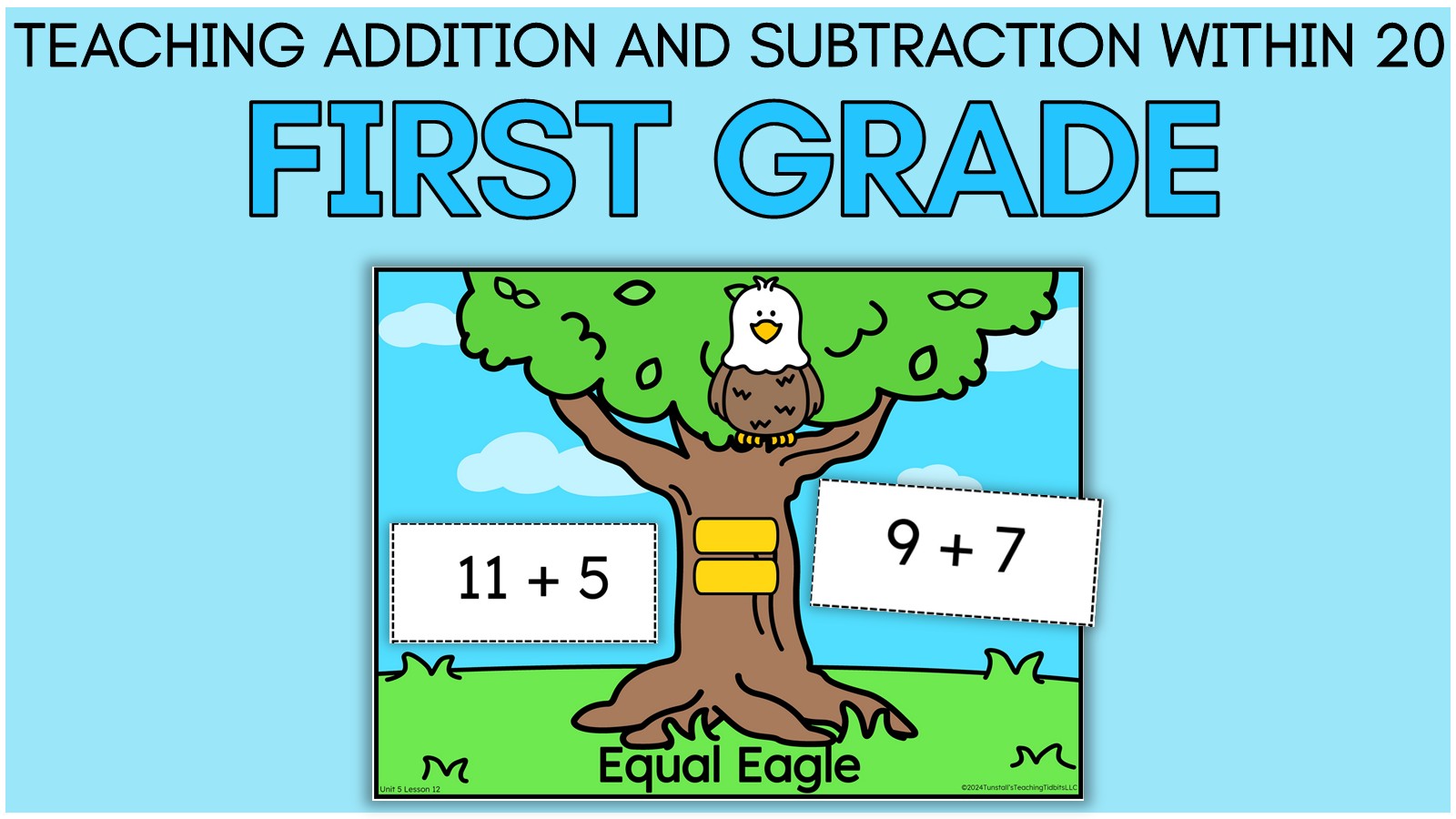
As students move deeper into addition and subtraction within 20, understanding the equal sign as balance becomes critical. At this stage, students are no longer just solving for an answer. They are reasoning about whether both sides of an equation represent the same value.
In first grade, this work goes beyond traditional equations written in a single direction. Students explore expressions where numbers appear on both sides of the equal sign, and they must determine what keeps the equation balanced.
Balanced equation work strengthens:
-
Flexible thinking with addition and subtraction
-
Understanding of unknown numbers
-
The relationship between operations
-
The meaning of the equal sign as “the same as,” not “the answer is”
Using visual models helps students see balance rather than memorize rules. When students justify why an equation is true or false, they are engaging in meaningful mathematical reasoning that supports long-term fluency.
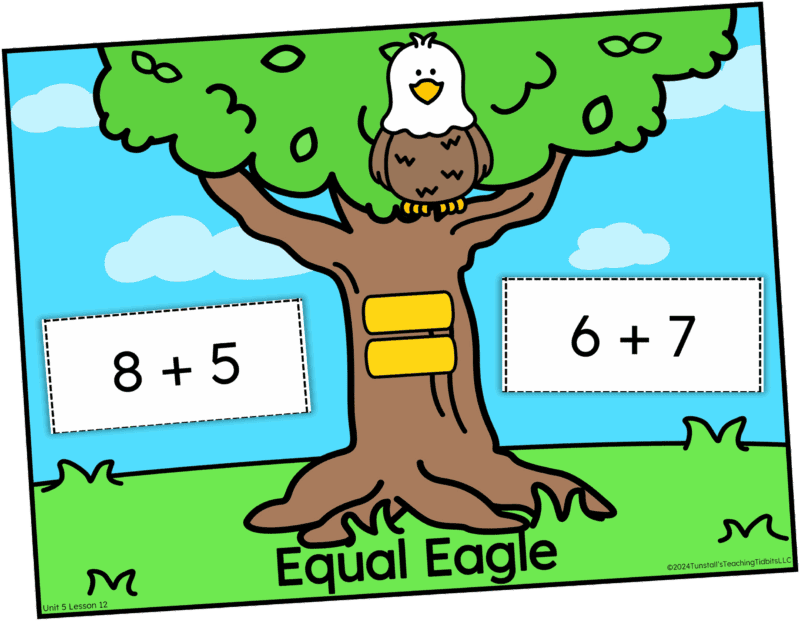
This type of balanced equation practice naturally connects to unknown number work and prepares students to reason through more complex problem structures.
Try Balanced Equation Reasoning with Students
Understanding the equal sign as balance is an important shifts students make in first grade. Rather than treating the equal sign as “the answer comes next,” students learn that both sides of an equation must represent the same value.
To support this thinking, students need repeated opportunities to reason about equations with unknowns on either side and justify their thinking using number relationships.
Download a free balanced equations practice page for first grade
This free page mirrors the equation structure used throughout Unit 5. Students practice solving for unknowns while maintaining balance on both sides of the equation.
How Total Math Unit 5 Supports Daily Math Instruction
Addition and subtraction within 20 requires more than isolated lessons or disconnected practice. Students need consistent routines, repeated exposure to strategies, and opportunities to apply the same thinking across the entire math block.
Total Math Unit 5 is designed to support daily math instruction by organizing each lesson around a clear instructional flow. The same strategies introduced during whole-group instruction are reinforced through guided practice, hands-on learning, and application activities so students encounter the math in multiple ways throughout the day.
Each lesson begins with warm-ups and number fluency activities that activate prior knowledge and prepare students for the skill focus. Teaching slides model the strategy using visual representations and structured language, allowing students to see how addition and subtraction within 20 work conceptually before moving into practice.
Small-group instruction and hands-on activities are intentionally aligned to the same strategy. Rather than introducing new thinking during centers, students revisit the same models and reasoning in a more supported setting. This allows teachers to target misconceptions, differentiate instruction, and strengthen understanding without fragmenting the math block.
Application activities and learning logs provide opportunities for students to independently apply the strategy, explain their thinking, and make connections between addition and subtraction. Because the structure of each lesson remains consistent, students are able to focus on the math itself rather than learning new routines.
By keeping instruction, practice, and application tightly aligned, Unit 5 supports meaningful learning. Likewise we reduce complexity for teachers and cognitive overload for students.