 Contact
Fractions in Grades 1–2: Building Understanding With Models and Language
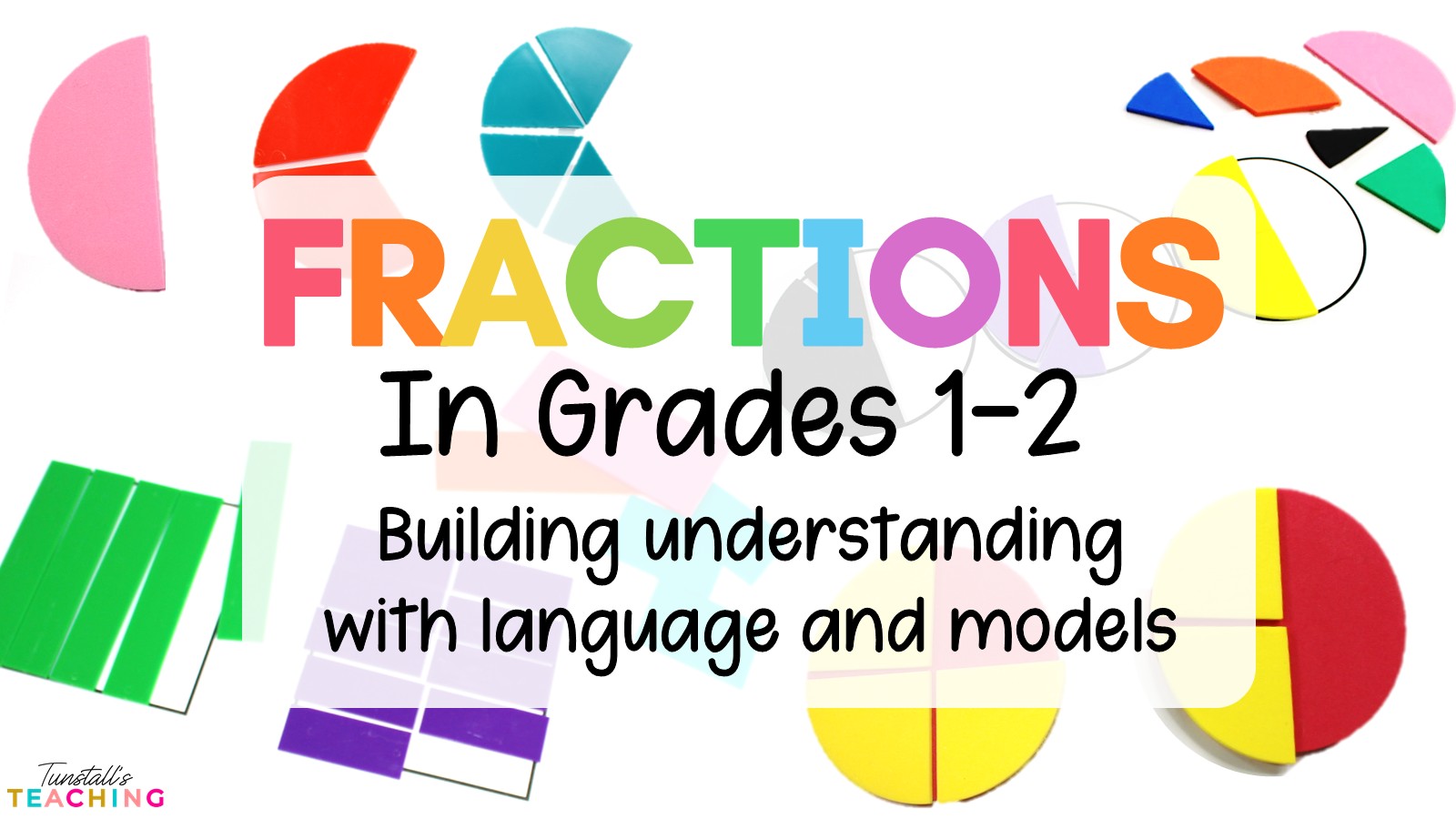
Fractions in Grades 1–2: Building Understanding Before Symbols
Fractions are often thought of as an upper elementary topic, but meaningful fraction understanding begins much earlier.
In grades 1–2, students are not expected to memorize fraction rules or operate with formal notation. Instead, they are learning how to reason about parts of a whole, use precise mathematical language, and make sense of how quantities are composed.
When fraction instruction in these early grades is rushed or treated as a set of isolated skills, students may appear successful in the moment but struggle later when fractions become more complex. Strong fraction instruction in grades 1–2 focuses on conceptual understanding first, laying the groundwork students need for long-term success.
This is the approach used throughout Total Math.
Where Fraction Learning Begins in First Grade
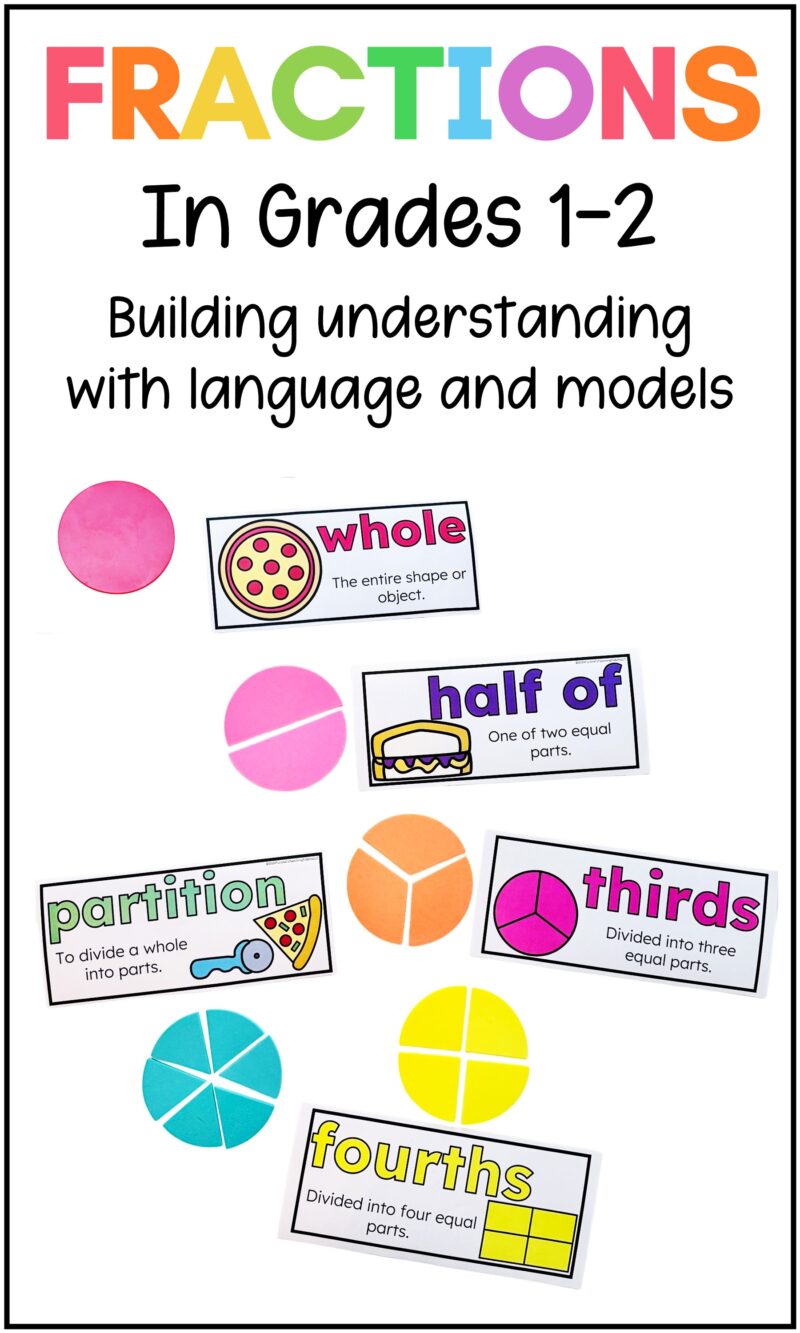
Fraction instruction begins in first grade with a focus on equal parts and fair shares.
Students explore questions such as:
-
Are these parts the same size?
-
What makes a partition fair?
-
How many equal parts make up the whole?
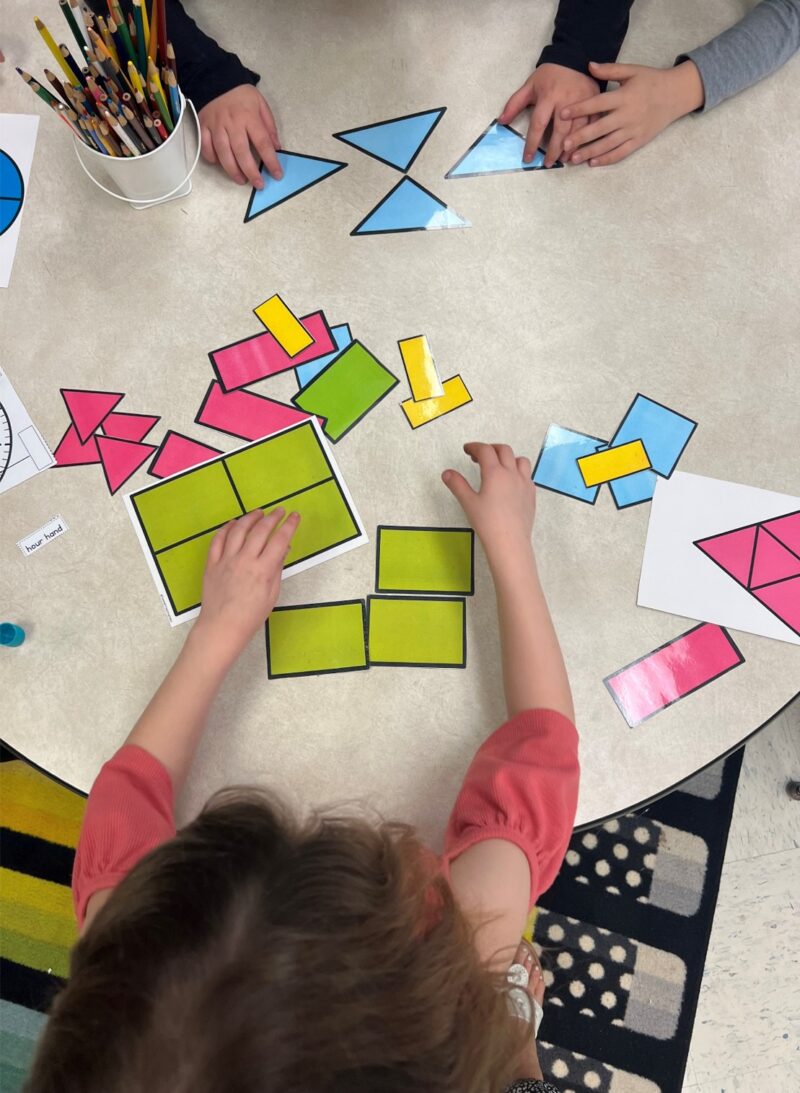
Rather than introducing fraction symbols, first grade instruction centers on partitioning shapes and objects into halves and fourths and describing what students see using clear, consistent language.
In Total Math, students work with:
-
Rectangles, circles, and real-world objects
-
Visual models that clearly show equal and unequal parts
-
Guided discussions that emphasize reasoning and explanation
These experiences help students understand that fractions are about relationships. A half is not just a word. It represents one of two equal parts of a whole.
This foundation is essential. Without a strong understanding of equal parts, students may later label fractions correctly without truly understanding what they represent.
Building Fraction Language Without Formal Notation
In first grade, fraction learning is intentionally language-driven.
Students regularly use and hear terms such as:
-
equal parts
-
halves
-
fourths
-
whole
They explain their thinking, justify whether parts are fair, and compare different ways a shape can be partitioned. This consistent use of vocabulary helps students attach meaning to fraction concepts long before they encounter symbols.
Formal fraction notation is not the goal at this stage. Instead, students are developing the conceptual and linguistic foundation that second grade instruction will build upon.
How Fraction Instruction Shifts in Second Grade
In second grade, fraction learning becomes more explicit while still remaining grounded in understanding.
Students move from simply identifying equal parts to reasoning with unit fractions, or one equal part of a whole. They begin counting fractional parts, describing fractions greater than one whole, and connecting fractions to quantities.
Total Math supports this shift by continuing to emphasize:
-
Same-size fraction pieces
-
Visual and hands-on models
-
Clear mathematical language before symbolic representation
Students work with fraction circles, fraction bars, and drawn models to explore how many unit fractions make one whole and how those parts can be combined and counted.
Formal fraction notation is introduced for exposure and discussion, but the emphasis remains on meaning rather than memorization.
Counting Fractions Beyond One Whole in Second Grade
A critical shift in second grade fraction work is helping students understand that fractions do not stop at one whole.
Many students believe fractions only exist between zero and one because they have limited experience counting fractional parts beyond a single whole. In Total Math, this misconception is addressed intentionally and early.
Students work with same-size fraction pieces to count unit fractions repeatedly, just as they would count whole numbers. They explore questions such as:
-
How many equal parts make one whole?
-
What happens when we keep counting past one whole?
-
How can we describe what we have built using fraction language?
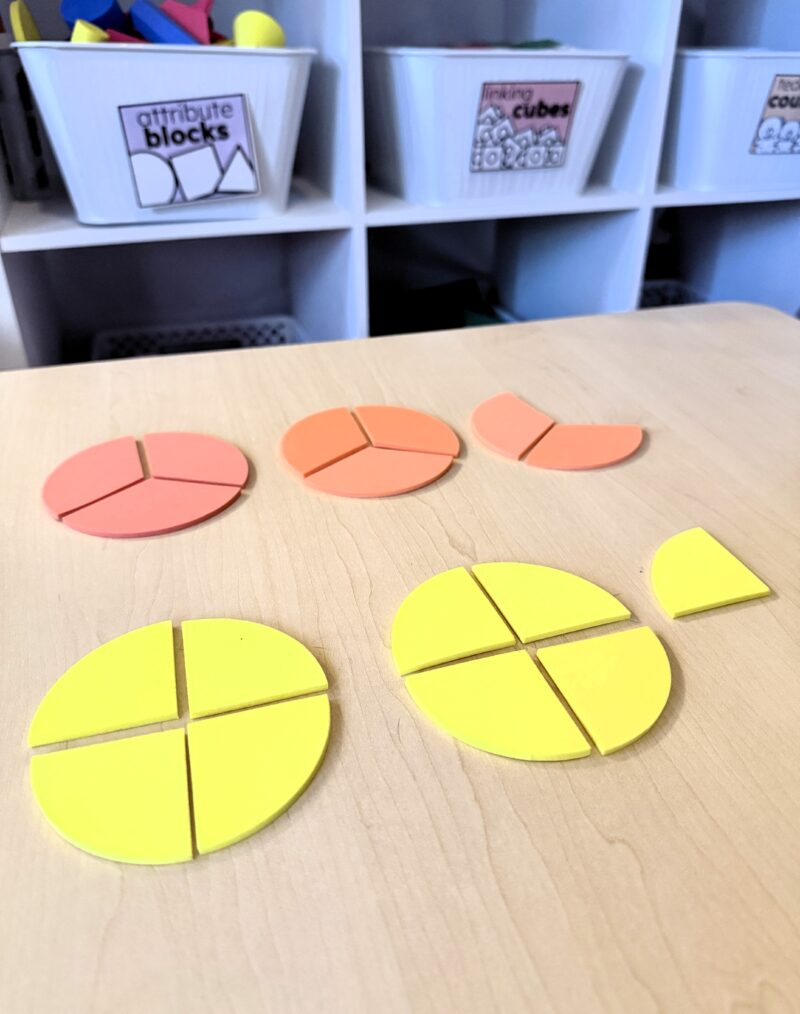
By physically combining fraction pieces and describing what they see, students develop a concrete understanding of quantities like one and one-half or two wholes. This prepares them for later work with number lines, equivalence, and mixed numbers without requiring formal notation or procedures.
The focus stays on meaning. Students are reasoning about quantities, not memorizing rules.
Extending Fraction Thinking in Second Grade
As students move into second grade, fraction instruction builds on their understanding of equal parts and begins to emphasize counting and reasoning with fractional amounts.
Rather than introducing fractions as symbols to memorize, second grade fraction work focuses on helping students see fractions as quantities that can be combined, compared, and named. Students reason about how many fractional parts make a whole and how fractional parts can extend beyond one whole.
To support this progression, I’m also sharing a second grade fraction page focused on counting with fractions.
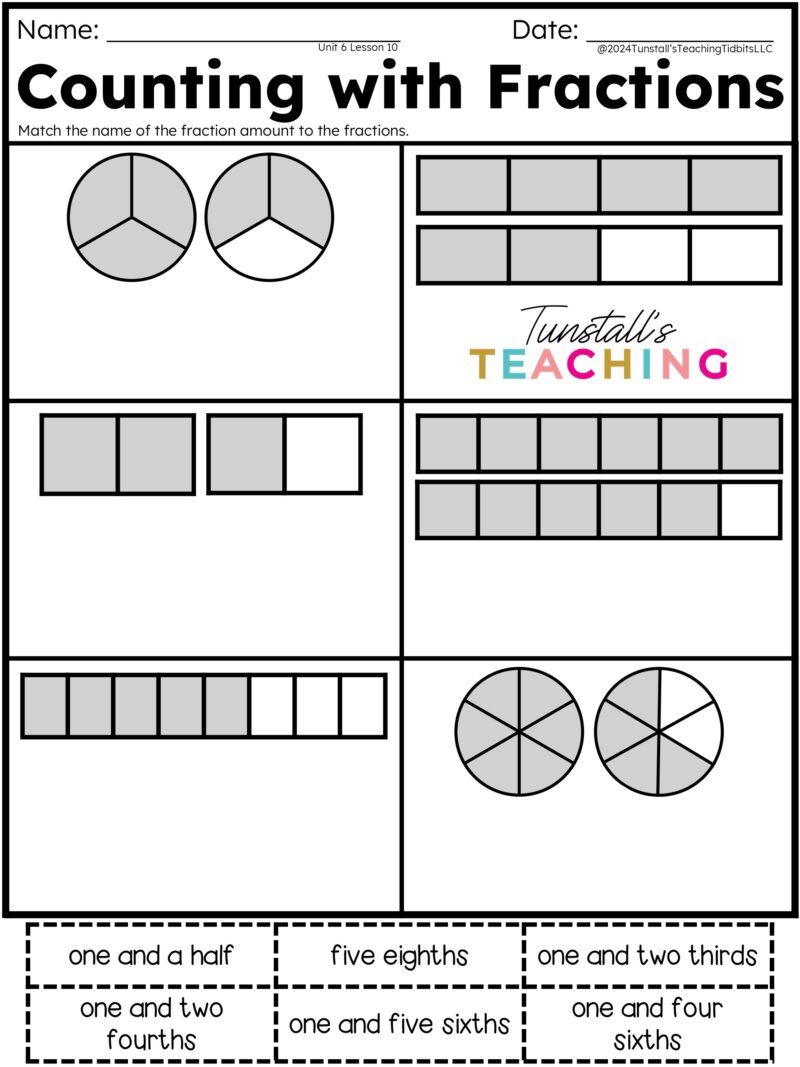
This task asks students to:
-
Analyze visual fraction models
-
Count fractional parts across multiple wholes
-
Match models to fraction amounts using words rather than symbols
Download the free second grade “Counting with Fractions” page here.
Because the emphasis stays on models and language, students are able to reason about fractions without relying on procedures or rules they may not yet understand.
How Total Math Intentionally Scaffolds Fraction Understanding
Fraction instruction in Total Math is carefully sequenced to reduce cognitive load while deepening understanding.
Each lesson follows a consistent structure that students recognize:
-
Visual and hands-on models first
-
Clear, repeated mathematical language
-
Guided practice before independent work
-
Opportunities to explain and justify thinking
Fraction vocabulary, models, and reasoning tasks are embedded throughout instruction rather than treated as separate components. This allows students to make connections naturally and apply their understanding across contexts.
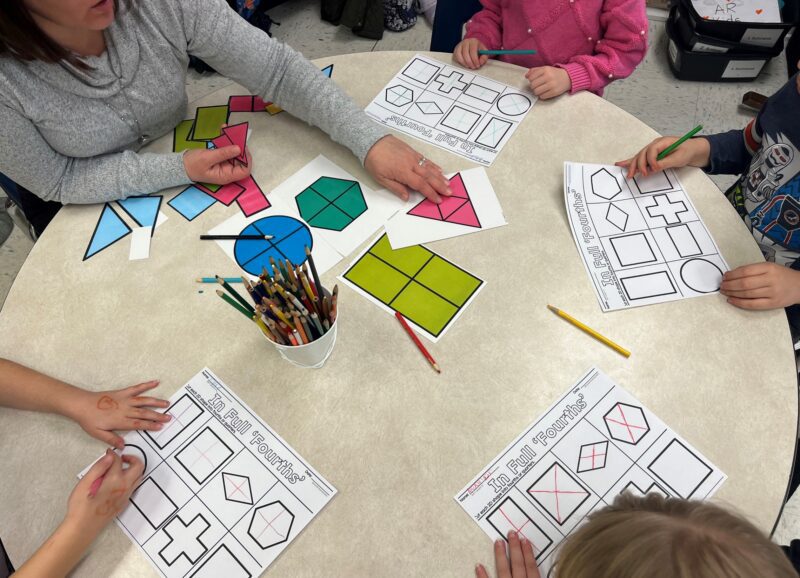
Formal fraction notation is introduced as exposure, not as an expectation for mastery. This ensures students focus on what fractions represent rather than how they are written.
This intentional scaffolding supports all learners, including students who need additional time with concrete and visual models before moving to abstraction.
Try It Free: Checking for True Fraction Understanding
Before students name fractions or work with symbols, they need to understand one foundational idea:
Fractions only make sense when the parts are exactly equal.
This is often where misunderstandings begin. Students may recognize a shape divided into parts but not notice that the parts are different sizes. Others may focus on counting pieces rather than reasoning about fairness and equality.
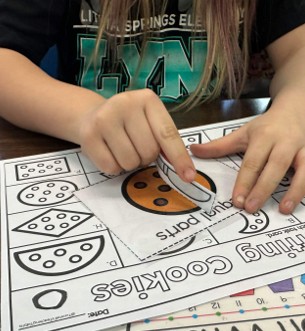
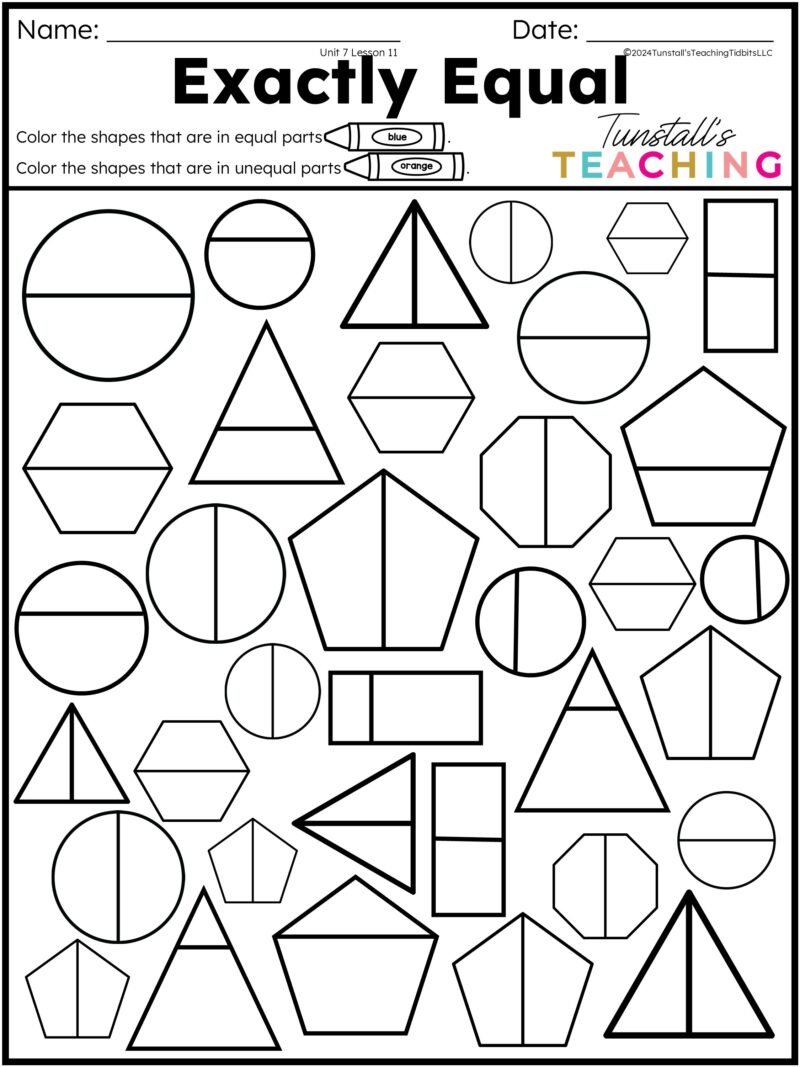
To support this important stage of fraction understanding, I’m sharing a free “Exactly Equal” fraction task you can use in grades 1–2.
This page asks students to look closely at shapes and decide whether they are divided into equal parts or unequal parts. There are no fraction names to label and no symbols to write. Instead, students must rely on visual reasoning, discussion, and comparison.
This makes it a powerful tool for:
-
Introducing fractions through meaning rather than memorization
-
Supporting math talk and justification
-
Informally assessing whether students truly understand what makes a fraction a fraction
You can use this page during whole group instruction, in small groups, or as a quick formative check before moving into more formal fraction work.
Download the free “Exactly Equal” fraction page here
This type of reasoning-based task reflects how fraction understanding is intentionally built in Total Math. Students develop a clear sense of equal parts first, which supports stronger fraction thinking as concepts become more complex in later grades.
Building Fraction Understanding That Grows Across Grades and Concepts
The fraction work students do in grades 1–2 is not isolated. It is part of a much larger mathematical progression.
When students build a strong understanding of equal parts, unit fractions, and fraction language early on, they are better prepared for the more formal fraction work that begins in grades 3–5. They approach fraction comparison, equivalence, and problem solving with a sense of meaning rather than relying on memorized procedures.
This same foundation also supports learning across other math concepts. Ideas such as equal parts, composing and decomposing shapes, and reasoning about wholes and parts appear again in geometry, measurement, and later fraction work. When instruction is intentionally connected, students are able to transfer what they know instead of starting over each time a new topic is introduced.
This is why Total Math is designed as a connected K–2 system rather than a collection of stand-alone units. Fraction understanding is built gradually through consistent language, familiar models, and instructional routines that reappear across concepts and grade levels. What students learn during fraction instruction supports future learning in geometry and beyond.
If you are teaching fractions in grades 3–5 or supporting students as they move into upper elementary math, these posts build on the same instructional ideas introduced here:
-
Understanding Fractions K–5: Vertical Alignment Lessons and Centers
-
Fractions for Upper Grades: Building on Early Fraction Understanding
Together, these resources show how early fraction understanding grows into more complex reasoning over time.