

 Contact
Word Problems Strategies and Work Mats for Grades K-2
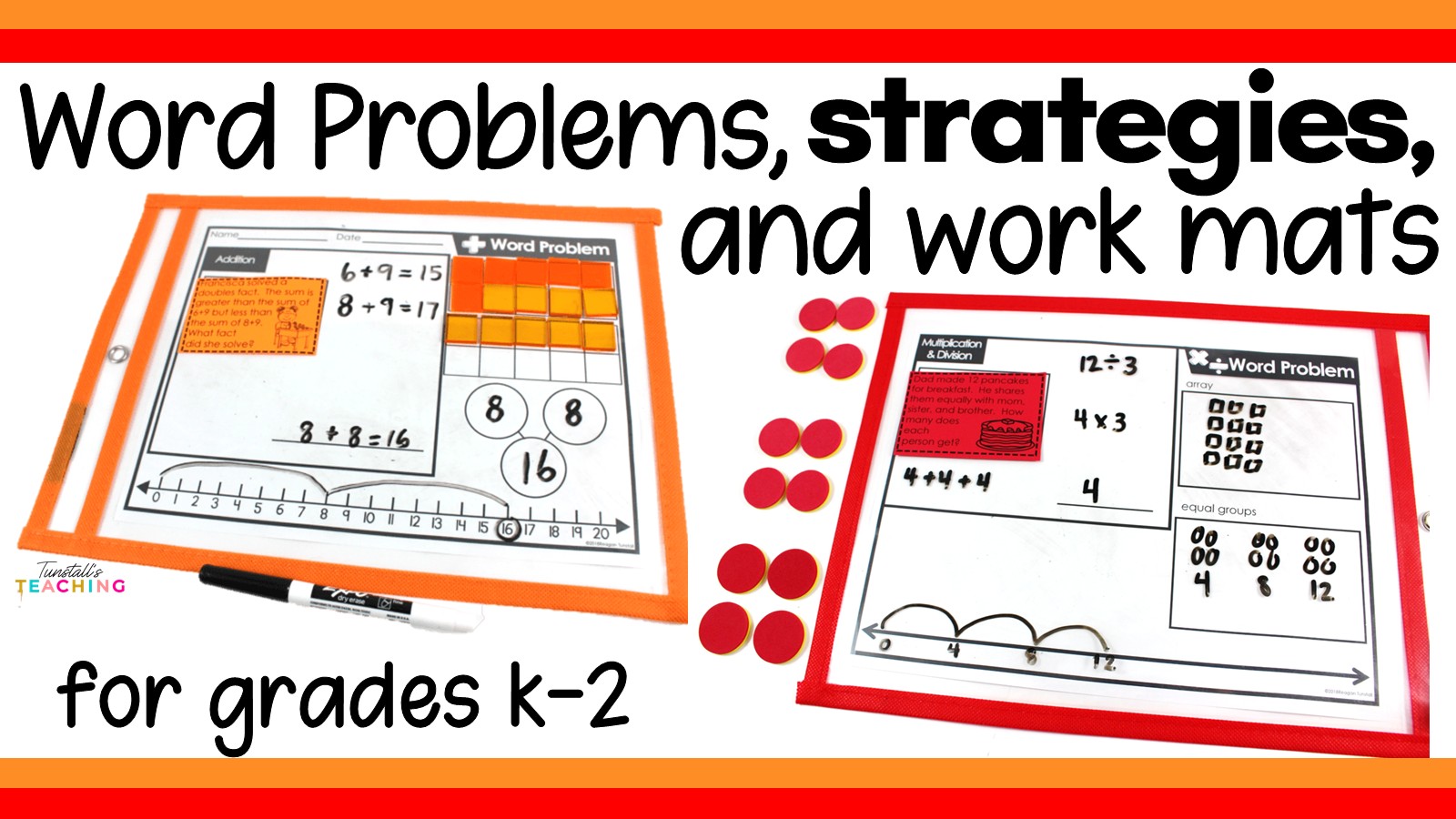
Word problems are one of the most challenging parts of math instruction in Kindergarten through second grade. Students are expected to read, understand a situation, decide what to do mathematically, and explain their thinking all at the same time. Without strong structure and consistent routines, many students resort to guessing or searching for keywords rather than making sense of the problem.
The good news is that word problem success in K–2 does not come from tricks or shortcuts. It comes from teaching students how to think through a problem using visual models, manipulatives, and intentional strategies. With the right support in place, even young learners can become confident and capable problem solvers.
In this post, you will find practical word problem strategies for grades K–2 and free work mats designed to help students model, solve, and explain their thinking.
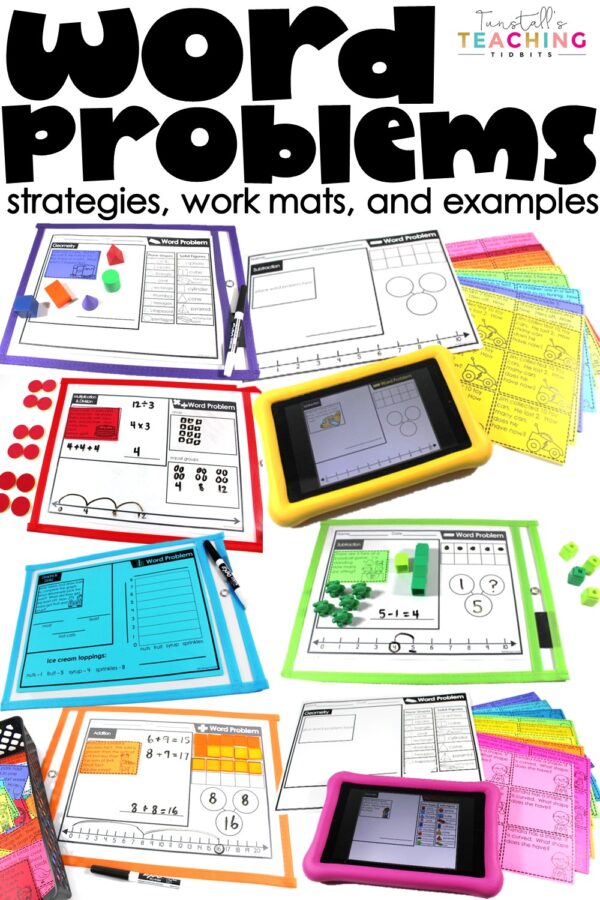
Why Word Problems Are Challenging in K–2
Early elementary students are still developing reading skills, language skills, and number sense. When these demands are combined in a single task, the cognitive load can quickly become overwhelming.
Common challenges include:
- Difficulty understanding what the problem is asking
- Focusing on individual numbers instead of the situation
- Guessing an operation based on a word they recognize
- Limited ability to explain thinking
When students are not given a clear process, word problems can feel confusing and frustrating rather than meaningful.
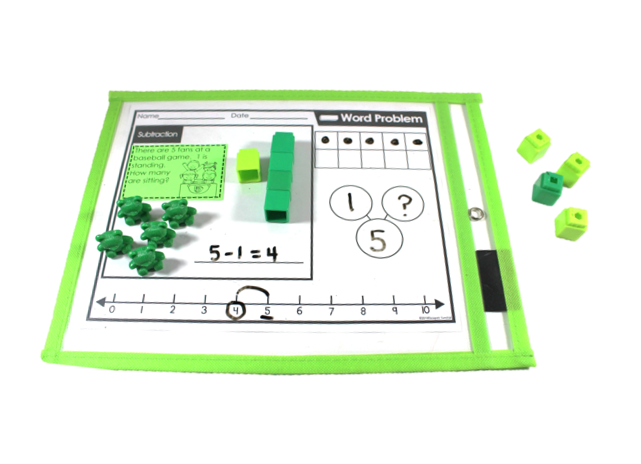
Moving Beyond Keywords in Early Elementary
Many classrooms rely on keyword charts to help students decide which operation to use. While this approach may seem helpful, it often leads students to make incorrect choices and prevents them from developing real problem solving skills.
Instead of teaching students to hunt for keywords, K–2 instruction should focus on sense making.
Effective word problem strategies include:
- Reading the problem slowly and retelling it in their own words
- Talking about what is happening in the story
- Identifying what they know and what they need to find out
- Using drawings, objects, or models to represent the situation
- Explaining how they solved the problem
This approach builds reasoning, flexibility, and confidence while supporting both math and language development.

Why Word Problem Work Mats Are So Effective in K–2
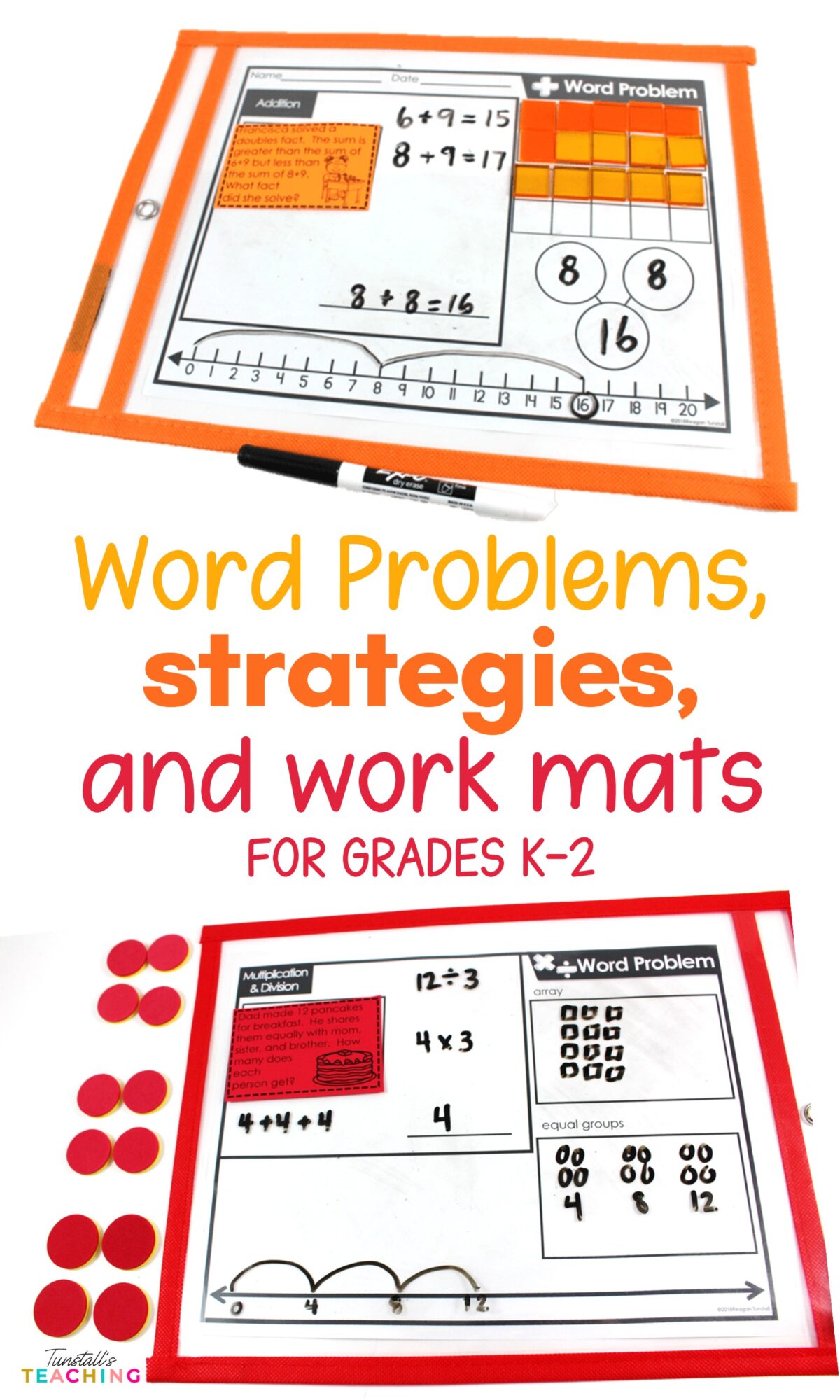
Word problem work mats provide a consistent structure that guides students through the problem solving process. Instead of staring at a blank page, students know exactly where to begin and how to organize their thinking.
Work mats help students:
- Focus on understanding the problem before solving
- Use visuals to model mathematical thinking
- Stay organized and reduce cognitive overload
- Practice explaining their reasoning
For teachers, work mats make it easier to model strategies, differentiate instruction, and assess student understanding.
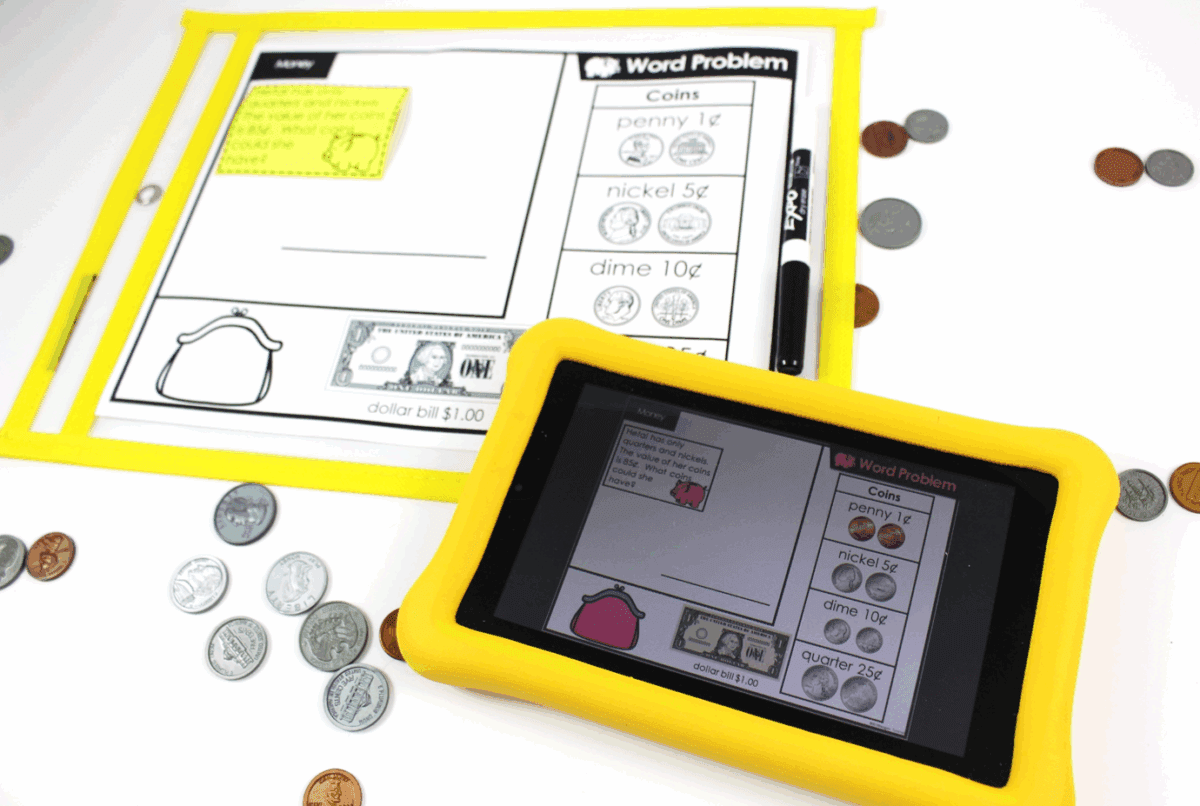
Grade Level Word Problem Strategies
Kindergarten Word Problem Strategies
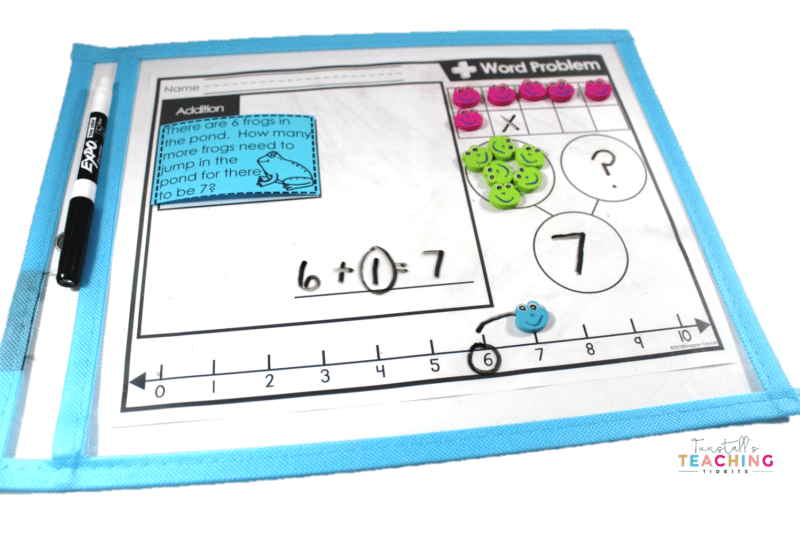
In Kindergarten, problem solving is highly concrete and visual. Students benefit from hands on experiences and oral explanations.
Effective strategies include:
- Acting out problems with objects
- Drawing pictures to show what is happening
- Using counters or manipulatives
- Telling how they solved the problem using simple language
At this stage, the focus is on understanding the story and representing it visually.
First Grade Word Problem Strategies
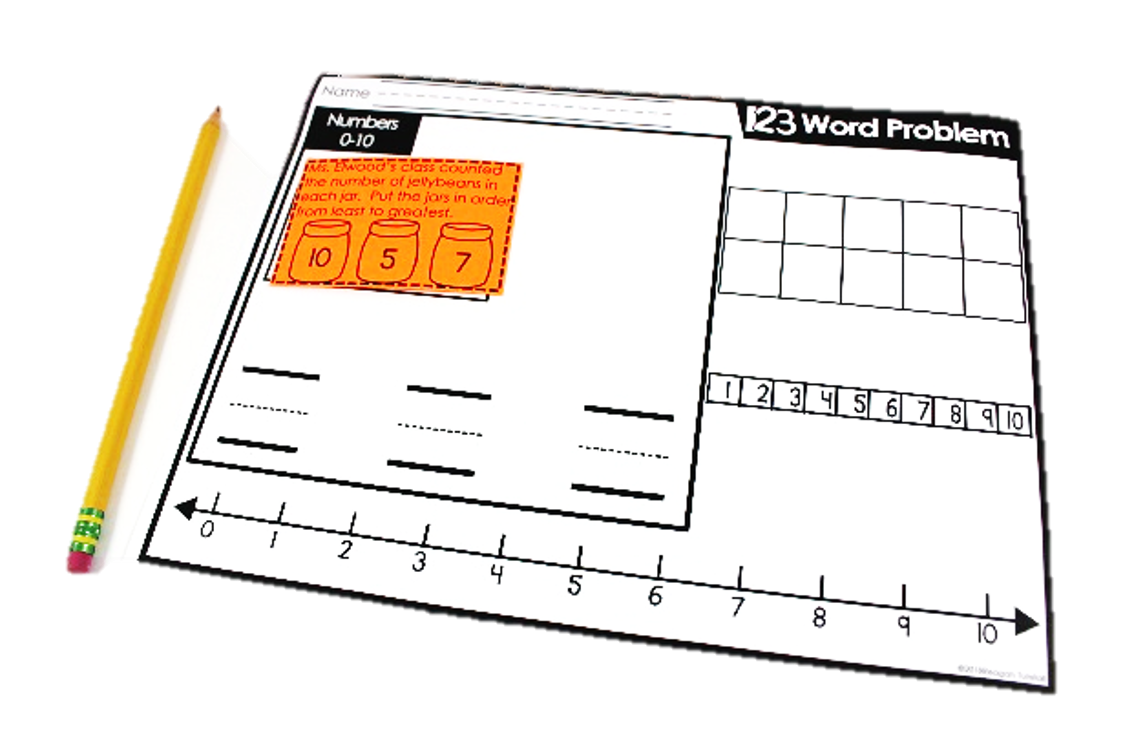
First grade students begin to connect concrete models to more abstract thinking.
Effective strategies include:
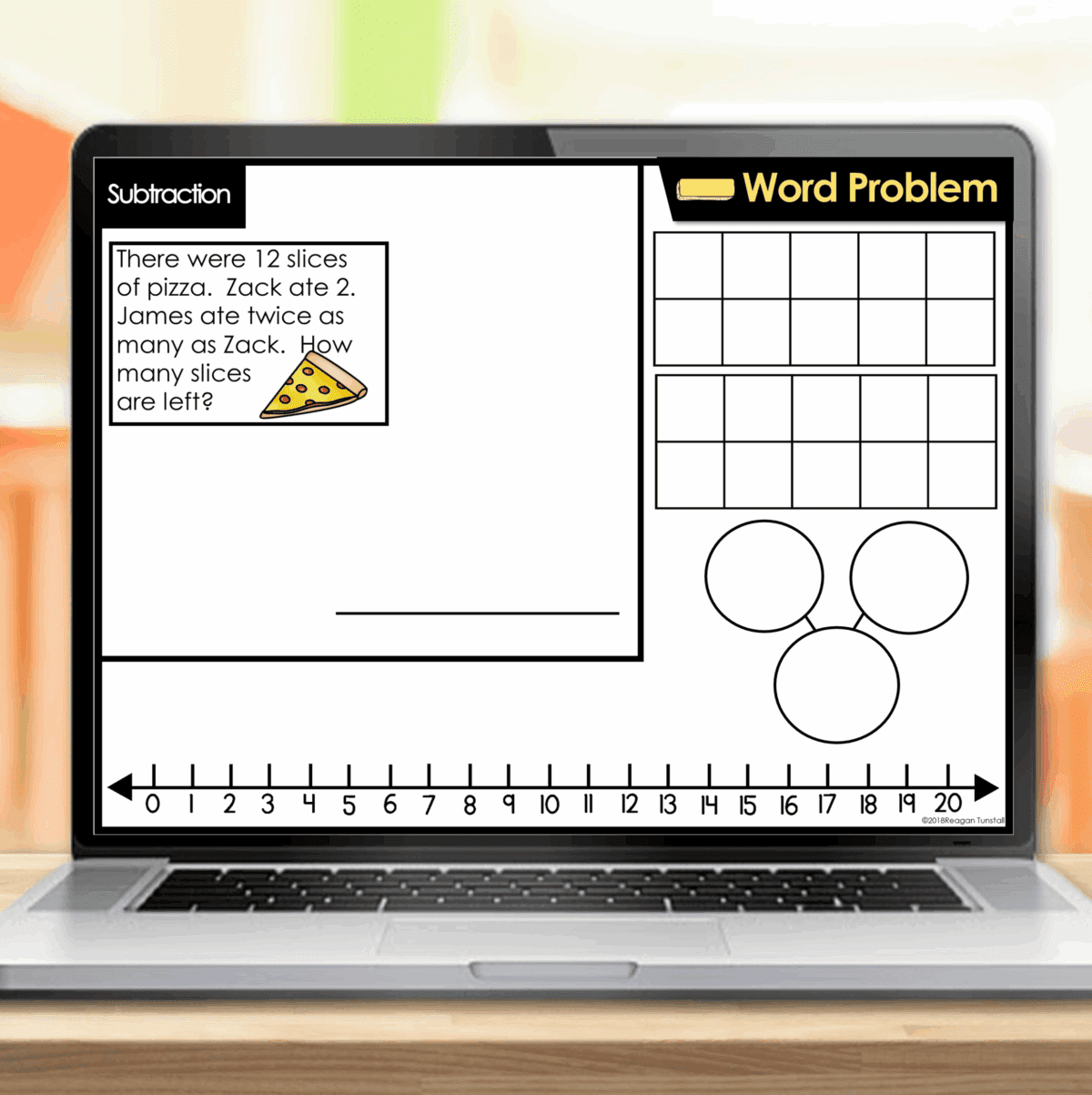
- Drawing pictures and number paths
- Using part part whole models
- Counting on or counting back
- Using simple sentence frames to explain thinking
Students are encouraged to choose a strategy and explain why it works.

Second Grade Word Problem Strategies
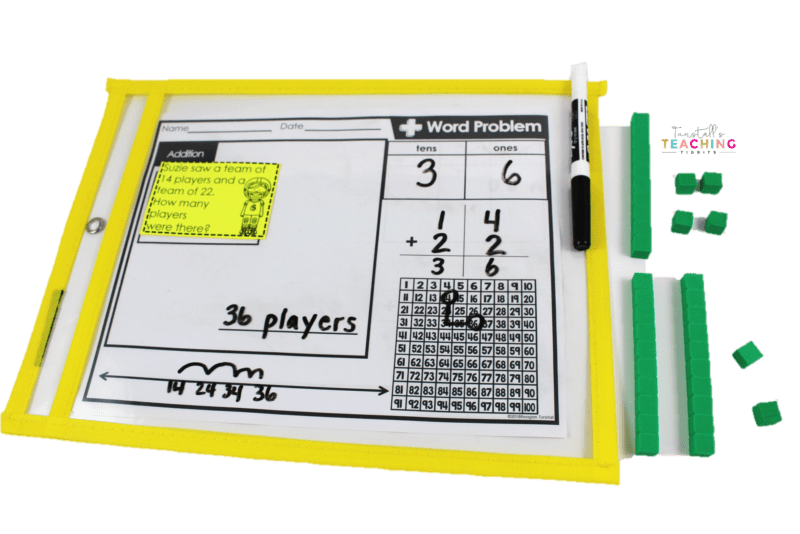
Second grade students are ready to compare strategies and explain their thinking in more detail.
Effective strategies include:
- Tape diagrams and bar models
- Open number lines
- Strategy discussions and comparisons
- Written explanations with support
At this level, students begin to justify their reasoning and reflect on their solutions.
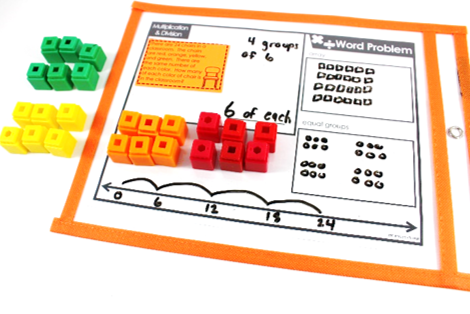
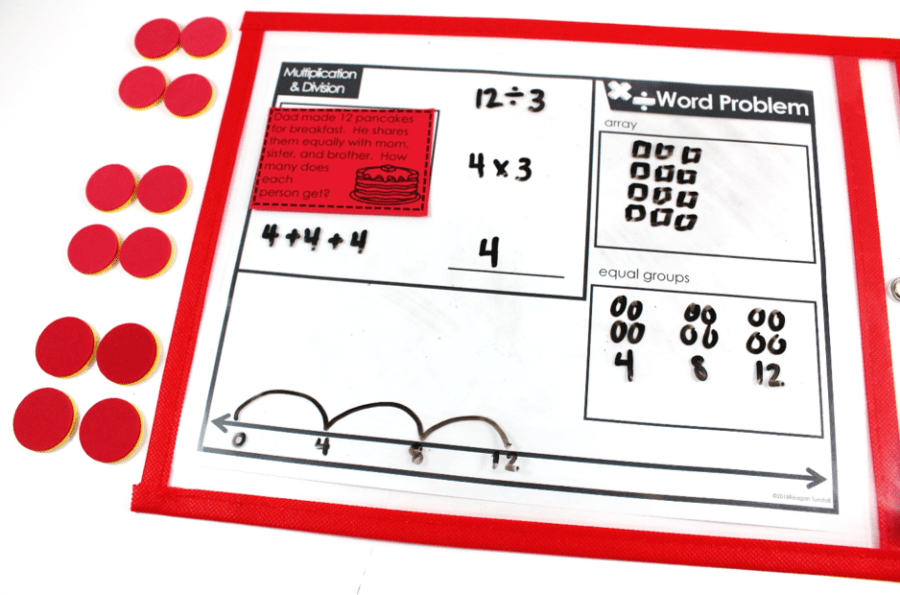
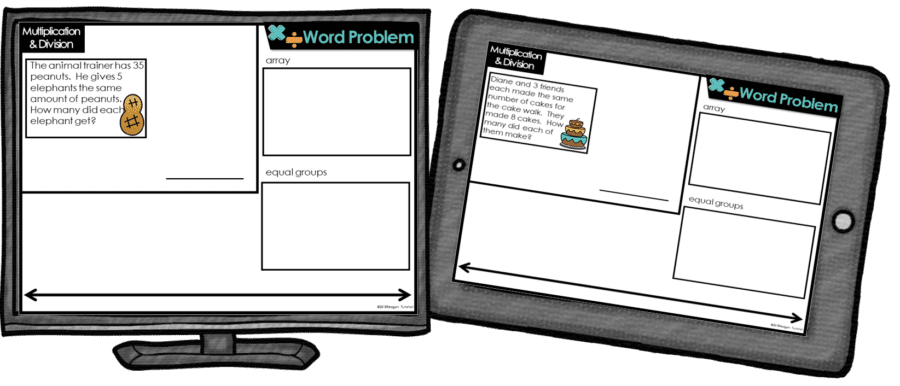
Free Word Problem Work Mats for Grades K–2
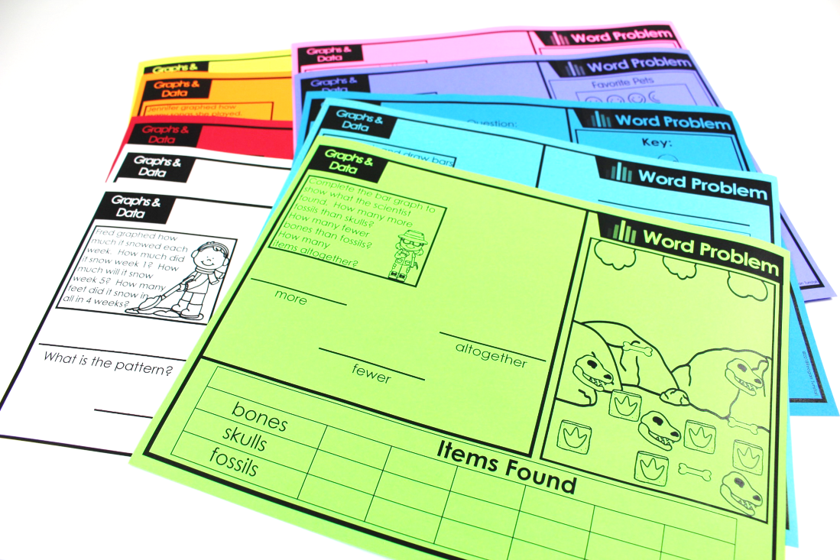
To support these strategies, I created free word problem work mats for Kindergarten, first grade, and second grade. The mats are color for digital display and black and white for printing as mats.
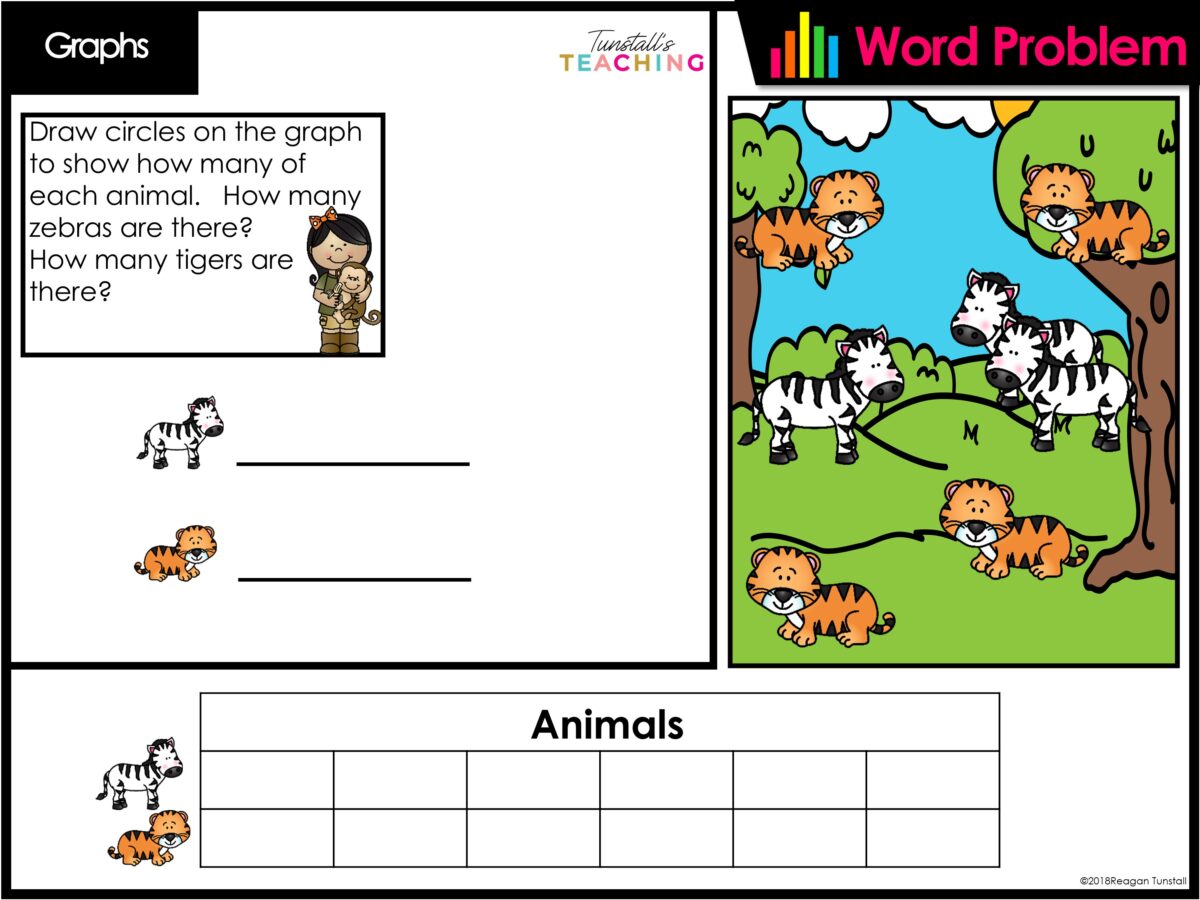
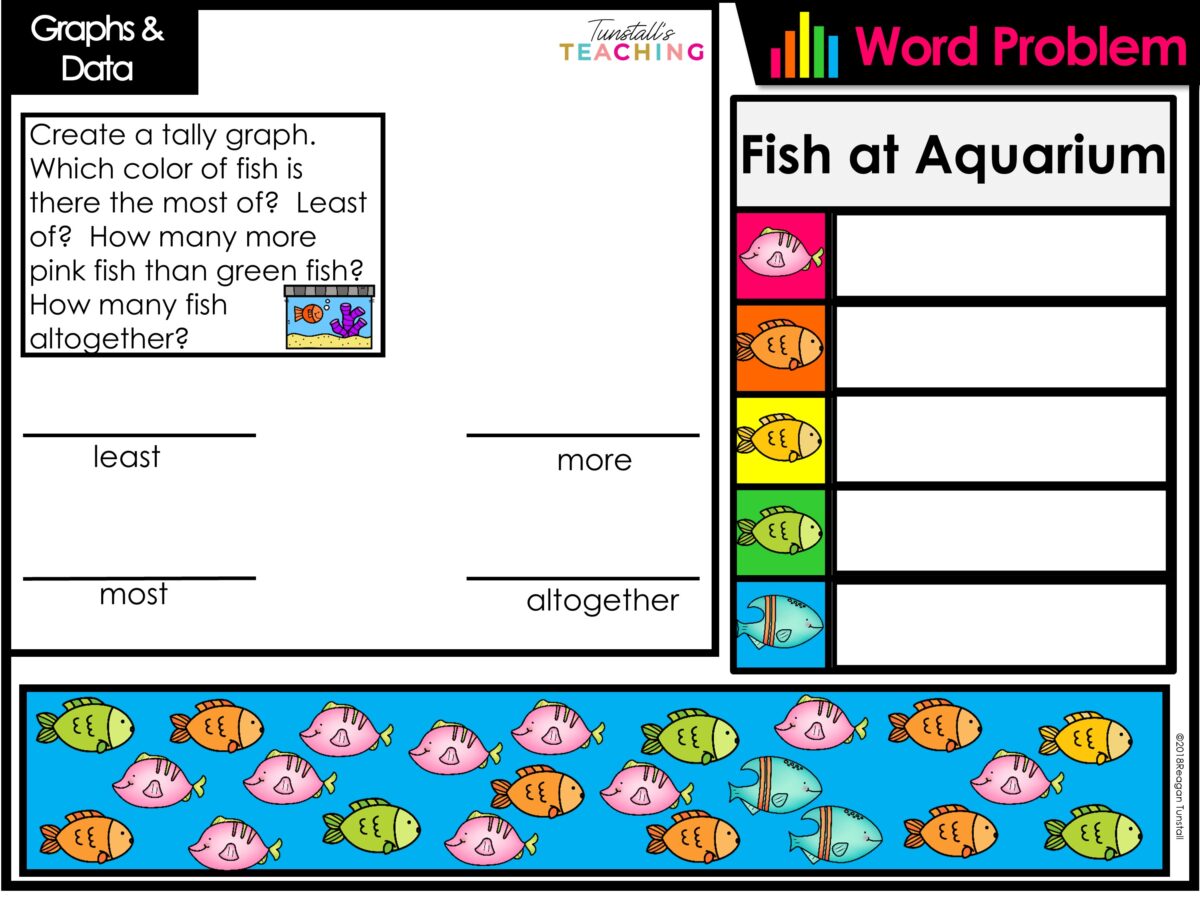
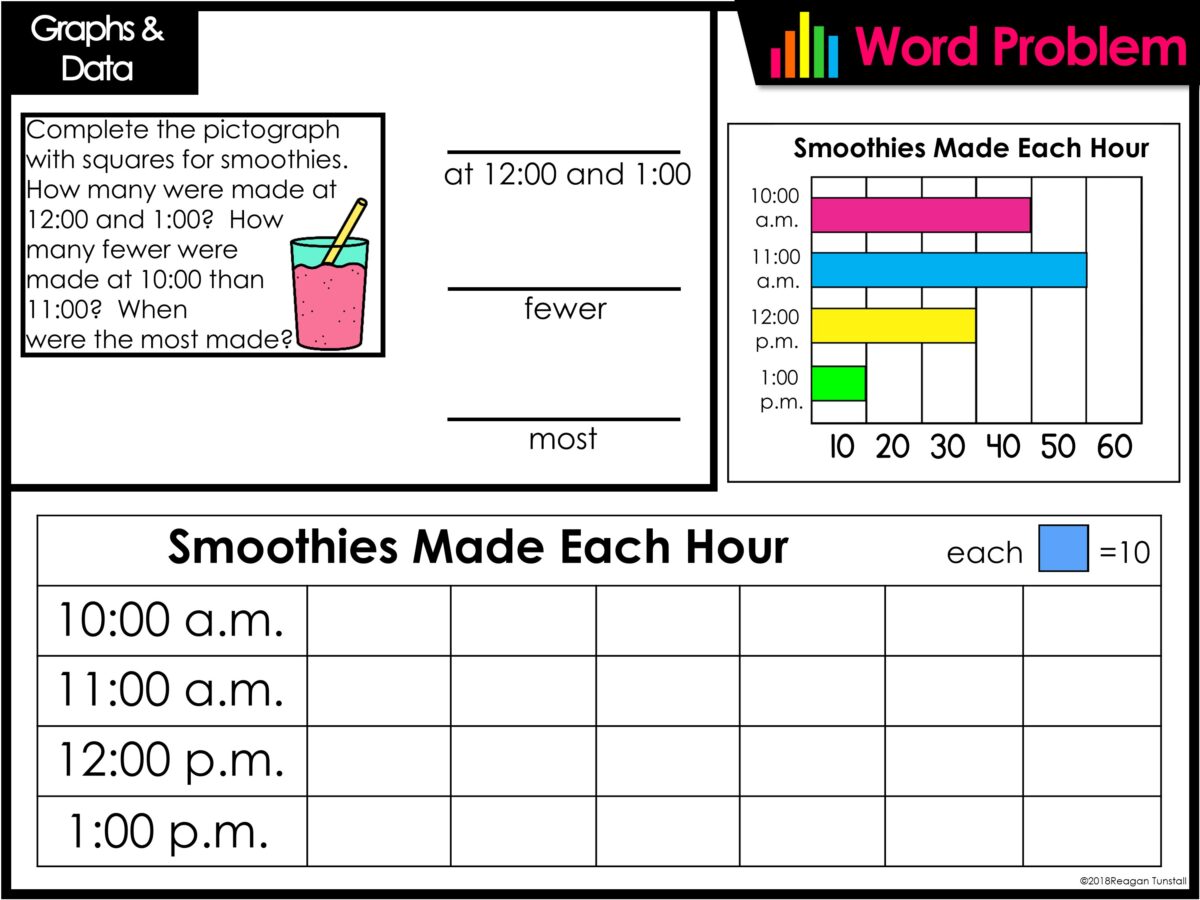
These mats are designed to work across whole group instruction, small groups, centers, and intervention.
Grab the free word problem work mats below to help your K–2 students model, solve, and explain their thinking with confidence.
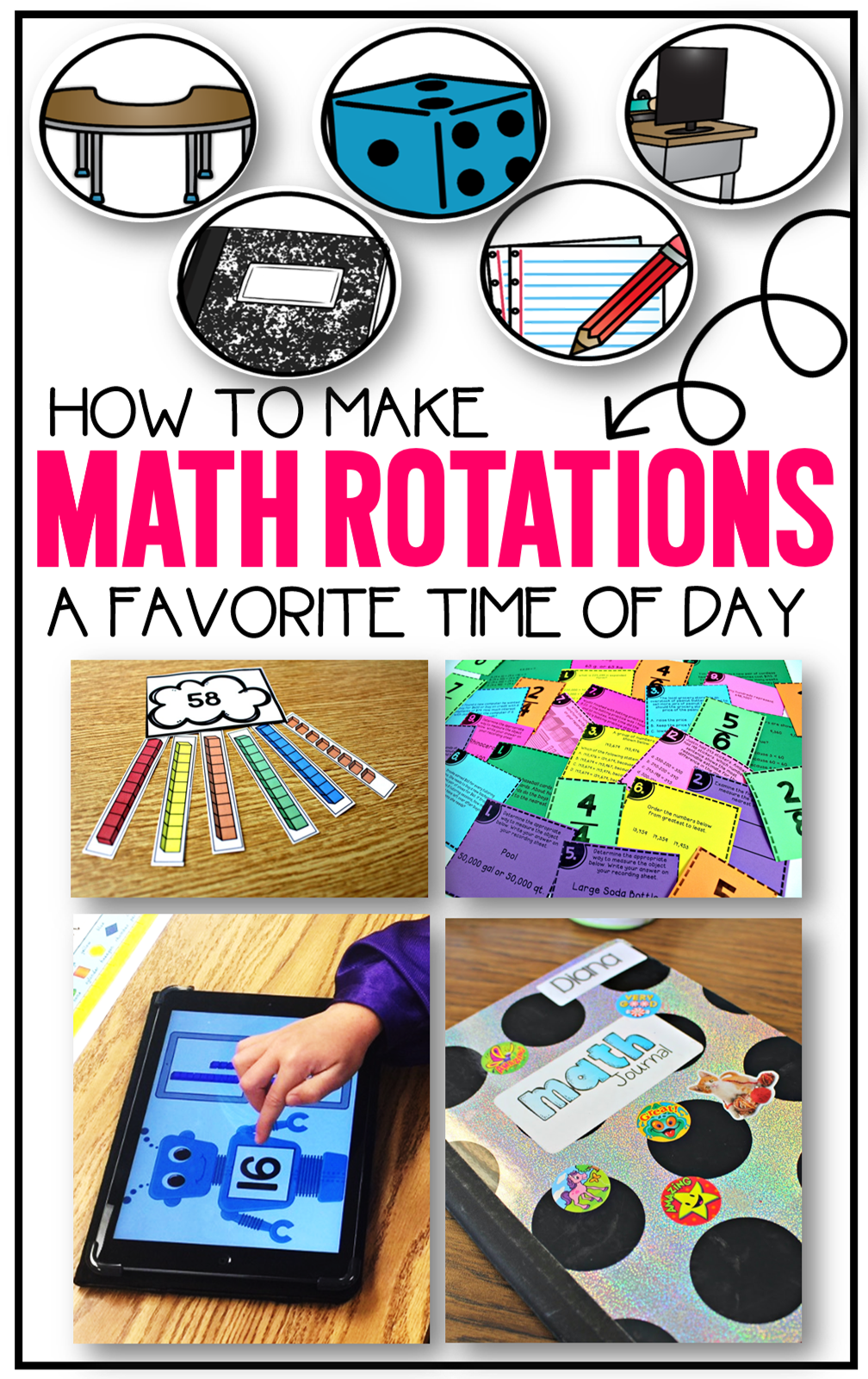
How to Use Word Problem Work Mats in Your Math Block
Word problem work mats are flexible and easy to integrate into your existing routines.
You can use them for:
- Whole group modeling during math mini lessons
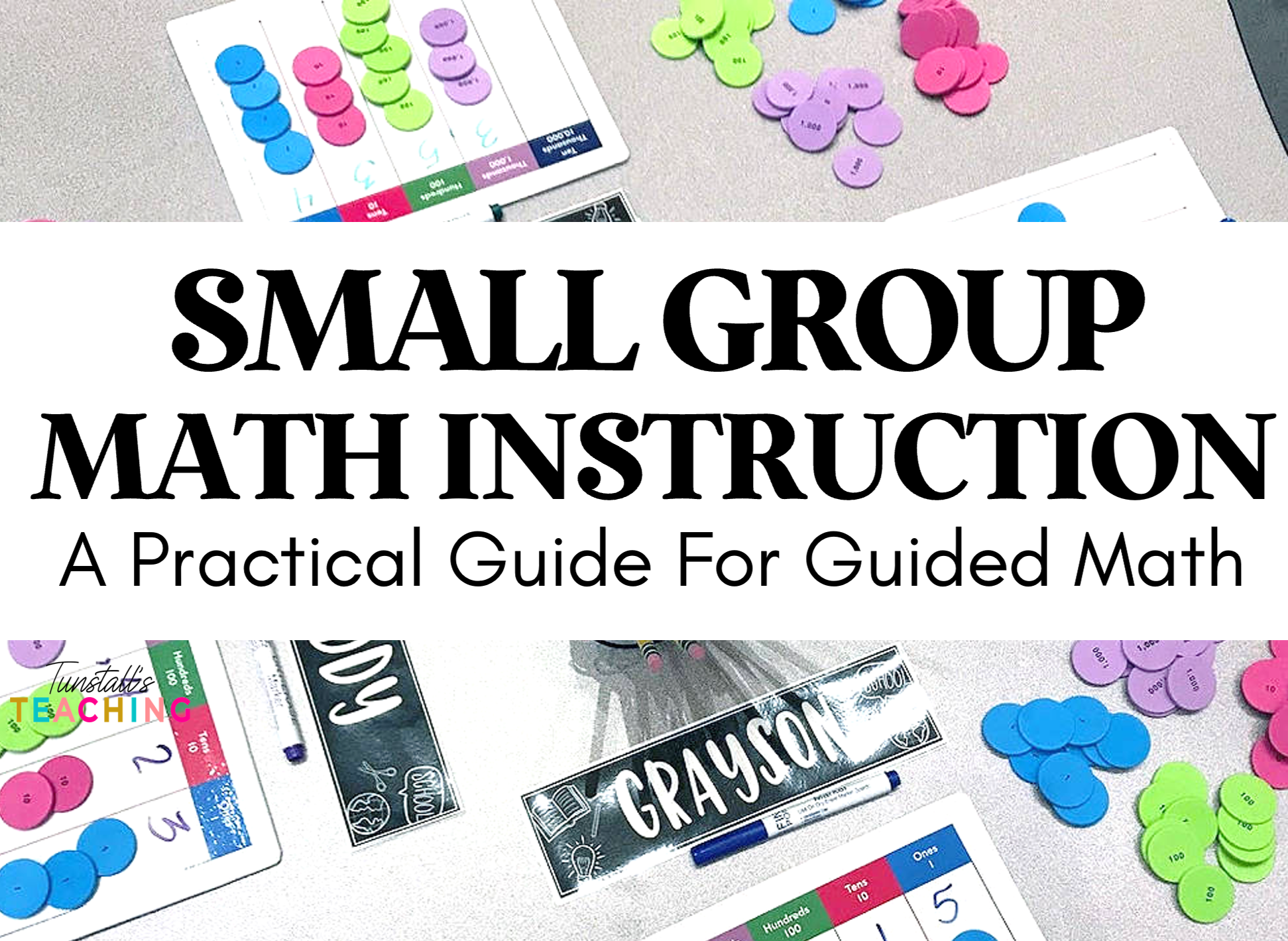
- Guided math small groups
- Math centers or stations
- Intervention and reteaching
- Formative assessment evidence
Because the structure stays the same, students can focus on thinking rather than figuring out what to do next.
Common Questions About Teaching Word Problems in K–2
How often should K–2 students solve word problems
Word problems should be included regularly, even daily. Short, meaningful practice builds confidence and skill over time.
Should Kindergarten students write explanations
Kindergarten students can explain their thinking orally or with drawings. Writing develops gradually and should be supported.
What if students use different strategies
Different strategies are a strength. Encourage students to share and compare their thinking to deepen understanding.
How do I support struggling readers during word problems
Read problems aloud, use visuals, and allow students to retell the story before solving.
Final Thoughts
Word problem success in grades K–2 comes from consistency, structure, and intentional strategy instruction. When students are given tools that support sense making, they learn to approach word problems with confidence instead of fear.
Using clear strategies and visual work mats helps young learners become thoughtful problem solvers who understand not just how to get an answer, but why it works.
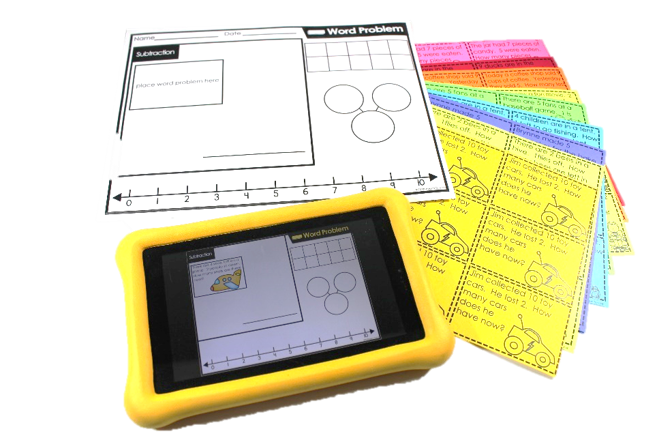
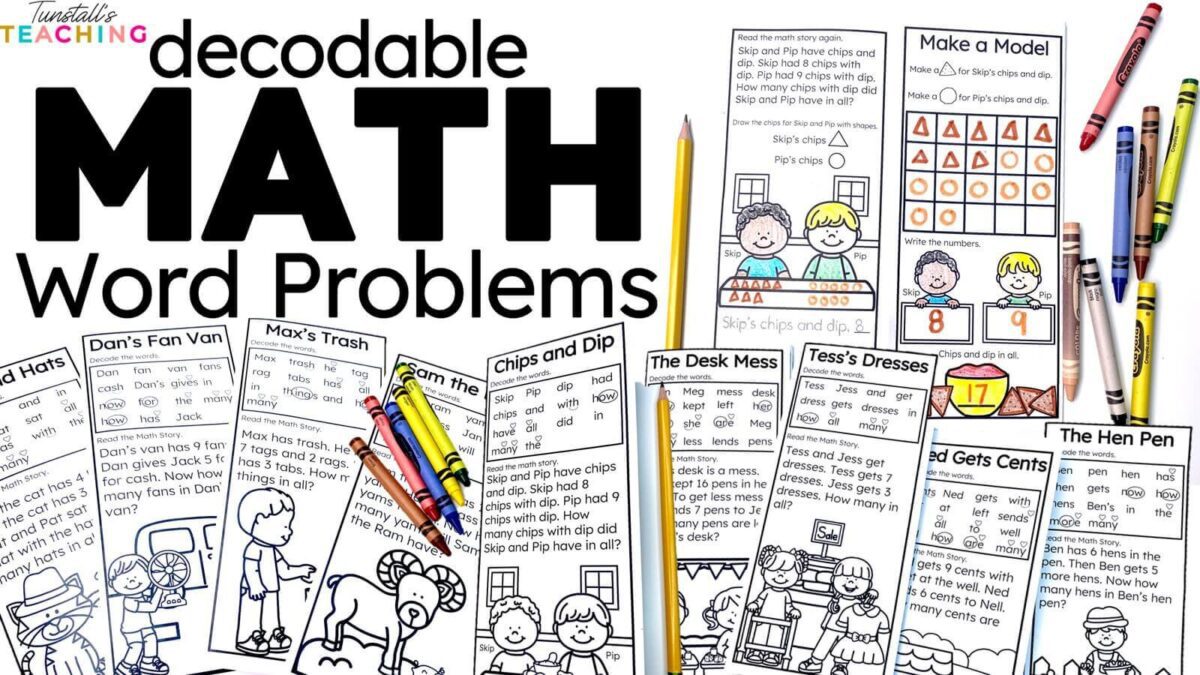
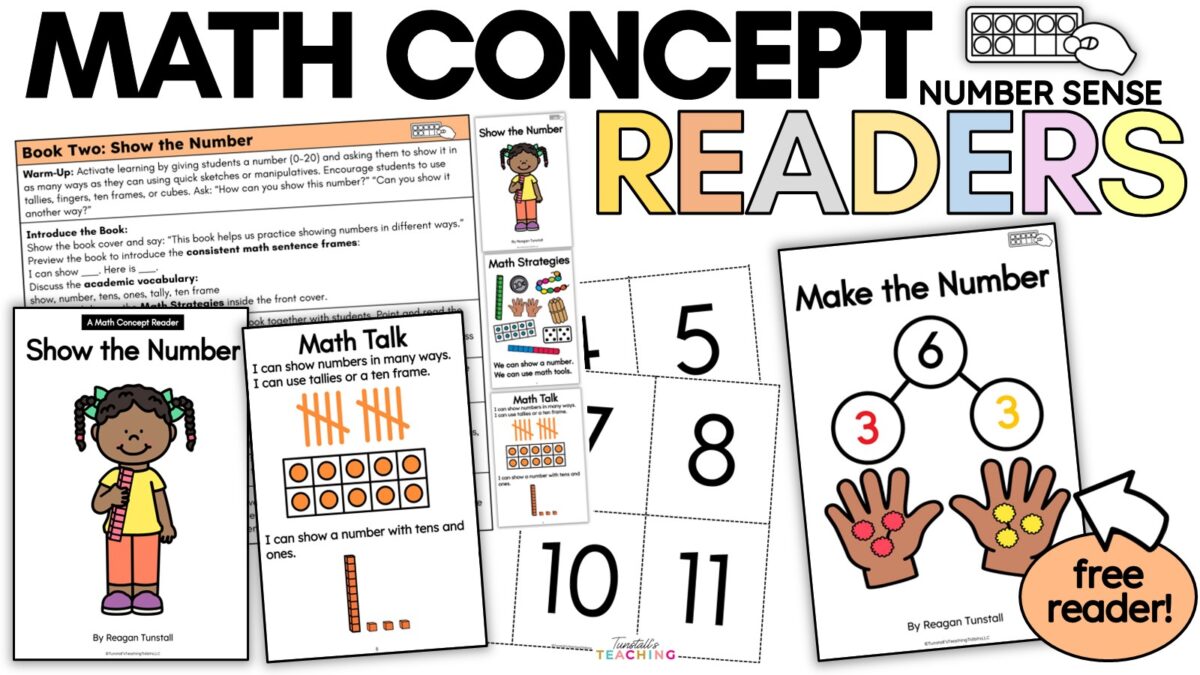
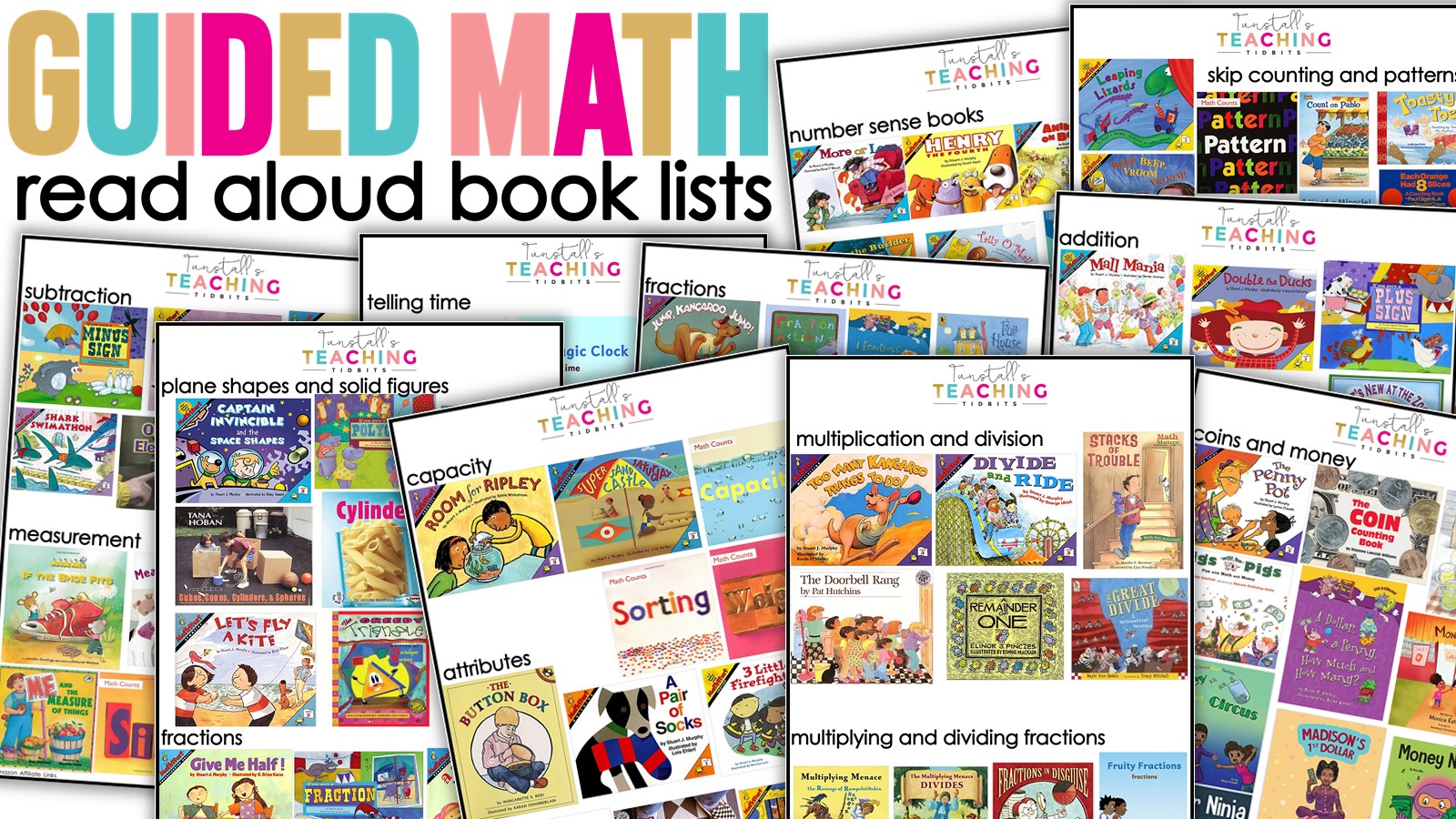
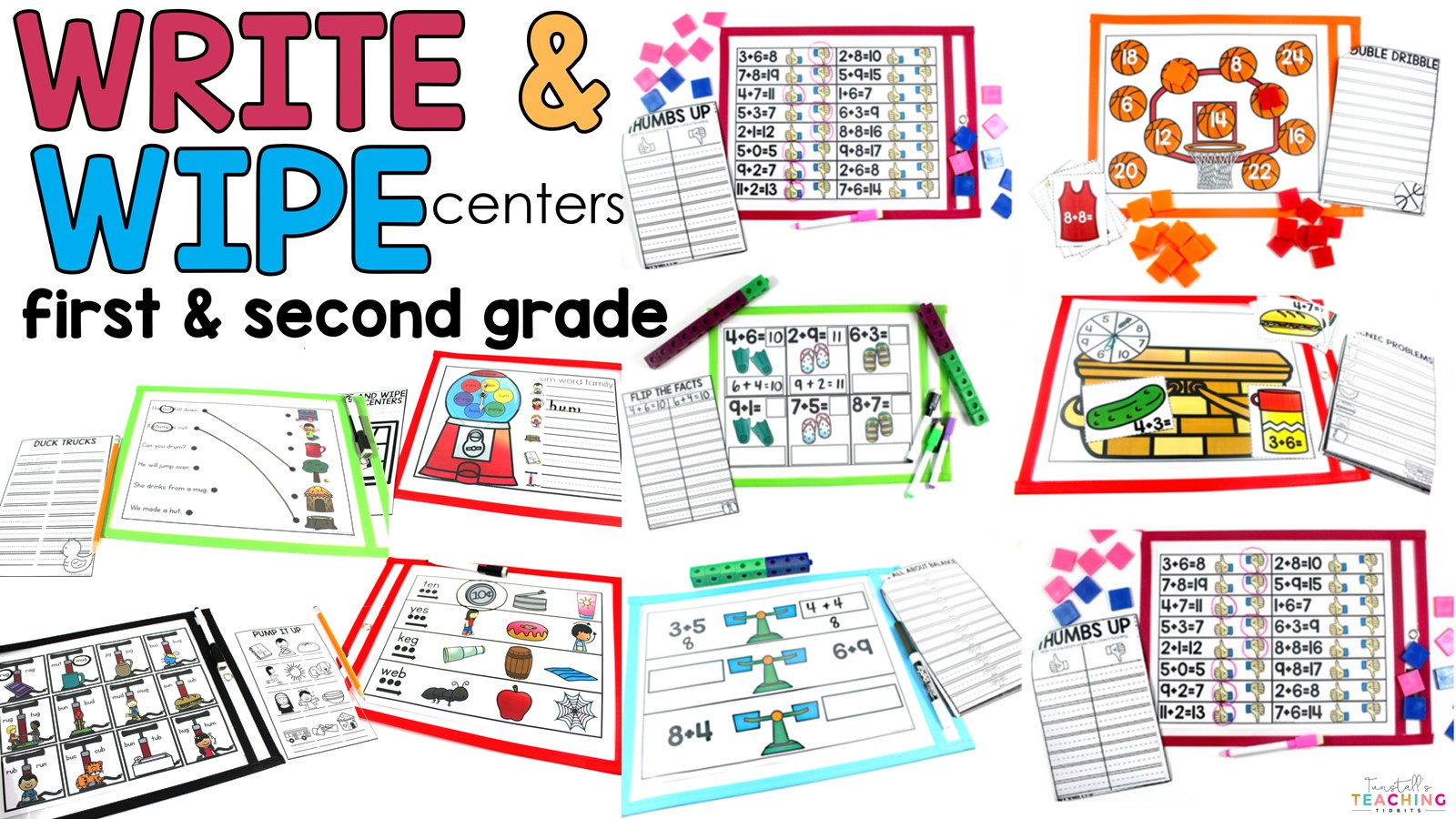
If you are looking to further support students with both reading and reasoning in math, these two resources pair well with the strategies shared above. Our decodable math word problems help students focus on understanding the situation without the barrier of complex text, while Math Concept Readers Number Sense strengthen the foundational skills students rely on when solving word problems. Together, they create a cohesive approach to building confident K–2 problem solvers.
Check out this https://scamfighter.net/review/unemployedprofessors.com link and find out why some writing services are unlikely to be number one on your list. Just check this site!
Freebies