 Contact
How to Launch Math Workshop in Your Classroom (Step-by-Step Guide)
How to Launch Math Workshop in Your Classroom
Launching math workshop can feel overwhelming.
You’re trying to manage small groups, math stations, and independent work all at the same time. And if you’ve ever tried to jump in too quickly, you already know…
It doesn’t work.
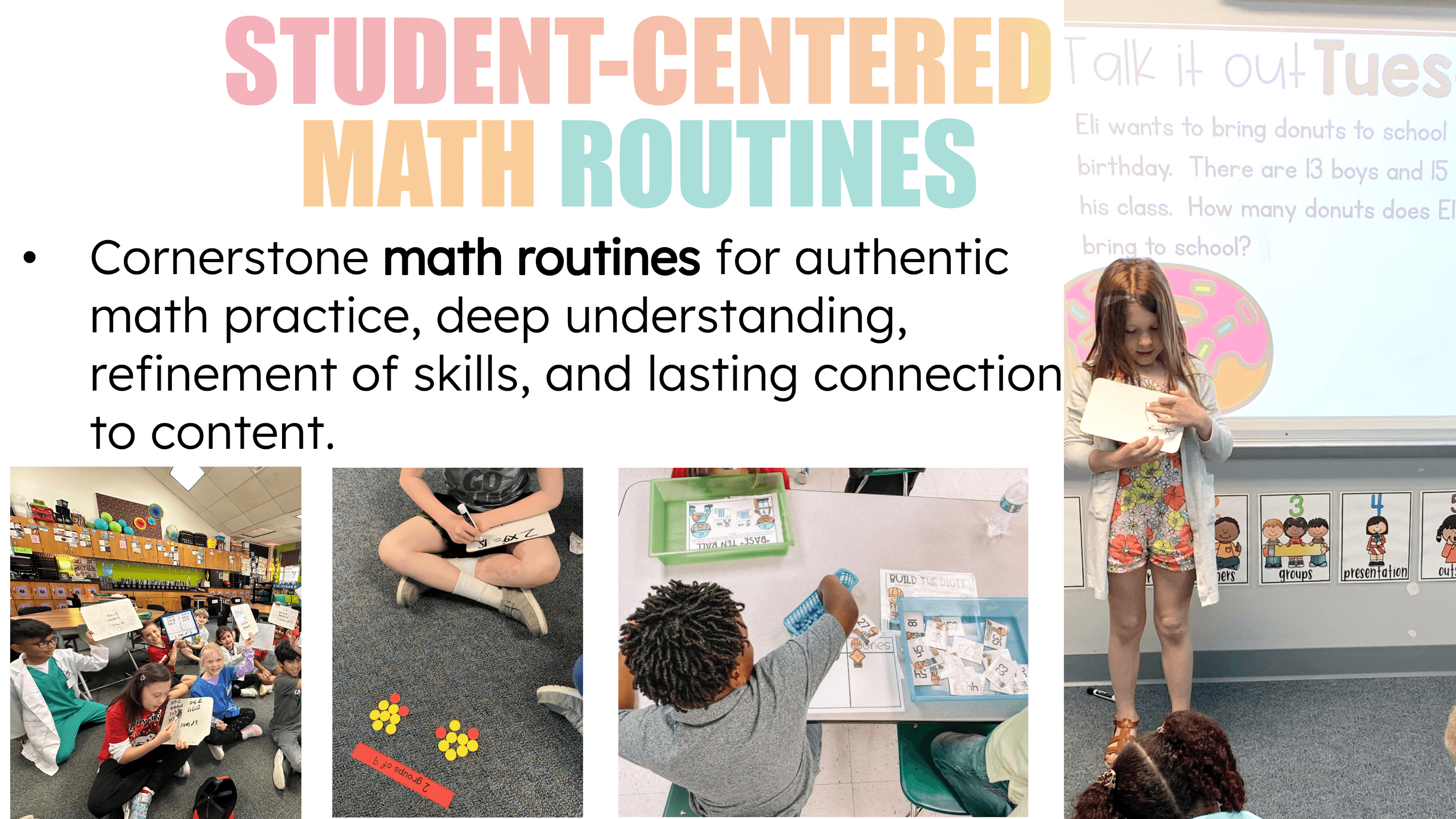
The truth is, a successful math workshop is one where students and teacher are part of a community of mathematicians with clear and common goals and expectations. Success is found in how you set it up and how you launch it together with students.
After years in the classroom, creating guided math resources, and supporting K–5 teachers through math professional development, I have found that the success of math workshop comes back to routines, expectations, and student independence.
Before I get into the free launch guide below, you can find free set up materials in these posts too!
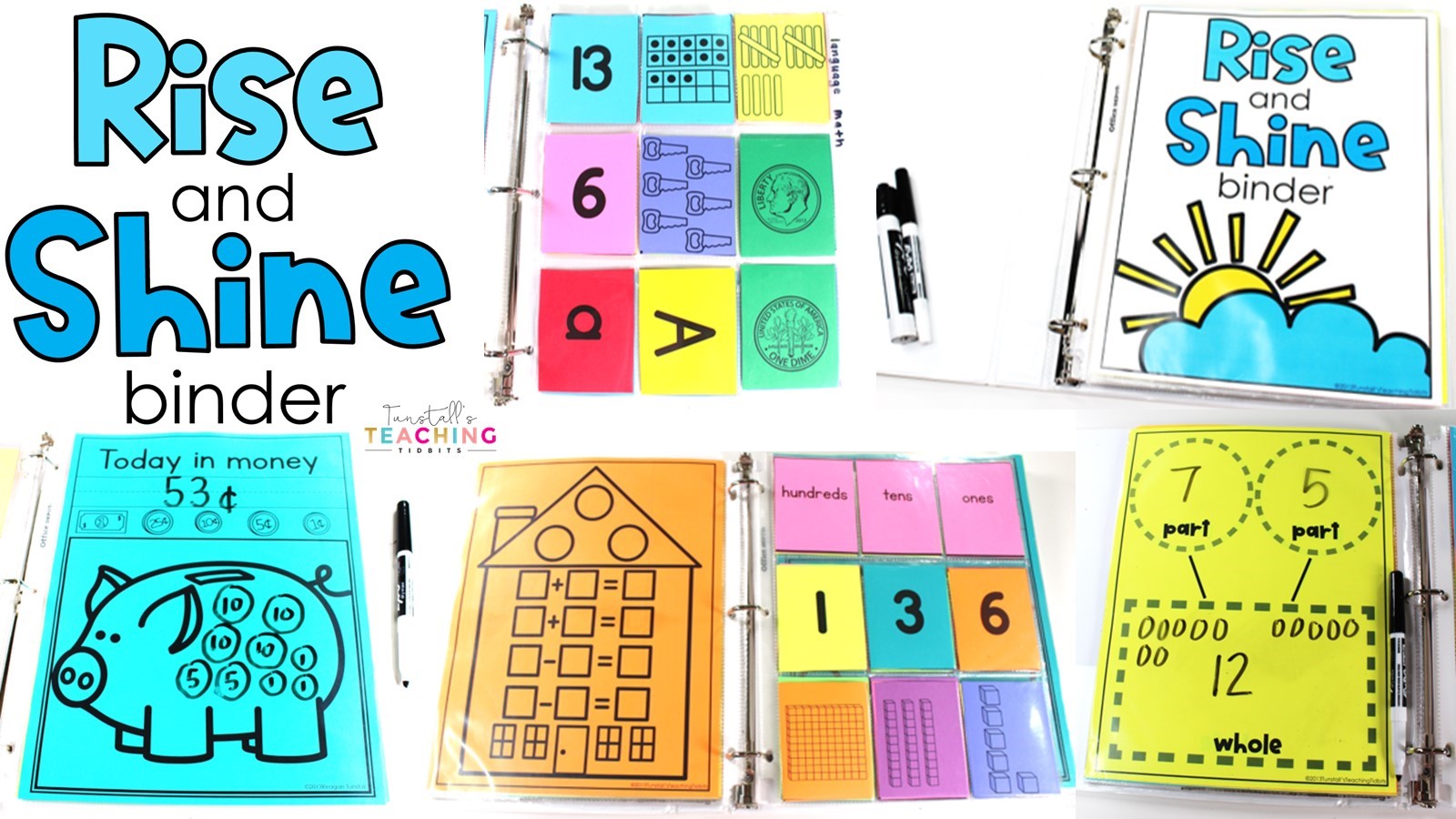
- The ultimate guide to math organization (K-2)
- Math STACK free set up (3-5)
- Rotations, Slides, and Schedules (K-5)
- Free Back to School Math Lessons (K-2)
- Free Back to School Math Lessons (3-5)
Why Launching Math Workshop Matters
Many teachers make the mistake of jumping straight into content.
But research and classroom experience both show:
Students need time to learn routines, expectations, and independence before academic rigor increases.
When you take time to launch your math workshop routines intentionally:
- students become more independent
- transitions run smoothly
- small groups are more effective
- you spend less time managing and more time teaching
The Biggest Mistake Teachers Make
The most common mistake?
Trying to do everything at once.
Instead of:
- teaching procedures
- modeling expectations
- practicing routines
Teachers often jump straight into rotations.
And that leads to:
- confusion
- constant interruptions
- off-task behavior
The Key to a Successful Math Workshop Launch
The key is simple:
Go slow to go fast
Start with:
- routines
- expectations
- modeling
Then build toward:
- independence
- small groups
- full rotations
What a Strong Math Workshop Includes
A well-structured math workshop includes small groups, a strong guided math structure, and effective math centers and stations.
- a focused mini lesson
- small group instruction
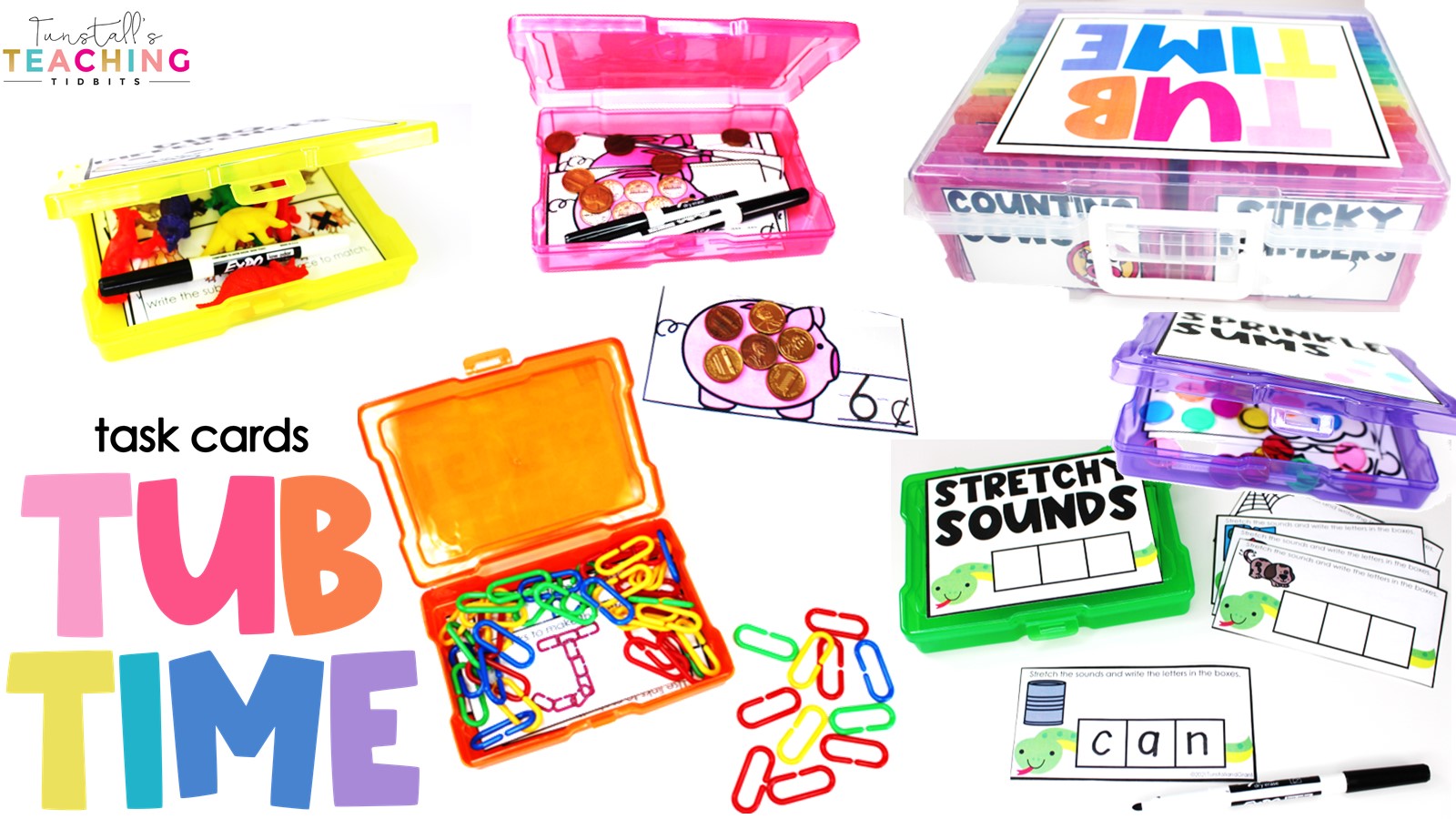
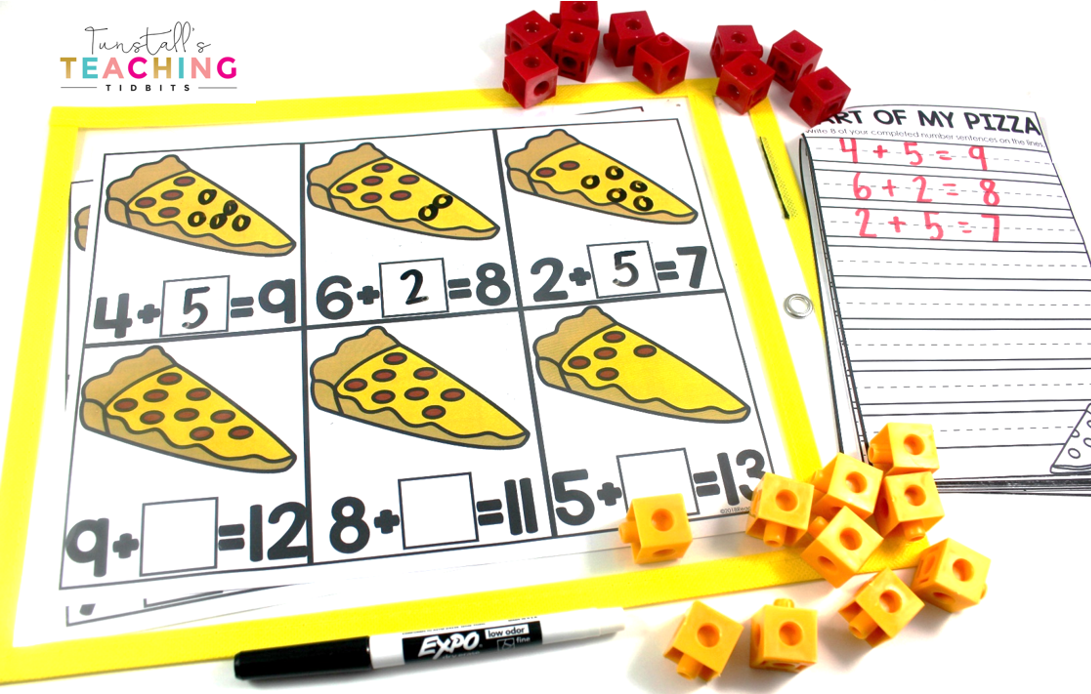
- math stations or centers
- independent or partner work
- reflection or closure
But again the success of these components depends on your launch.
What Math Workshop Is and What It Is Not
Math workshop is not the entire math block. It is the part of the math block where students apply learning through meaningful tasks while the teacher meets with small groups. In many classrooms, math workshop happens after a focused whole group lesson or mini lesson.
How to Launch Math Workshop Step by Step
Instead of jumping in all at once, I will walk you through how to break your launch into phases.
Phase 1: Prepare
Focus on:
- how to respond to a signal
- how to move in the room
- how to use materials
- how to work independently
- what it looks like and sounds like
Phase 2: Launch
Show students:
- exactly what to do to meet expectations
- what NOT to do and the logical consequence
- how to fix mistakes as a math community
Model. Practice. Reflect.
Phase 3: Build Independence
Gradually release responsibility:
- partial group rotations
- full rotations
- adding more varied tasks
Phase 4: Sustain
Only after routines are strong:
- begin meeting with small groups
- differentiate instruction
- use data to guide teaching
This is the exact framework used in the 20-day Math Workshop Launch Guide.
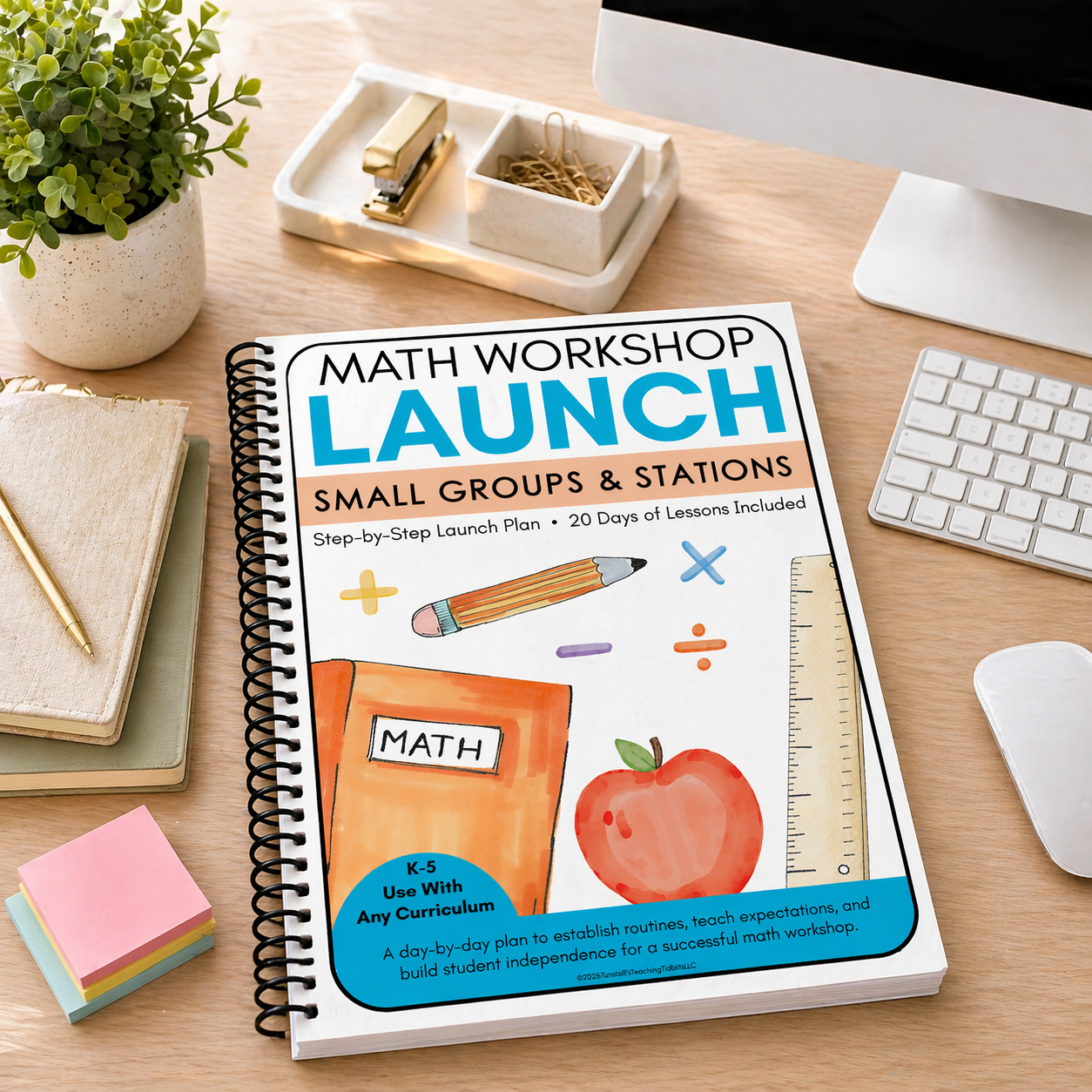
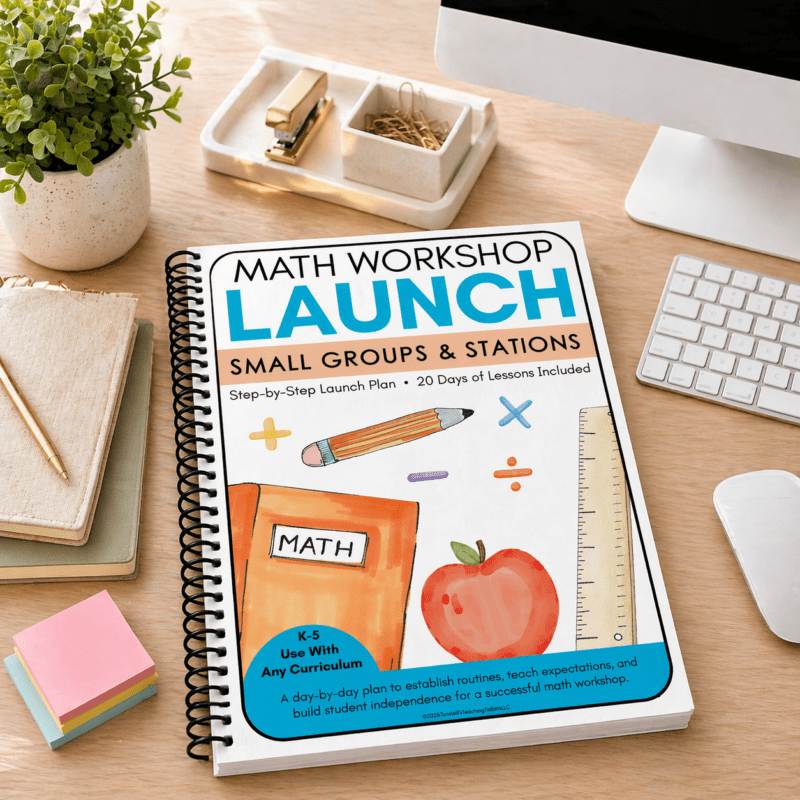
Grab my free 20-day Math Workshop Launch Guide that walks you through exactly what to teach each day to build routines, independence, and successful small groups.
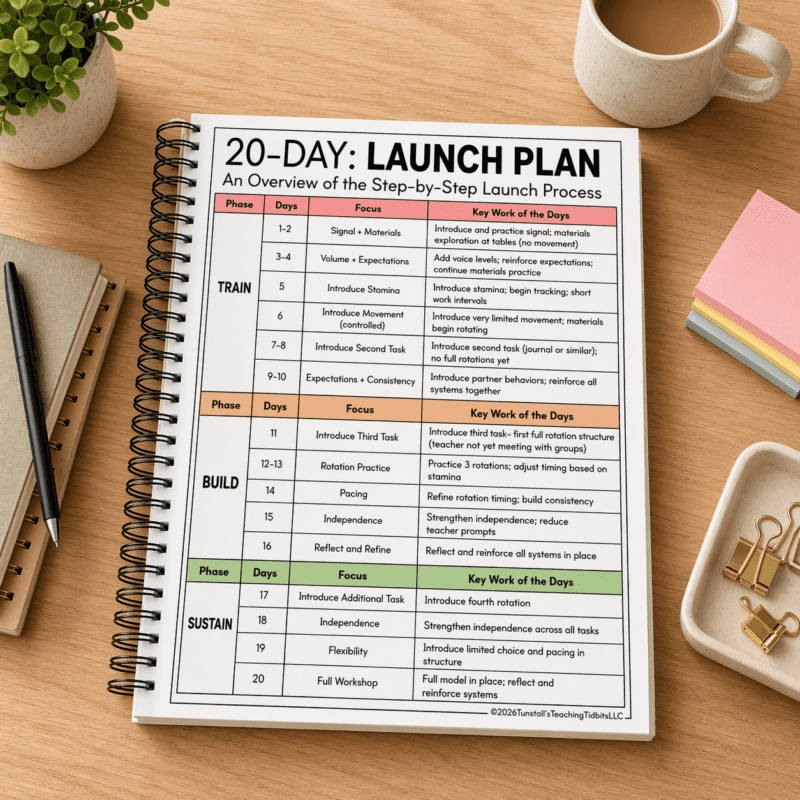
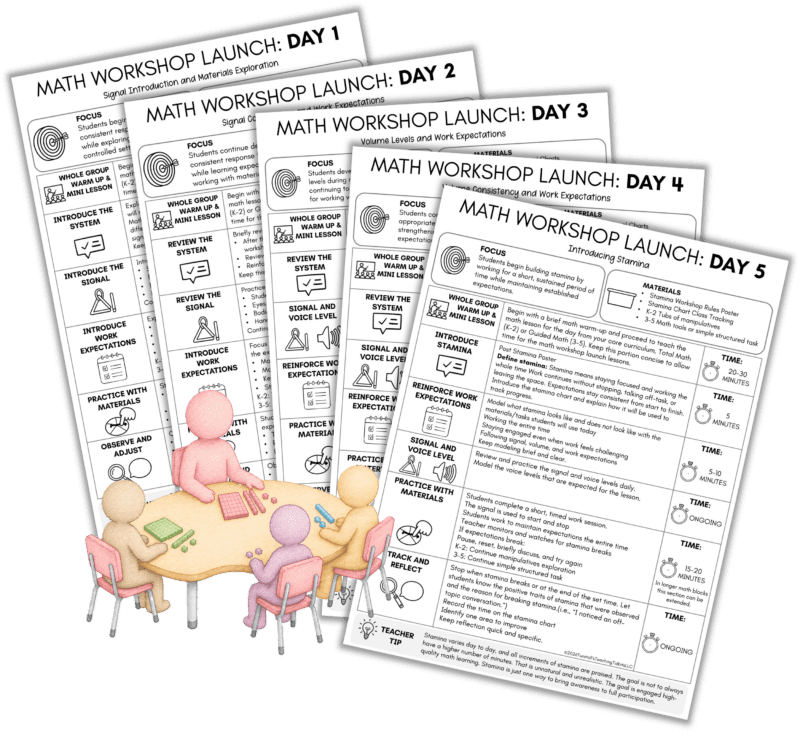
Sample 20-Day Math Workshop Launch Flow
In the first few days, students learn routines for materials, movement, voice level, and expectations. From there, they practice partial rotations before moving into full rotations. Small group instruction is added once students have enough independence to work successfully without constant teacher support.
Launching Math Workshop in K–2 vs. Grades 3–5
Math workshop can work in every grade level, but the launch may look a little different depending on the age and independence of your students.
In K–2 classrooms, the launch usually includes more modeling, repeated practice, and visual support. Students need time to learn how to use math materials, work with a partner, move safely between stations, clean up, and complete short tasks independently. The goal is to build confidence with simple routines before adding more complexity.
In grades 3–5, the launch still includes explicit routines and expectations, but the focus shifts toward stamina, accountability, and deeper math thinking. Students may be expected to work for longer periods of time, respond in math journals, solve multi-step problems, explain their reasoning, and stay productive while the teacher meets with a small group.
Across every grade level, the goal is the same: teach students how math workshop should look, sound, and feel before expecting full rotations to run smoothly.
What Makes a 20-Day Launch Different
A structured launch plan gives you:
- clear daily focus
- consistent routines
- built-in progression
- less overwhelm
Instead of guessing what to teach…
you follow a clear path.
Final Thoughts on Launching Math Workshop
Launching math workshop doesn’t have to feel overwhelming.
When you:
- start with routines
- build independence
- follow a clear plan
Everything changes.
Your math block becomes:
- calmer
- more effective
- more student-centered
And most importantly…
it works.
Want a step-by-step plan?
These four phases are exactly what I walk you through in the 20-day Math Workshop Launch Guide so you know what to teach each day, not just what to focus on.